Opinion: World Environment Day and the case for environmental justice
A truly sustainable society is possible only when environmental protection, climate resilience and social justice advance together


By Akhilesh Kumar
Every year on June 5, World Environment Day calls upon governments, institutions, and citizens to reflect on the urgent challenges posed by climate change, pollution, biodiversity loss, and environmental degradation. While these issues are often presented as affecting humanity as a whole, an important question remains overlooked: Do environmental crises affect everyone equally? Environmental degradation may be universal, but its consequences are profoundly unequal.
Also Read
Across the world, and particularly in India, marginalised communities bear a disproportionate share of environmental burdens while enjoying fewer environmental benefits. Communities already disadvantaged by caste, class, gender, occupation, and geography are often the first to experience the devastating impacts of pollution, resource scarcity, climate disasters, and ecological neglect. This reality lies at the heart of what scholars call Environmental Justice — the principle that environmental protection cannot be separated from social justice.
Unequal Vulnerability
Environmental Justice emerged as a global movement challenging the unequal distribution of environmental risks. It argues that environmental problems are not merely ecological concerns; they are also political and social questions. The German sociologist Ulrich Beck, in his influential work Risk Society (1986), argued that modern industrial societies increasingly produce new forms of risks such as pollution, toxic contamination, nuclear hazards, and climate change.
Beck suggested that these risks transcend traditional social boundaries. However, the Indian experience reveals that environmental risks are not distributed equally. Caste, class, and social exclusion continue to shape who faces the greatest exposure to environmental hazards and who possesses the resources to recover from them. Environmental risks may be global, but vulnerability remains deeply local and unequal.
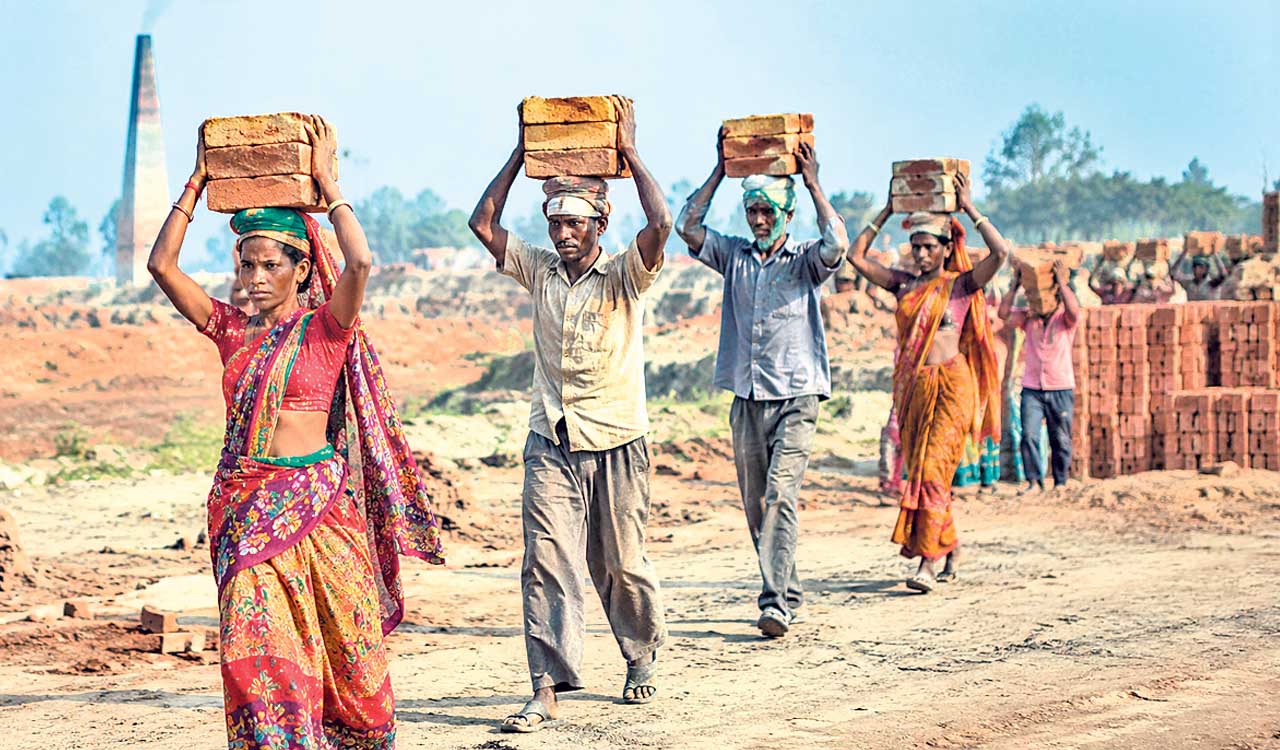
Across India, environmental burdens often follow existing patterns of social inequality. Many marginalised communities, including Dalits, Adivasis, landless labourers, migrant workers, and urban poor populations, reside in areas characterised by inadequate infrastructure and heightened environmental vulnerability. Informal settlements are frequently located near landfills, industrial zones, sewage channels, polluted rivers, and waste disposal sites.
Double Burden
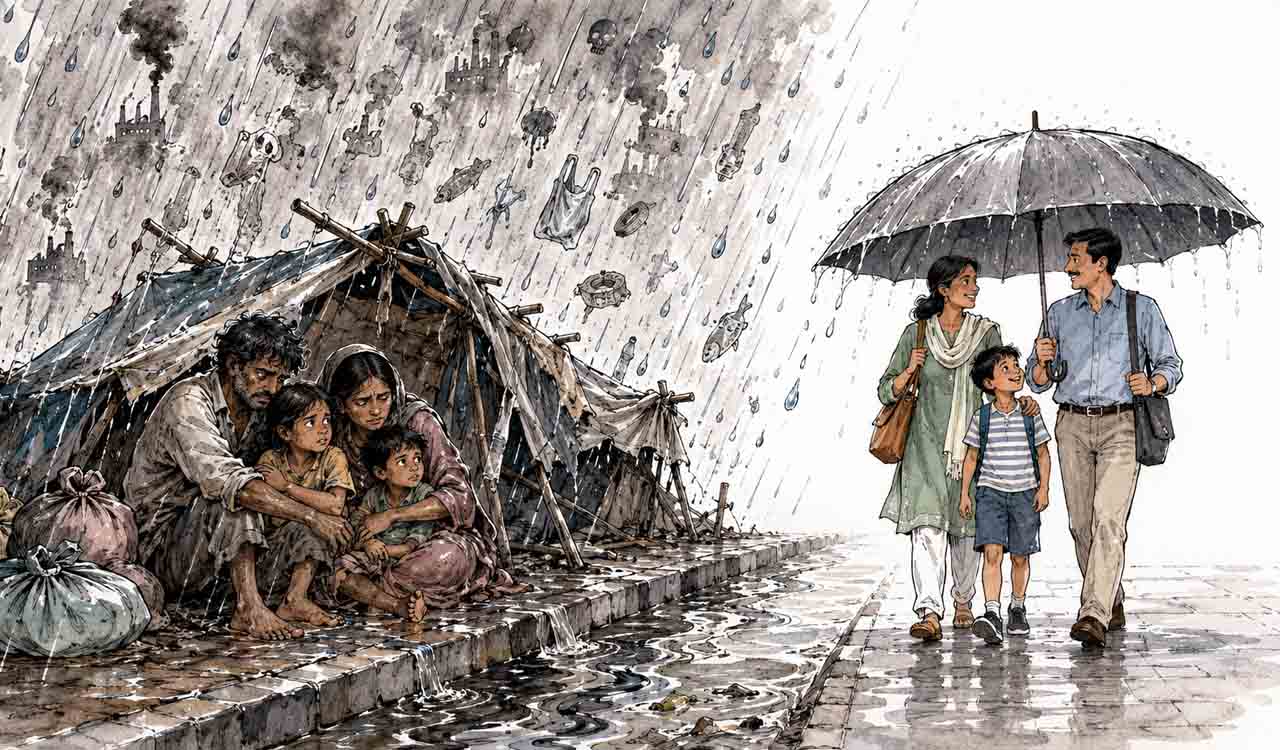
These communities often face a double burden: economic deprivation and environmental degradation. While affluent neighbourhoods enjoy cleaner surroundings, better waste management, and greater access to public services, marginalised communities are more likely to experience polluted air, contaminated water, inadequate sanitation, and limited access to healthcare. Environmental inequality is, therefore, not accidental; it reflects broader structures of social inequality.
A sustainable future cannot be built solely through technological innovation or conservation efforts. It must also be built through justice, dignity, and equity
One of the most visible examples of environmental injustice in India is the continued existence of hazardous sanitation labour. Despite legal prohibitions on manual scavenging, sanitation workers continue to lose their lives while cleaning sewers and septic tanks. Government data presented in Parliament in 2025 reported that 622 sanitation workers died in sewer and septic tank accidents between 2017 and 2025.
Many families continue to struggle for compensation and rehabilitation. The overwhelming majority of these workers come from historically marginalised communities. Environmental protection cannot be meaningful if it relies upon dangerous and degrading labour performed by vulnerable communities.
Climate change is often described as the defining challenge of our time. However, its impacts are not experienced equally. India has witnessed increasingly severe heatwaves, floods, cyclones, droughts, and extreme weather events. For marginalised communities, these environmental changes are not merely inconveniences; they threaten livelihoods, health, and survival.
Landless agricultural labourers lose income when droughts reduce agricultural activity. Fisherfolk face uncertainty due to changing marine ecosystems and coastal erosion. Migrant workers and construction labourers endure extreme heat exposure with limited protection.
Informal settlements are often the first to suffer during floods and climate-related disasters. Those who contribute the least to environmental degradation frequently bear its greatest consequences. Climate change, therefore, acts as a force multiplier, deepening existing social and economic inequalities.
Mahad Satyagraha
The historic Mahad Satyagraha of 1927 challenged caste-based exclusion from public water sources. At its core, the movement was a struggle for equal access to a common resource. It asserted that dignity, citizenship, and equality could not exist where certain communities were denied access to water. Social democracy requires equal access to public resources and public goods.
Dr Ambedkar’s struggle reminds us that questions of water, sanitation, public health, and environmental access are inseparable from questions of justice. Long before the emergence of contemporary environmental discourse, Dr Ambedkar recognised that exclusion from essential resources represented a fundamental denial of human dignity.
Environmental vulnerability is not determined by a single factor but by the intersection of caste, class, gender, occupation, disability, and geography. Recognising these intersections is essential for developing inclusive environmental policies.
Environmental protection must move beyond symbolic actions such as tree plantation drives and awareness campaigns. While these initiatives have value, they cannot substitute for structural change. An environmentally just society requires universal access to clean drinking water, safe and dignified sanitation infrastructure, climate adaptation policies focused on vulnerable communities, strong environmental regulations in marginalised neighbourhoods, and inclusive decision-making processes that incorporate the voices of affected communities.
Most importantly, environmental policies must recognise that ecological sustainability and social equality are deeply interconnected goals. As the world observes World Environment Day, it is important to remember that environmental crises are not experienced equally.
Pollution, climate change, resource scarcity, and environmental degradation often reinforce existing inequalities, placing the heaviest burdens on marginalised communities. A sustainable future cannot be built solely through technological innovation or conservation efforts. It must also be built through justice, dignity, and equity.
Environmental justice reminds us that the question is not only how we protect the environment, but also whom we protect, who bears the costs of environmental degradation, and whose voices are included in shaping our ecological future. Only when environmental protection and social justice advance together can the promise of a truly sustainable society be realised.

(The author is a research scholar at Jamia Millia Islamia, New Delhi, and an Ambedkarite activist)

Related News
-

Opinion: CURE Bill 2026—reform or centralisation?
-
Environmentalists celebrate Lula’s reelection in Brazil: ‘The Amazon can breathe sigh of relief’
-
Opinion: Politics of India-US trade ties — can strategic convergence survive economic friction?
-
Opinion: Uncounted and Unprotected — India’s seasonal migrants and Digital Census