Opinion: The CBSE language muddle
While multilingualism offers cognitive benefits, concerns remain over teacher shortages, infrastructure gaps and a hurried rollout


By KSS Seshan
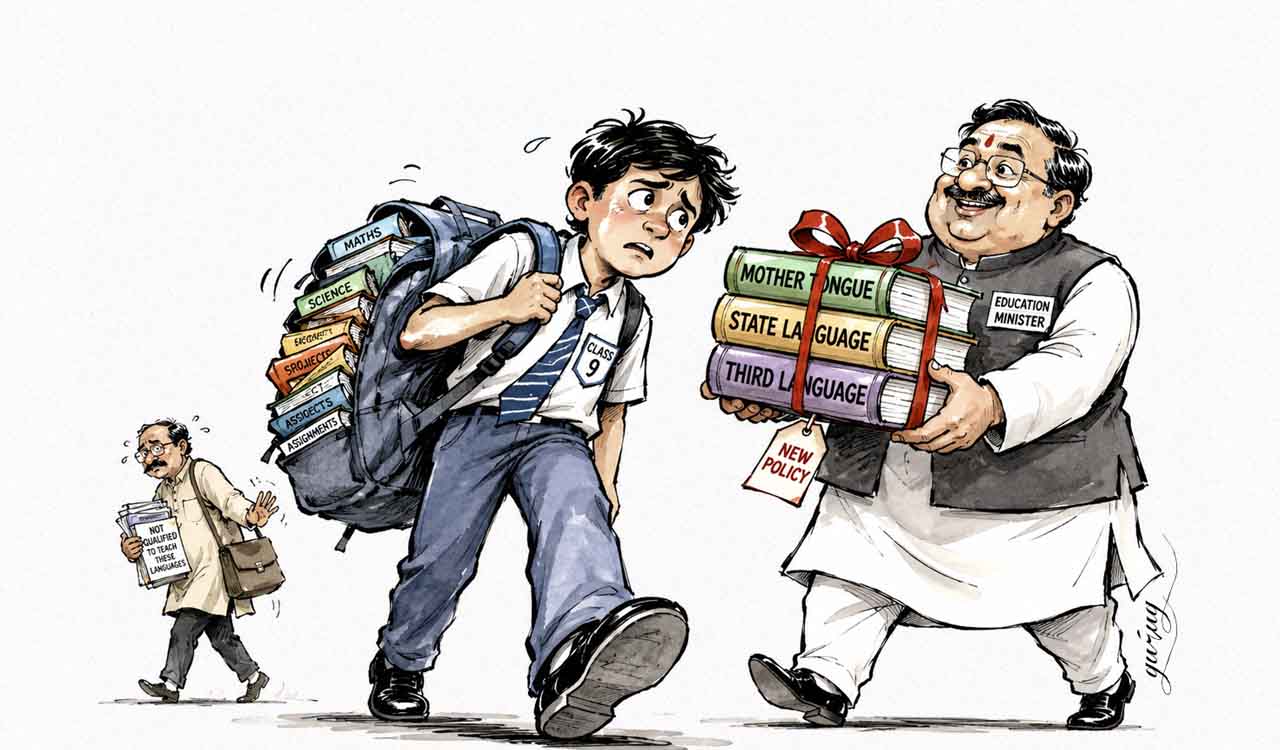
It is unfortunate that there has been a spate of unsavoury developments in the country’s education sector. The leak of NEET question papers, followed by the chaos due to the hasty implementation of CBSE’s OSM (On-Screen Marking) system, has adversely impacted lakhs of students, eroding the very credibility of the system. It is unfortunate that another policy decision of the government, the three-language policy for class 9 of CBSE, is causing anxiety and uncertainty among students, teachers and parents.
The new education policy of the government envisages that under the CBSE framework, students have to study three languages, where at least two must be Indian. Students can choose their mother tongue, the State language, plus a third language. In other words, they can pursue any two Indian languages and a foreign language. The logic behind the three-language policy is that multilingualism is an added educational advantage, and implementing it will fully benefit students.
It is generally argued that learning additional languages enhances students’ cognitive development and prepares them for future growth. Studies testify that learning multiple languages strengthens brain function, reasoning flexibility, problem-solving abilities and greater adaptability. Learning a different language, as we know, also helps students connect with people and regions beyond their own, serving as a bridge between communities. It enables students to understand and empathise with people from other regions and appreciate their sensitivities.
Language is an effective tool in the nation-building process. History is replete with examples of how Spain, Portugal, France and England emerged as national-states in Europe as early as the 15th century on the basis of language.
Practical Hurdles
While the benefits of multilingualism are undisputed, implementing the policy is beset with several practical challenges. States like Tamil Nadu, West Bengal, and Karnataka view the policy as a ploy to impose Hindi on unwilling students.
Several regional political parties regard the policy with suspicion, arguing that the introduction of a particular language can become a means of political domination. In the past, this perception triggered several movements and agitations in the South against language policies.
Any major restructuring of the existing system should begin at the foundational stage rather than be introduced midway through the academic cycle
Education is on the Concurrent List, but a centralised policy like language in the educational curriculum undermines the federal structure. This was the main reason the erstwhile DMK regime in Tamil Nadu opposed the three-language policy so strongly. A new language is always welcome when pursued voluntarily, but is resented when imposed from above.
Rural-Urban Divide
An important aspect that has been overlooked is the rural-urban divide in matters of providing the needed infrastructure, teaching aids and qualified faculty to teach new languages. While corporate and private schools can afford to hire language teachers at short notice, schools in rural areas, often run by modest management, may struggle to secure necessary teaching resources and faculty.
The policy could, therefore, widen the gap between the haves and the have-nots. More importantly, it risks deepening the divide between rural and urban students, since many educational policies are already urban-centric.
Any major restructuring of the existing pattern should be at the foundational stage rather than midway through the academic cycle. The present policy is intended to be introduced for Class 9 students from the current academic year, July 1. Such a significant change should have been at the Class 6 level, the entry point to secondary education, when students could be better prepared to adapt.
Lack of Willing Teachers
A major obstacle to the immediate implementation of the policy is the availability of qualified teachers. If a student opts for a language other than his own State language, there is a need for a trained teacher exclusively to teach that language. For example, in Hyderabad, if a student opts for Tamil, Kannada or Marathi, schools may struggle to find qualified teachers to teach those languages.
The teaching of new languages also requires appropriate textbooks and reading material. Given the short timeline, it is difficult to see how such resources can be made available in time. The introduction of foreign languages such as French, Spanish and German presents even greater challenges in terms of procuring proper teaching materials and hiring qualified teachers. There is also a pressing need for language laboratories in schools to facilitate effective language learning — a requirement that schools and policymakers have largely overlooked.
Language with Passion
Language is closely associated with emotion, purpose, tradition and culture. Love for a language leads to an understanding of its people, literature and cultural heritage, ultimately fostering a broader national outlook. Languages should be learned for their intrinsic values rather than imposed on unwilling learners for the sake of exams and grades.
It might be pertinent to cite an example of how students can learn new languages when motivated by genuine interest. Sir Thomas Munro, who introduced the Ryotwari land settlement in India as the Governor of Madras in 1807, learned Spanish while a young student at the University of Glasgow because he wished to read the famous novel Don Quixote in its original language.
It would be prudent for the government to consider the views of educational planners and stakeholders in a dispassionate manner before implementing the new language policy for the current Class 9 students.
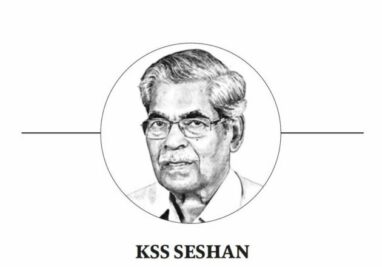
(The author is retired Professor of History at the University of Hyderabad)

Related News
-

Opinion: Politics of India-US trade ties — can strategic convergence survive economic friction?
-
Opinion: Uncounted and Unprotected — India’s seasonal migrants and Digital Census
-
Opinion: Poverty has no caste—the unspoken story of India’s Brahmins
-
Opinion: India’s undersea cable security gap—what China got right