Opinion: Who is fetching the water in India?
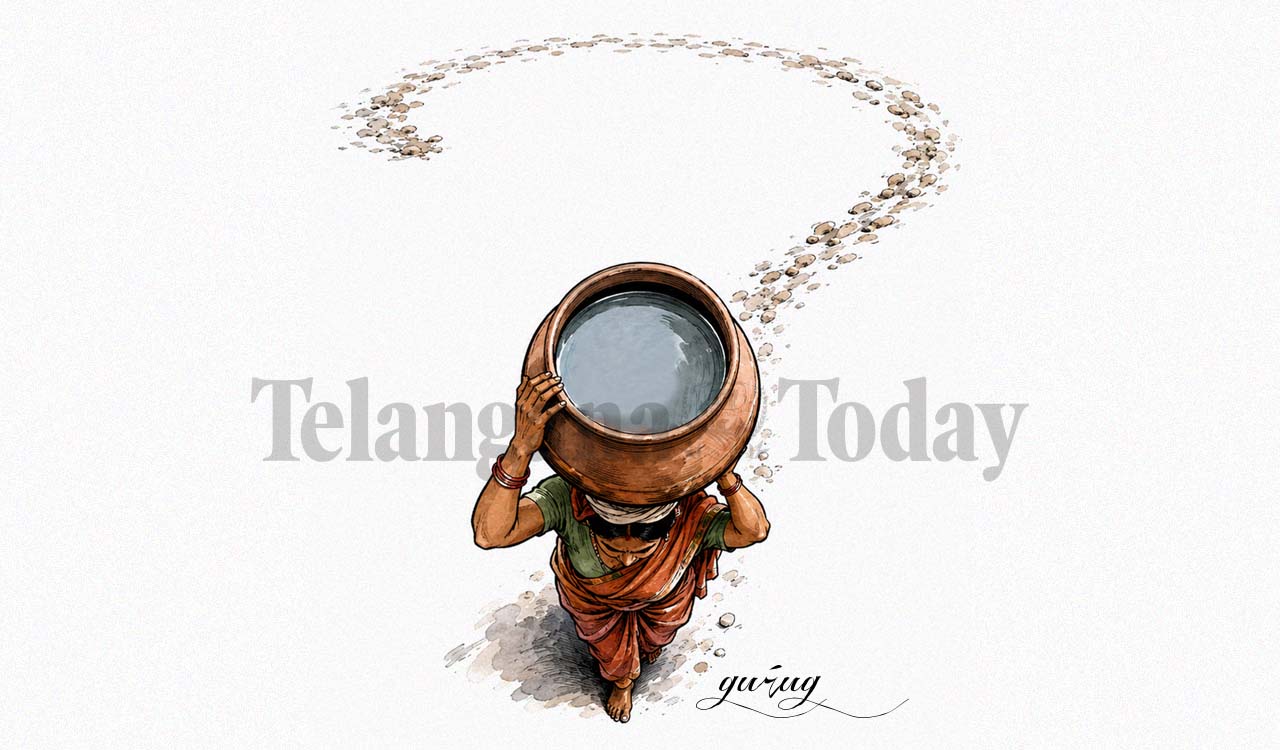
India’s water crisis is also a gender and labour crisis. The unpaid burden of fetching water costs women time, education, income, and opportunity—and demands policy recognition


By Sushanta Kumar Mahapatra and Madan Meher
As India confronts rising temperatures, worsening heatwaves, and growing water scarcity, a silent economic crisis is unfolding inside millions of homes. It is not reflected in GDP growth rates, employment statistics, or stock market movements. Instead, it is measured in hours spent fetching water, caring for exhausted family members, and sacrificing paid work to keep households functioning. And overwhelmingly, that burden falls on women.
Also Read
India’s water crisis is no longer merely an environmental or infrastructure problem. It has become a labour market and gender issue. When taps run dry, or groundwater levels collapse, women absorb the shock through unpaid labour, lost wages, deteriorating health, and reduced economic opportunities. In effect, India’s fragile water system is being sustained by women’s invisible work.
The scale of this unpaid burden is staggering. According to the Time Use Survey 2024 released by the Ministry of Statistics and Programme Implementation (MoSPI), female participants aged 15–59 years spend about 305 minutes a day on unpaid domestic services and another 140 minutes on unpaid caregiving activities. Men spend substantially less time on such work. These numbers reveal more than household inequality; they expose how millions of women lose productive time because essential public services remain inadequate.
Water scarcity deepens this inequality. In households without reliable water access, women are usually responsible for collecting, storing, rationing, and managing water for cooking, cleaning, and caregiving. According to UN-Water and the WHO-UNICEF Joint Monitoring Programme (2023), in two out of three households globally without water on the premises, women are the primary water collectors. Meanwhile, the UNESCO World Water Development Report 2026 estimates that women and girls worldwide spend 250 million hours every day collecting water.
Hidden Labour Crisis
India represents one of the clearest examples of this hidden labour crisis. The NITI Aayog Composite Water Management Index (2018) warned that nearly 600 million Indians face high to extreme water stress. Even if the estimate is several years old, the broader trend has only become more alarming as climate change intensifies droughts, heatwaves, and groundwater depletion across several states.
When taps run dry or groundwater levels collapse, women absorb the shock through unpaid labour, lost wages, deteriorating health, and reduced economic opportunities
But water scarcity is not only an environmental issue. It creates what economists describe as “time poverty.” Hours spent walking long distances for water are hours lost from paid employment, education, skill development, rest, or entrepreneurship. Before asking why millions of Indian women remain outside the workforce, policymakers must ask a more uncomfortable question: who is fetching the water?
India already struggles with one of the world’s lowest female labour force participation rates among major economies. Yet debates on women’s employment rarely acknowledge the enormous amount of unpaid care work linked to water insecurity. In rural India, women often wake before sunrise to stand in queues for water tankers or walk kilometres carrying heavy containers. In urban informal settlements, unreliable municipal supply forces women to organise their daily lives around uncertain water timings.
This unpaid labour remains largely invisible in economic policymaking because it is not counted as “productive work.” Yet households, communities, and even local economies depend on it. Women’s invisible labour compensates for inadequate public infrastructure, allowing households to survive despite worsening water stress.
Climate Change Taking Toll
The burden is also becoming more severe because of climate change. Heatwaves increase household water demand while simultaneously worsening dehydration, exhaustion, and illness. Women then shoulder additional caregiving responsibilities for children, elderly family members, and outdoor workers affected by extreme heat. Climate stress, therefore, expands unpaid care work without increasing incomes or state support.
This is where India’s climate debate intersects with the care economy in a powerful but under-recognised way. Climate adaptation policies continue to focus primarily on infrastructure, agriculture, and disaster management. Far less attention is paid to how climate-related water stress redistributes labour within households, especially onto women.
The irony is striking. Women’s unpaid labour effectively subsidises weak public infrastructure. When water systems fail, households survive because women compensate through additional work. The economic costs, therefore, remain hidden from governments, even though women pay through lost opportunities, physical strain, and reduced autonomy.
Economists have long argued that unpaid care work remains undervalued, yet India’s water policies rarely recognise it as a labour or gender issue. Discussions on dams, irrigation, and groundwater extraction often ignore the invisible burden placed on women who spend hours managing household water needs.
Policy Blind Spot
This is a serious policy blind spot. Improving water access is not just a welfare measure; it is an economic investment. Reliable water infrastructure can reduce unpaid labour, improve women’s workforce participation, and expand opportunities for education and paid employment.
Schemes such as the Jal Jeevan Mission have improved rural tap-water access, but reliability, affordability, and groundwater sustainability remain major concerns. India must therefore rethink water policy through the lens of labour and gender economics. Investments in piped water, rainwater harvesting, and climate-resilient infrastructure are not merely environmental priorities — they are essential for reducing invisible labour and strengthening women’s economic freedom.
GDP may not count unpaid care work, but households and economies depend on it every day.
What is not counted is often not prioritised. India cannot seriously discuss women’s empowerment, labour-market inclusion, or demographic dividends while ignoring the unpaid care burden intensified by water scarcity. Nor can climate adaptation policies succeed if they fail to recognise that women are absorbing the human costs of environmental stress inside households.
Because when water disappears, women do not simply lose access to a resource. They lose time, opportunities, income, education, and autonomy.
And until India counts women’s unpaid water labour, it will continue to underestimate both its water crisis and its care economy.
(Sushanta Kumar Mahapatra teaches Economics at ICFAI Foundation for Higher Education, Hyderabad; Madan Meher teaches Economics at Amity Business School, Amity University, Chhattisgarh)

Related News