Pahalgam Attacks: Can India suspend Indus Waters Treaty, What can Pakistan do?
The Foreign Secretary Vikram Misri said, "The Indus Waters Treaty of 1960 will be held in abeyance with immediate effect until Pakistan credibly and irrevocably abjures its support for cross-border terrorism."


Hyderabad: India has taken a stern stance by deciding to pause the Indus Waters Treaty (IWT), which has stood strong since 1960. The decision follows the brutal terrorist attack in Pahalgam in Jammu and Kashmir that claimed the lives of 26 persons.
The Foreign Secretary Vikram Misri said, “The Indus Waters Treaty of 1960 will be held in abeyance with immediate effect until Pakistan credibly and irrevocably abjures its support for cross-border terrorism.”
Also Read
What is Indus Water Treaty?
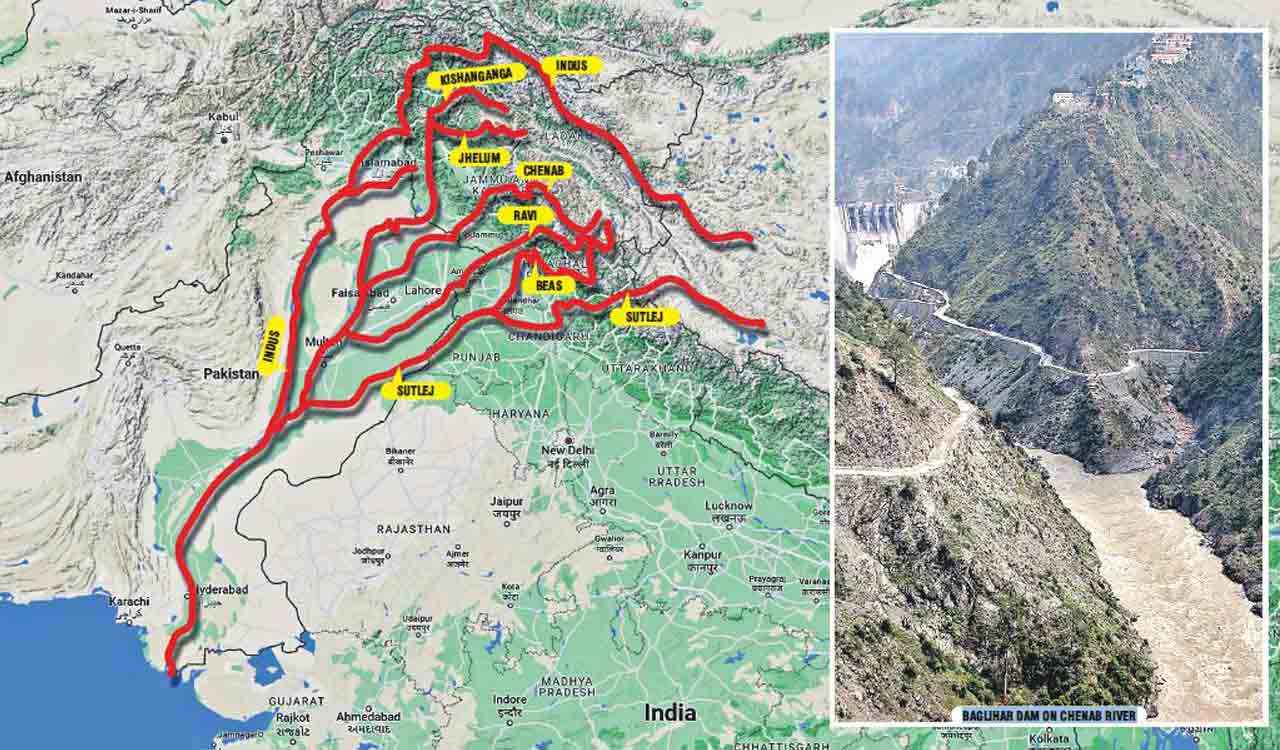
The Indus Water Treaty (IWT) is a water-distribution treaty between India and Pakistan arranged and negotiated by the World Bank. The treaty talks about the terms to use the water available in the Indus River and its tributaries by both the countries.
According to the treaty, which was signed by the then Prime Minister Jawaharlal Nehru and the then Pakistan Prime Minister Ayub Khan in 1960, India gets control over the three Eastern Rivers – Beas, Sutlej and Ravi, while the control over the waters of three Western Rivers – Indus, Chenab and Jhelum – is given to Pakistan.
Although much of the Indus system flows through Indian territory, Pakistan receives around 70% of its water, while India uses about 30%. India is permitted to use the western rivers for limited irrigation and unrestricted non-consumptive purposes like hydropower generation, navigation, and fisheries.
The treaty was essential for post-partition stability, as Pakistan, being the downstream nation, feared India could potentially disrupt its water supply during conflicts.
Can India legally exit the treaty?
According the signed treaty, neither India nor Pakistan can unilaterally cancel the treaty or abandon the pact. Though neither party can exit from the treaty nor it can stop the flow of water entirely, the treaty allows India to reduce the flow of water through provisions stated under Article 3 of the IWT.
However in cases of such cancellation or non-cooperation, the 1969 Vienna Convention on the Law of Treaties also comes into action to talk peace. The Vienna convention regulates the formation, regulation and termination of treaties between any two sovereign States.
What’s next for Pakistan?
As India has unilaterally exited from one of the longest treaty citing security concerns, Pakistan can seek assistance and intervention from the Permanent Indus Commission (PIC), comprising commissioners from both the countries. PIC controls and resolves disputes that arise between the countries over water sharing.
Pakistan can also knock the door of World Bank which had initially negotiated the treaty in 1960.

Related News