Repeated fires in Hyderabad furniture stores expose serious safety violations
A series of recent fires in Hyderabad furniture stores and warehouses has raised serious concerns over safety violations, illegal cellar storage and lack of fire infrastructure, with officials warning that inflammable materials and blocked exits are turning many outlets into potential fire traps.
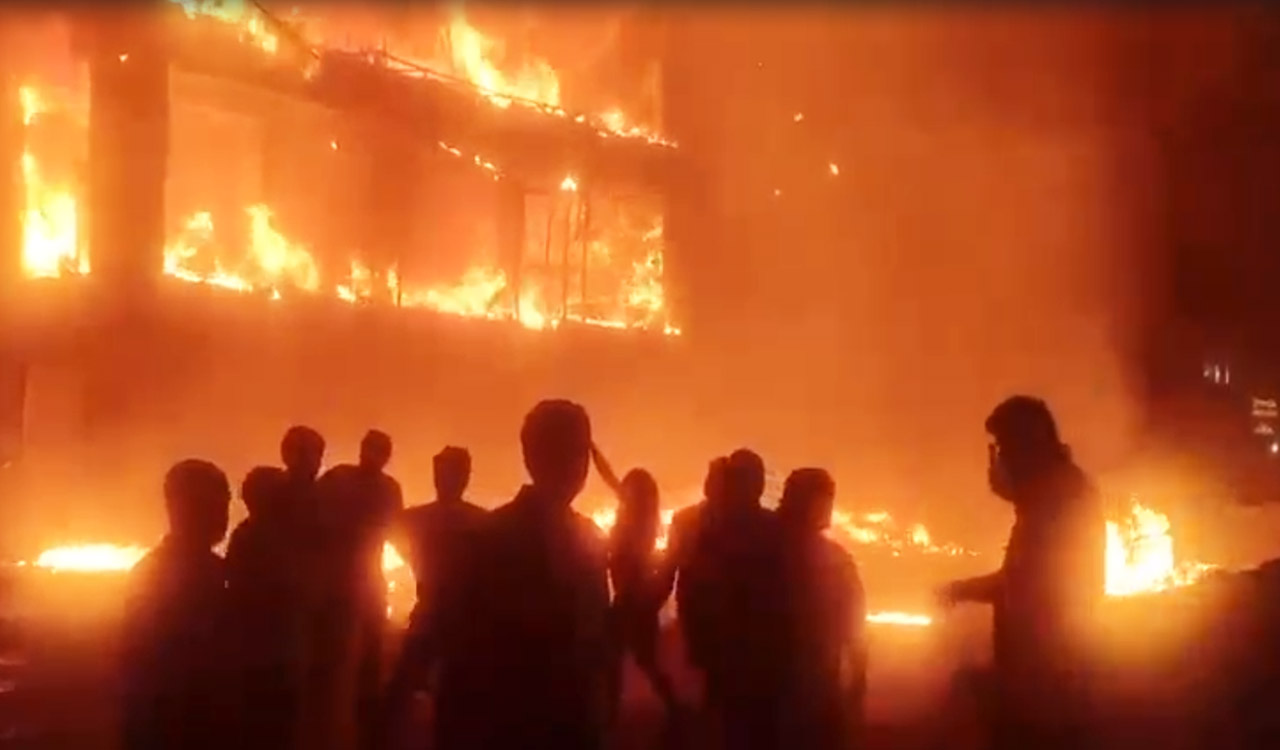


Hyderabad: The city has in recent months witnessed a series of fire accidents in furniture stores and warehouses, raising serious concerns over safety violations, illegal storage practices and poor infrastructure management.
Several incidents have revealed similar lapses that allow fires to spread rapidly, often putting lives and property at risk.
A massive blaze early this month destroyed more than twenty furniture sheds along the Pragathi Nagar – Miyapur road in Bachupally after flames reportedly spread through chemical based products stored inside the units.
Earlier in January, a devastating fire in a multistoried furniture building in Nampally claimed five lives after victims were trapped in a cellar that had been converted into a workshop and storage area without proper exits. On Thursday, a major fire was reported at Anu Furniture in Chandanagar where huge property was destroyed.
Investigations and preliminary findings by fire and police officials indicated that many furniture showrooms are illegally converting building cellars, originally meant for parking, into storage spaces for highly inflammable materials.
According to the Fire Department officials, wooden furniture, mattresses, foam, rexine sheets, adhesives, paint cans and other chemical products are often stacked in large quantities in underground areas, turning them into potential fire traps.
It was also found that in many shops, emergency access routes such as ramps and staircases are blocked with furniture stock. “This not only prevents occupants from escaping during emergencies but also hampers fire personnel from entering buildings quickly to control the flames,” said T Venkanna, District Fire Officer.
Another major concern is the lack of basic fire safety infrastructure in several stores. “Numerous furniture outlets continue to operate without valid fire safety clearances, functional extinguishers, smoke detectors or automatic sprinkler systems, increasing the risk of major damage once a blaze breaks out,” Venkanna said.
This apart, rising temperatures along with overloaded or faulty electrical wiring in buildings stacked with combustible goods increase the chances of short circuits, which are suspected to be a common trigger behind many recent fires.
In suburbs, unauthorised temporary furniture sheds have emerged as a major hazard. These makeshift structures, usually built with tin sheets and closely packed together, allow fires to spread quickly from one shop to another.
Following such incidents, authorities had earlier taken up intensified inspections briefly across the city. Enforcement teams from GHMC have begun sealing establishments found violating fire safety norms, particularly those using cellars as warehouses or operating without mandatory safety systems. However, not much impact is felt on the ground.

Related News