Rewind: Raghu Rai — the candid chronicler of India’s soul
From iconic portraits to moments of tragedy, Raghu Rai’s six-decade journey captured the spirit of a nation, proving that while photographs fade, truthful images endure as lasting witnesses
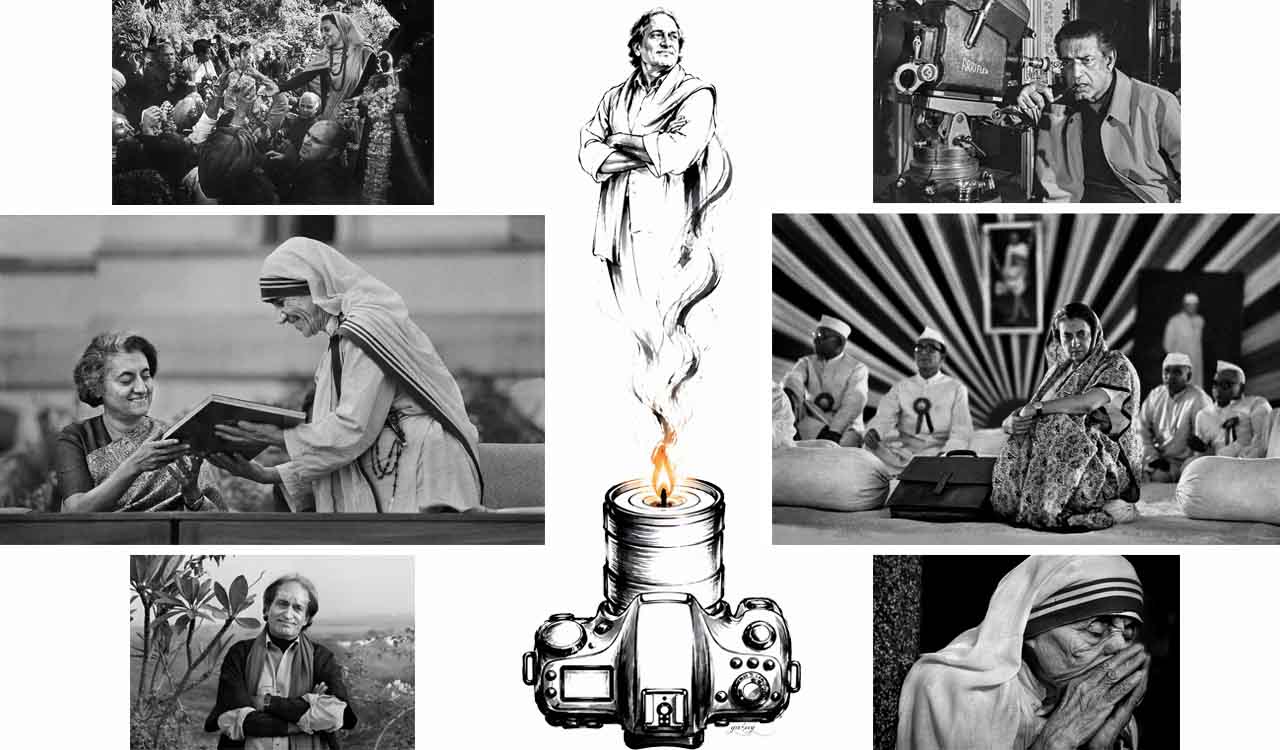


By N Shiva Kumar
The journey from the grainy romance of black-and-white film in the 1960s to the seductive lure of colour films of the 1970s, through the luminous magic of Kodachrome transparencies, and more recently, into the relentless immediacy of the digital age, spanning six unbroken decades, is no ordinary feat. It is a saga of seeing, feeling, and enduring, captured photogenically by Raghu Rai, a master craftsman who passed away at 83 on April 26. He was not merely a photojournalist, but a diligent and candid chronicler of India’s soul, a man who captured fleeting truths in timeless frames.
Also Read
A realistic reckoning of Raghu Rai’s life behind the lens reveals staggering scale and even sharper selectivity. Even at a modest rhythm of 100 frames a day across 200 working days a year, he would have produced 20,000 images annually — easily crossing well over a million in six relentless decades. That is a conservative estimate, as in moments of conflict, catastrophe, and political churn, his shutter would have fired far more, especially in the liberating surge of the digital era.
Yet the real story lies not in volume but in verdict. From this ocean of images, only a razor-thin slice, perhaps a few thousand, survived his uncompromising eye to define his legacy. From millions of moments, only the most piercing endured, appearing in newspapers, magazines and over two dozen coffee-table books.
First Shot at 23
Trained as a civil engineer yet drawn to music, Raghu Rai stumbled into photography at 23, thanks to a nippy-nudge from his elder brother S Paul, an established photographer himself, who placed a modest camera in his restless hands. What followed was nothing short of alchemy. Like a fish discovering water, Raghu Rai instinctively took to the lens, shooting the ordinary until it turned extraordinary.
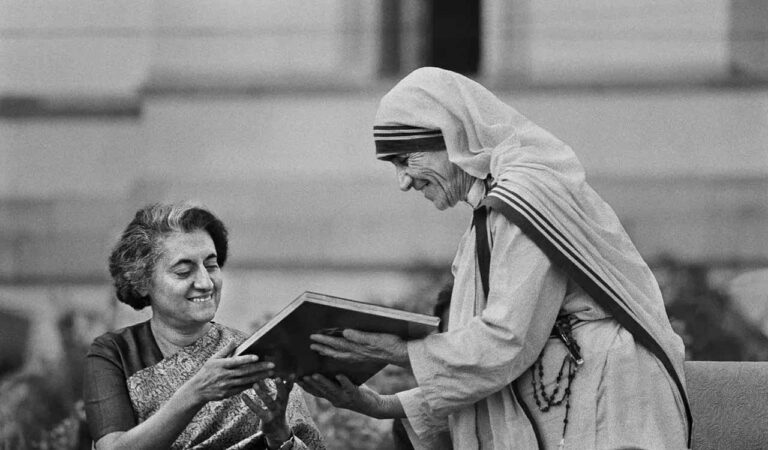
Former Prime Minister Indira Gandhi and Mother Teresa. Photos: Raghu Rai
One early, arresting image — a tight, unblinking close-up of a wide-eyed foal — caught his brother’s discerning eye. It was swiftly dispatched to The Times of London, published without hesitation, and rewarded handsomely. That moment was ignition. Encouraged further, Raghu Rai began sending his work to Indian newspapers, where his images were received with equal fervour. Those first affirmations, sparked and steered by his brother, set him on a lifelong pursuit of light, shadow, and truth.
Though an ardent admirer of Raghu Rai’s instinctive, unvarnished frames, I never quite crossed that final mile to meet him in Delhi, where I lived for over 30 years. Instead, I encountered him where it mattered most, in his workshops, words, images, and in the charged silence of his lectures. I attended a few, the last in Hyderabad barely a year ago, measured, reflective, yet crackling with the same restless eye that defined his work.
In 2012, a quirk of fate brought me close to S Paul when he served as a jury member for the PETROTECH International Photography Competition, which I coordinated, hosted by Indian Oil Corporation. We connected instantly as he peeled back layers to reveal the quiet architect behind the legendary Raghu Rai. He spoke of how he shaped and sharpened his brother’s early gaze, instilling discipline, ethics, and a near-sacred photographic etiquette. In those conversations, it became clear that Raghu Rai’s brilliance was no accident but had been patiently kindled, guided, and grounded long before the world took notice.
Born in 1929 in Jhang (now in Pakistan), S Paul was a towering pioneer of modern Indian photojournalism. As Chief Photographer of The Indian Express from 1962 to 1988, he defined editorial photography with precision, patience, and an instinct for the decisive moment. He passed away on August 16, 2017, just days short of 88.
Born Raghunath Rai Chowdhry, Raghu Rai carried a name rooted in lineage, but it was S Paul (born Sharampal Chowdhry), who first edited identity with the instinct of an artist. Sharampal became “S Paul”, a leaner, sharper, more stylish. Both brothers quietly dropped the weight of their surname, Chowdhry. They were often mistaken for one another. But beyond the resemblance lay a deeper overlap of characteristics: a shared eye, a shared discipline, a shared aesthetic grammar. One refined the name; the other redefined the gazelle’s gaze.
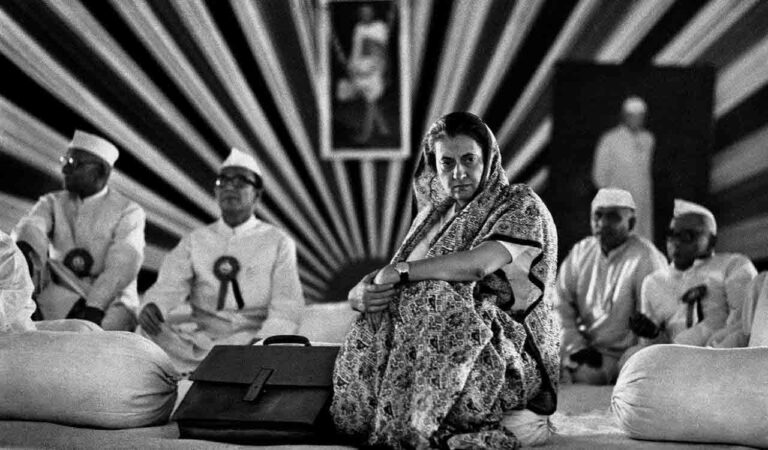
Indira Gandhi at a press conference.
Formidable Entry
Raghu Rai entered photography in 1965 with disarming force. Within a year, he was already steering the visual narrative as Chief Photographer at The Statesman. By 1972, his images had travelled to Paris and struck a deep chord with the legendary lensman Henri Cartier-Bresson, who ushered him into Magnum Photos, a prestigious, international image-cooperative that documents world events with high-quality visual storytelling.
Raghu Rai built a rare trust with two towering figures, Indira Gandhi and Mother Teresa. Both recognised his eye and instinct. In those guarded spaces, Raghu Rai did not intrude; he witnessed. He distilled authority and compassion into frames of quiet intensity. With both women commanding global attention, his images travelled far and wide, carrying the weight of their presence and the pulse of their times. His coffee-table books on Indira Gandhi and Mother Teresa remain visual epics.
In 1976, he stepped away from The Statesman to shape the visual grammar of a newly launched Sunday magazine in Calcutta. His coverage of the 1977 Andhra Pradesh super cyclone marked his first major engagement with large-scale human tragedy. Sent into the ravaged coastal belt, Raghu Rai walked into a world that seemed emptied of breath, villages flattened into memory, boats hurled inland like wreckage, carcasses caught in uprooted trees, and a silence heavy with loss. His frames held survivors in their rawest truths with only an unblinking intimacy that placed the viewer inside the wound. That assignment did not just document a disaster; it also defined a photographer. It hardened his instinct, sharpened his empathy, and set the course for a lifetime of witnessing.
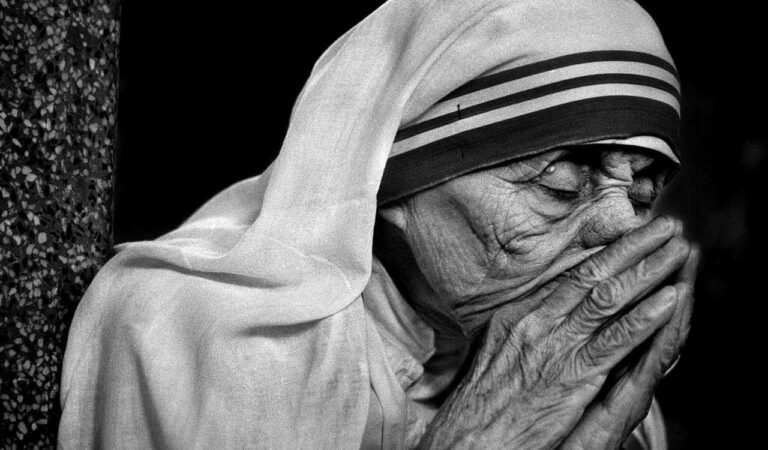
Mother Teresa.
By 1980, he moved to New Delhi and was at the nerve centre of the fledgling India Today magazine, helping define its visual identity in its formative years. Between 1982 and 1991, his photo essays on India’s social, political, and cultural churn were fierce, layered, and impossible to sidestep. Thereafter, the era of photo features started across Indian mainstream and vernacular publications.
Recognition came early and never ceased. He received the Padma Shri in 1971, and his 1992 National Geographic cover story on wildlife management earned global acclaim. His work appeared in leading international publications and exhibitions worldwide. Raghu Rai was not merely a participant in global photography but was one of its arbiters, serving multiple times on the jury of the World Press Photo and UNESCO’s International Photo Contest. A photograph of a dozen vultures set against the backdrop of the Taj Mahal revealed his relentless eye and restless conscience—qualities that made his images not just speak, but scream, and endure.
Honest Image
What set him apart was his refusal to mimic. He transformed documentation into experience — crowds into choreography, streets into living tapestries and faces into narratives. The age-old saying, “One photo is equivalent to 1,000 words”, magically transformed to 10,000 words,
Raghu Rai’s photos of the Bhopal Gas Tragedy in 1984 remain among the most haunting visual records of human suffering. He did not sensationalise the tragedy; instead, he lent it dignity. His images carried grief, anger, and an almost unbearable intimacy, compelling viewers to confront the human cost of industrial negligence. Raghu Rai believed: “If responsible journalism is the first draft of history, then photojournalism is the first evidence of that history being lived.” He disliked both Bollywood and what he termed ‘Pollywood’—his name for politics, and emphatically said both project fantasy far away from truth.
Raghu Rai’s work dares the next generation to look deeper. He had an eye that refused to blink and a language that spoke right in the bright light of Indian photojournalism. As he said, “Photographs die a daily death, but immortality belongs only to the honest image.”
(The author is a wildlife writer and photographer)

Related News