Rewind: The reluctant giant — the listing Tata Sons never wanted
Tata Sons faces pressure to list after RBI’s NBFC classification. Can it remain a philanthropic guardian, or will it reshape into a transparent entity answerable to shareholders and markets?



By Praveen Bose
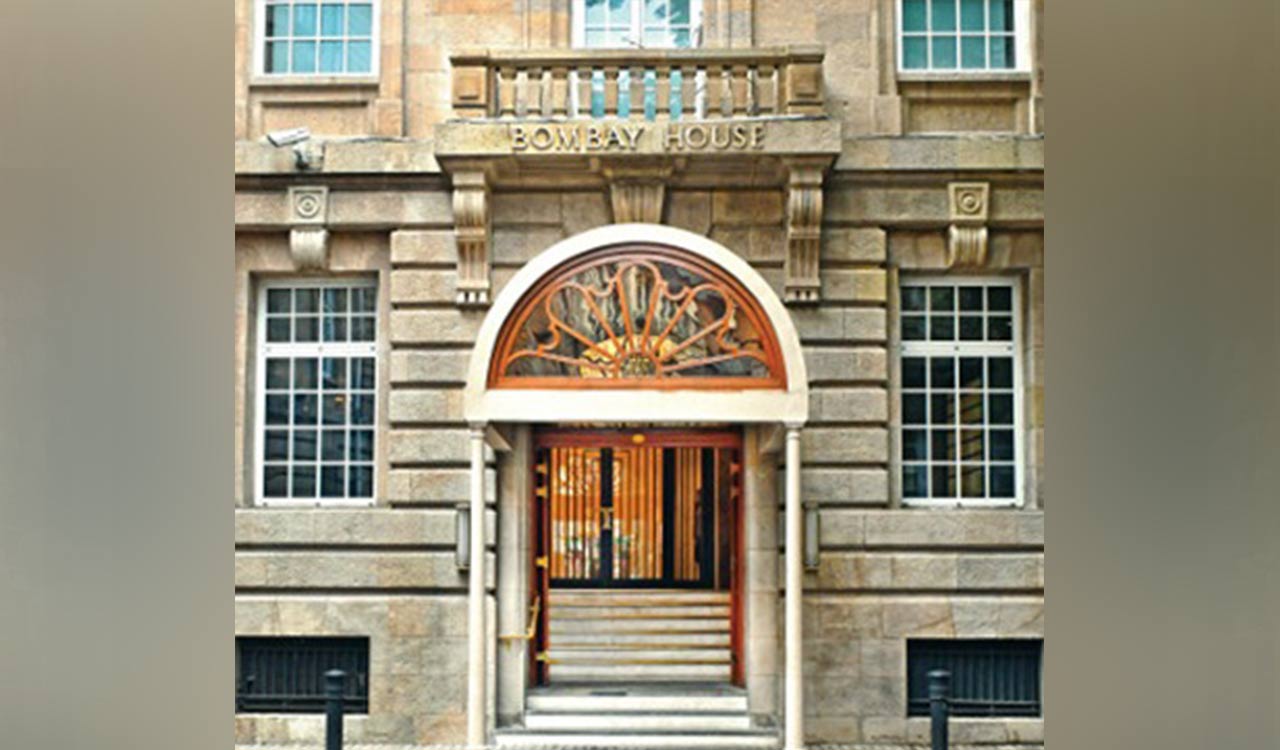
It was one of those heavy, sweat-soaked Mumbai mornings, early 2024, when an invisible tremor passed through the hushed corridors of Bombay House, the Tata Group’s venerable headquarters. Not the kind that cracks plaster, but the sort that quietly rattles the bones of an institution. A single decision by the Reserve Bank of India in 2022 had lit the fuse on something the group had side-stepped for generations: the very real prospect of going public.
Also Read
The trigger seemed innocuous at first. The RBI had classified Tata Sons had classified Tata Sons as an ‘upper-layer NBFC’, a tag reserved for large non-bank financial companies that are simply too big to stay in the shadows. The RBI deadline for mandated listing had unsettled the group. The rule came with no room for nostalgia: list on the stock exchange within three years, no extensions, no exceptions.
Under RBI rules, Upper Layer NBFCs are required to list on stock exchanges within three years. For almost any other company, that’s a straightforward strategic move. For Tata Sons, it felt less like a milestone and more like a challenge to its very soul.
To grasp why, you have to travel back to where the story began. Ever since Jamsetji Tata set the first stone in 1868, Tata Sons has been more than a holding company; it has been a custodianship. Two charitable trusts, the Sir Dorabji Tata Trust and the Sir Ratan Tata Trust, together own roughly 66% of the equity. This was never about building personal fortunes. The design was deliberate: funnel profits into philanthropy, national advancement, and impossibly patient industrial dreams.
The Taj Mahal Palace hotel, Tata Steel, Tata Motors. These weren’t born from quarter-by-quarter targets. They were sown with a kind of capital that wouldn’t survive the ritual of endless earnings calls. Inside Bombay House, the real anxiety has never been about public shareholders as people. It’s the quiet dread that listing would swap a legacy measured in decades for a scorecard judged every 90 days.
Tussle Over Identity
So the internal debate was never just about ticking a regulatory box. It was, and still is, a tussle over identity.
On one side stand the keepers of that legacy. Noel Tata and the leadership of the Tata Trusts, who together command a majority voice, have been openly uneasy. Their logic is rooted in memory: the group’s greatest bets would never have flourished under the relentless glare of short-termism. They point to Tata Consultancy Services, today a technology bellwether, but once a fragile idea that survived only because it was allowed to grow unseen, nourished by years of invisible investment.
ON THE TABLE
• Venu Srinivasan, a powerful board member, sees listing as arithmetic, not betrayal
• Shapoorji Pallonji Group, a significant minority stakeholder, supports listing for liquidity and valuation clarity
For them, a public listing isn’t primarily a financial event. It’s a shift in the institution’s gravity—a slow erosion of the freedom to think beyond the next analyst call. Ratan Tata himself long insisted the group’s purpose stretched far wider than shareholder returns. The Trusts echo that: listing risks turning a calling into a ticker.
Across the table sits a very different conviction. Voices like Venu Srinivasan, a powerful board member, don’t see betrayal; they see arithmetic. The Tata empire is not just a collection of mature, self-sustaining legacy businesses. It’s a sprawling ambition, hungry for capital: a Rs 91,000-crore semiconductor plant in Dholera, a starkly expensive overhaul of Air India’s fleet, an electric pivot at Tata Motors, and deepening bets on digital infrastructure.
Even the Trusts’ formidable reserves and internal accruals can’t stretch indefinitely. Listing these, proponents argue, isn’t giving up; it’s unlocking a public reservoir of funds precisely to preserve the group’s long-term vision, only now with transparent governance and far deeper pockets. In their view, disciplined public scrutiny could even strengthen, not weaken, the group’s backbone.
Unresolved Wound: Shapoorji Pallonji Group
Then there’s the unresolved wound: the Shapoorji Pallonji Group. Under Shapoor Mistry, they hold a significant minority stake, and this debate cuts closer to the bone. Years after the devastating boardroom rupture — Cyrus Mistry’s abrupt unseating as chairman in 2016, the scorched-earth legal battles, the financial strains that followed — their shares remain locked inside a private structure that offers no obvious exit.
The Mistry family’s attempts to raise funds against those shares have repeatedly stalled; a private company’s valuation is stubbornly opaque, making lenders nervous. For them, a listing tastes like liberation, a chance to finally crystallise value, or walk away cleanly. It would turn a bitter, illiquid inheritance into something transparent and tradable, perhaps closing one of India Inc’s most painful chapters.
ACROSS THE TABLE
• Noel Tata and Tata Trusts resist listing to protect long-term legacy control.
• Ratan Tata upheld purpose over shareholder returns; trusts echo this philosophy: listing risks turning a calling into a ticker
N Chandrasekaran, Caught in the Middle
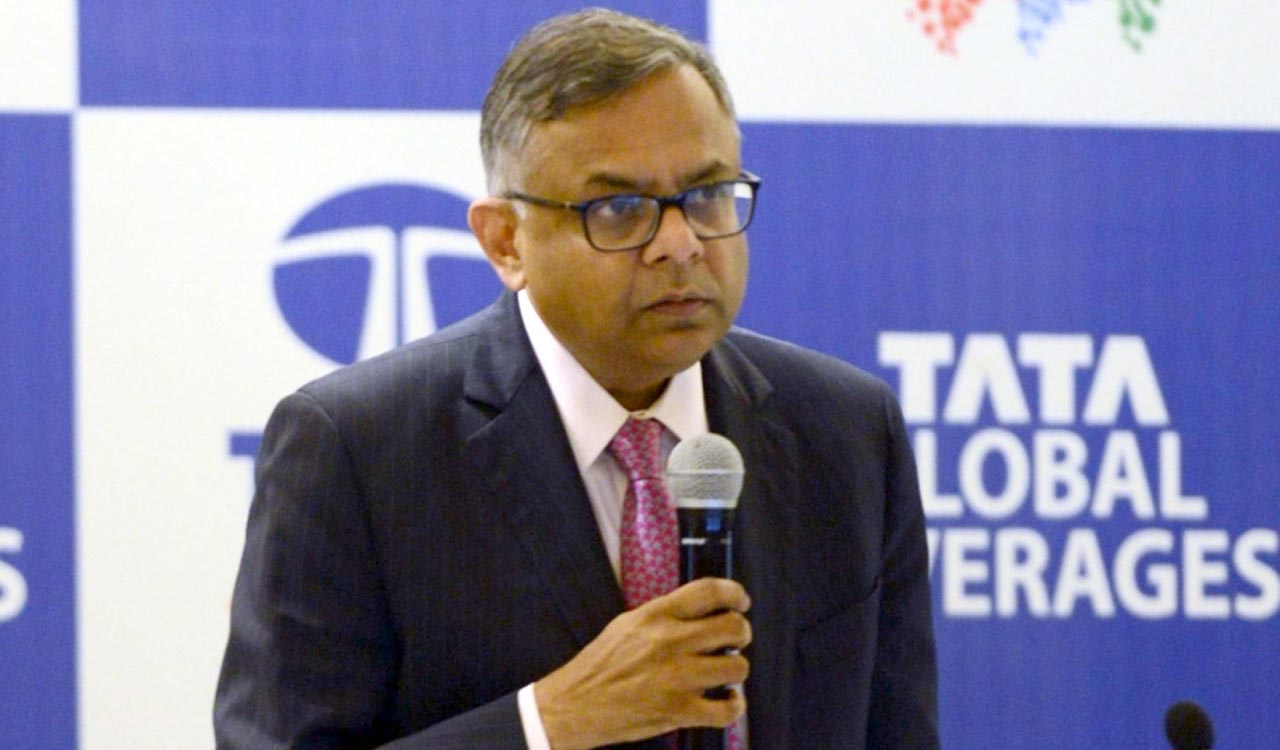
Caught in the middle, as always, is Natarajan Chandrasekaran, the group’s chairman. He’s less an ideologue and more a pragmatist. He reads the regulator’s intent, the Trusts’ anxieties, the minority’s pleas— all with the calm of a man who once steered TCS, one of the country’s most watched and widely held listed companies. He knows public markets intimately, but he also knows the Tata DNA. Those close to him whisper that his instinct has been to prepare for a listing if it becomes inescapable, while fighting fiercely to avoid being cornered into one under somebody else’s terms.
That tightrope has only grown more precarious with time. By September 2025, the RBI’s deadline slipped past with no IPO. As of May 2026, Tata Sons remains an NBFC; the regulator’s pressure is still present, but no immediate crackdown is visible. Behind the boardroom doors, a quiet ingenuity has been at work: trimming debt, reshaping assets, exploring every financial re-engineering possible to wriggle out of the “upper-layer” net altogether.
The whole upper-layer framework was conceived after 2021 to force systemically important shadow banks into the same sunlight as traditional banks. If you pose a risk to the system, the logic goes, you answer to the public. Most large NBFCs had grudgingly complied. But none carried the intricate, trust-woven architecture of Tata Sons.
Churn in Board
Meanwhile, the board itself has been shifting. Quietly, new independent directors with sharp regulatory and restructuring expertise have been brought in. It’s not a white flag. It’s more like storing sandbags before a flood, prudent preparation for a world where opacity is no longer an option.
What makes this moment so potent isn’t the RBI alone. It’s the way multiple forces are now bending inwards simultaneously. Capital appetites are ballooning just as patience from minority voices runs thin, and regulators show vanishing tolerance for legacy exceptions.
IN THE MIDDLE
• Natarajan Chandrasekaran, the group’s chairman, balances regulation, legacy, and market reality
• He understands both public markets and the Tata DNA
The real question humming through Bombay House now isn’t simply “Will they list?” It’s far more unsettling: can a trust-led, mission-first industrial house — built to nurture projects across generations — survive inside a global financial system that worships quarterly transparency? Elsewhere, family-controlled giants like IKEA or Bosch have crafted ingenious structures to balance purpose and markets. Tata Sons is now being asked to design its own answer, and the clock is ticking.
What was once whispered in closed rooms has become a stark, public crossroads. At the bottom, this isn’t just about an IPO now. It’s about what the institution chooses to become.
Can it stay a philanthropic guardian, sheltered from market noise and steered by century-long purpose? Or must it reshape itself into something more transparent, answerable to external shareholders and the pulse of the bourses?
For now, there’s no resolution, only momentum. The regulator keeps pressing. The Trusts keep resisting. Pro-listing voices keep building their case. And Tata Sons hangs between them, a reluctant giant being gently, but firmly, nudged into the light.
The story hasn’t reached its final act. But after 156 years, for Tata Sons, the question can no longer remain abstract. It’s unavoidable.
(The author is a former business journalist)

Related News