Rewind: Who tames the powerful? Power and restraint in an anarchic world
There is no universal inhibitor in global politics. Power must be restrained by both countervailing strength and political judgement


By Monish Tourangbam
In the latest Hollywood blockbuster Spider-Man: Brand New Day, the idea of a ‘universal inhibitor’—a device capable of suppressing extraordinary superhuman abilities—offers an irresistible political metaphor. In a world inhabited by beings whose powers exceed the capacity of ordinary institutions to contain them, the central problem is not merely how power is acquired, but how it is restrained. Who controls the inhibitor? Who decides when to activate it? And what happens when the person who possesses extraordinary powers also possesses the means to disable every restraint placed upon it?
Also Read
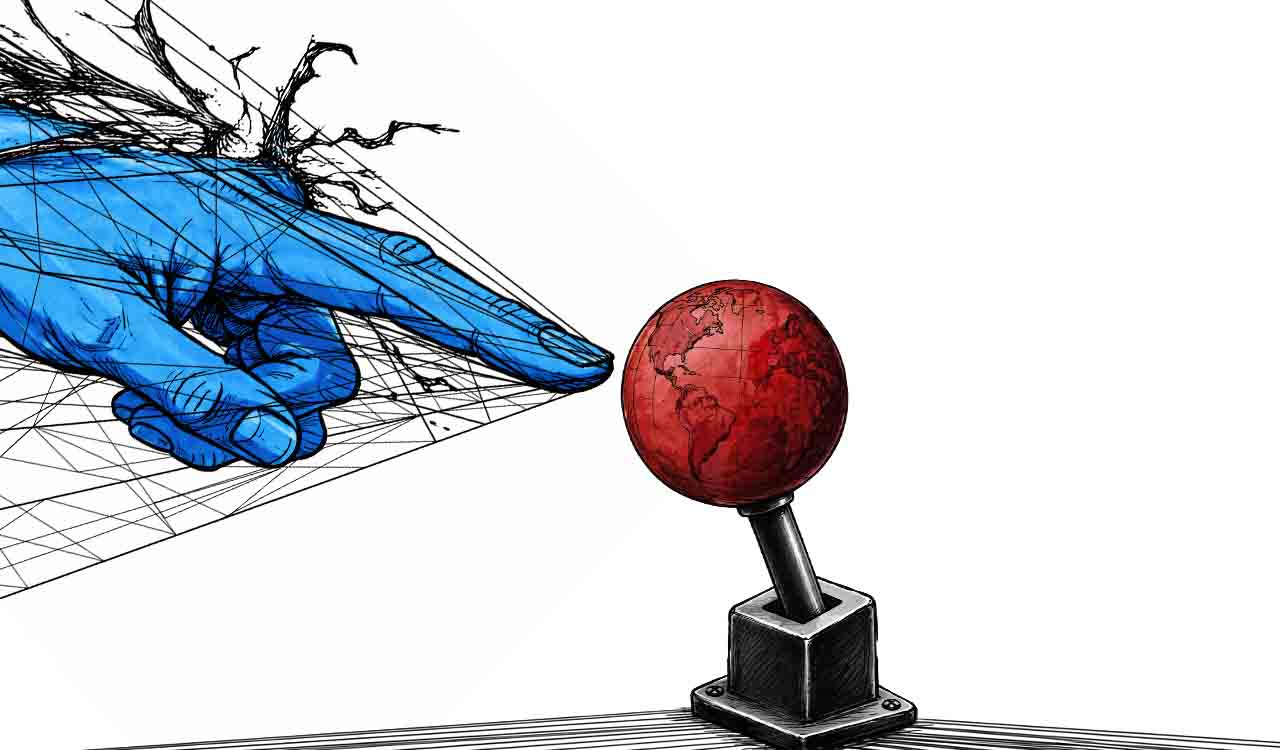
Strip away the superhero setting, and the dilemma is immediately recognisable. It has followed international relations through empires, revolutions, world wars and the nuclear age. How can the unrestrained and unchecked exercise of power be tamed? Does restraint arise from within, through institutions, political norms and the judgment of leaders? Or is it imposed principally from without, through the countervailing power of other states and the shifting regional and global balance of power?
The Inhibitor Within
There is no universal inhibitor in international politics. Within states, constitutions, legislatures, courts, elections and political norms seek to make power answerable and prevent even legitimate authority from becoming excessive. Yet these restraints become far less certain when power travels beyond national boundaries. In an anarchic international system — defined not by chaos but by the absence of a central authority above sovereign states —rules cannot be enforced consistently and equally across all actors.
International law establishes standards of conduct, institutions facilitate cooperation, and diplomatic norms generate expectations of restraint, but none constitutes a world government. Enforcement remains uneven, often reflecting the very distribution of power that these mechanisms are intended to regulate. Consequently, the most powerful states retain a greater capacity to interpret rules selectively, evade their constraints or apply them differently to themselves and others.
• Excessive power need not manifest itself through territorial conquest. States can weaponise interdependence, restrict access to technology, employ economic coercion or exploit asymmetric dependencies
Internal restraints can influence how states behave internationally. Democratic accountability, political culture, national memory, strategic traditions and public opinion can impose limits on the purposes for which national power is deployed. Even highly capable states do not exercise all the power available to them. Capability is filtered through legitimacy, historical experience and domestic consent. But internal restraint remains inherently uncertain because it is ultimately self-administered. Institutions can weaken, public opinion can change, and nationalism or perceptions of external threat can alter political calculations.
What one government considers an unacceptable use of power, another may regard as strategically necessary. For other states, therefore, security cannot rest entirely upon the expectation that the powerful will continue to restrain themselves. The inhibitor, in effect, remains in the hands of the actor whose power it is supposed to contain.
When Power Meets Its Match
This is why the external balance of power remains central to international relations. Power is often checked most effectively by countervailing power. States moderate their conduct not necessarily because they have become more virtuous, but because other actors possess the capacity to resist, retaliate or impose unacceptable costs. Alliances, military capabilities, economic coalitions and regional partnerships create counterweights, while deterrence rests on the assurance that aggression will not remain cost-free.
The balance of power is hardly a perfect mechanism because it can generate arms races, proxy conflicts and security dilemmas in which defensive measures are interpreted as threatening. Yet balancing persists because intentions are neither permanently benign nor fully ascertainable. States consequently respond not simply to declared intentions but to capabilities and concentrations of power. The greater the concentration, the stronger the incentive to hedge, align and balance.
A global order founded principally on self-restraint would require weaker states to trust that superior capabilities would not eventually be employed coercively. History offers little basis for building national security upon such confidence alone. Conversely, an order resting entirely upon external balancing risks becoming trapped in permanent competition, where every restraint is imposed through countervailing force and institutions become instruments of rival power centres. The problem is not choosing absolutely between trust and resistance, but finding a framework in which each can discipline the limitations of the other.
• The balance of power is no longer merely a balance of armies. It is also becoming a balance of networks, standards, markets, technologies and strategic choices
More durable restraint, therefore, emerges from an interaction between power and rules. External balances raise the costs of excess, while institutions create mechanisms through which competition can be negotiated and moderated. International institutions cannot independently neutralise the power of major states, but they can shape how power is exercised and contested. They provide forums for negotiation, generate information, create reputational costs and enable coalitions to coalesce around shared rules. Their effectiveness, however, ultimately depends upon political support and an underlying distribution of power that prevents any single actor from disregarding them without consequence.
The New Power Game
This relationship has acquired greater importance in an era when power itself is becoming increasingly diffuse across multiple domains. Military strength remains central, but geopolitical influence now flows through technology, finance, supply chains, data, energy, infrastructure and control over critical resources. Excessive power need not manifest itself through territorial conquest. States can weaponise interdependence, restrict access to technology, employ economic coercion or exploit asymmetric dependencies.
The inhibitors of power must consequently become equally diverse. Resilient supply chains, technological partnerships, economic diversification, regional coalitions and institutional cooperation increasingly perform functions once associated primarily with military balancing. The balance of power is no longer merely a balance of armies. It is also becoming a balance of networks, standards, markets, technologies and strategic choices. These instruments widen the repertoire of restraint by reducing vulnerability and distributing leverage across a broader constellation of actors.
For materially less capable states, this transformation is particularly consequential. They can neither presume that norms alone will safeguard their autonomy nor rely exclusively on traditional military balancing. Their room for manoeuvre increasingly lies in strengthening regional institutions, building flexible partnerships and avoiding excessive dependence on any single centre of power.
• International institutions cannot independently neutralise the power of major states, but they can shape how power is exercised and contested
Contemporary balancing, therefore, rarely resembles the rigid alliance systems of an earlier era. It is increasingly selective, issue-based and spread across multiple domains. States may cooperate with one power on trade, another on technology and a third on security, while simultaneously strengthening domestic resilience. Such diversification is not an abandonment of strategic autonomy but a practical means of preserving it amid an increasingly contested and uncertain global order.
The challenge becomes most acute when a dominant power begins to treat restraint as weakness and rules as impediments. At such moments, appeals to responsibility are unlikely to suffice, and other states inevitably begin searching for counterweights. Yet the purpose of balancing should not be to replace one unrestrained concentration of power with another. It should be to restore limits within which competition can be managed, and cooperation sustained.
No Single Hero Can Tame Power
The central question of international relations is not whether self-restraint or the external balance of power provides the perfect inhibitor. Neither does. Internal restraint without external counterweights may collapse before ambition, while external balancing without political restraint can reproduce the very excess it seeks to contain. Rules require power behind them, but power also requires rules and political judgement if balancing is not to become an endless cycle of confrontation.
Unlike the imagined universal inhibitor of the superhero world, geopolitical restraint cannot be activated by a single device or entrusted to a single guardian. It must emerge from a distribution of capabilities that makes domination difficult, institutions that facilitate cooperation, and political judgment that recognises the limits of what power can sustainably achieve.
The enduring paradox of international relations is that power remains necessary to restrain power, but power alone cannot cultivate restraint. A stable global order requires both the capacity to confront excess and the wisdom to recognise limits. The most effective inhibitor is, therefore, neither wholly internal nor entirely external. It lies in the uneasy equilibrium between self-restraint and countervailing power; between the discipline a state accepts and the resistance the international system can credibly impose.

(The author is a Fellow at the Chintan Research Foundation, New Delhi)

Related News