Saina Nehwal credits rivalry with Sindhu for badminton’s rise in India
Saina Nehwal said her rivalry with P. V. Sindhu helped popularise badminton in India. She highlighted the importance of early training systems, school support for young athletes, and shared her views on fairness and evolving debates in sport.
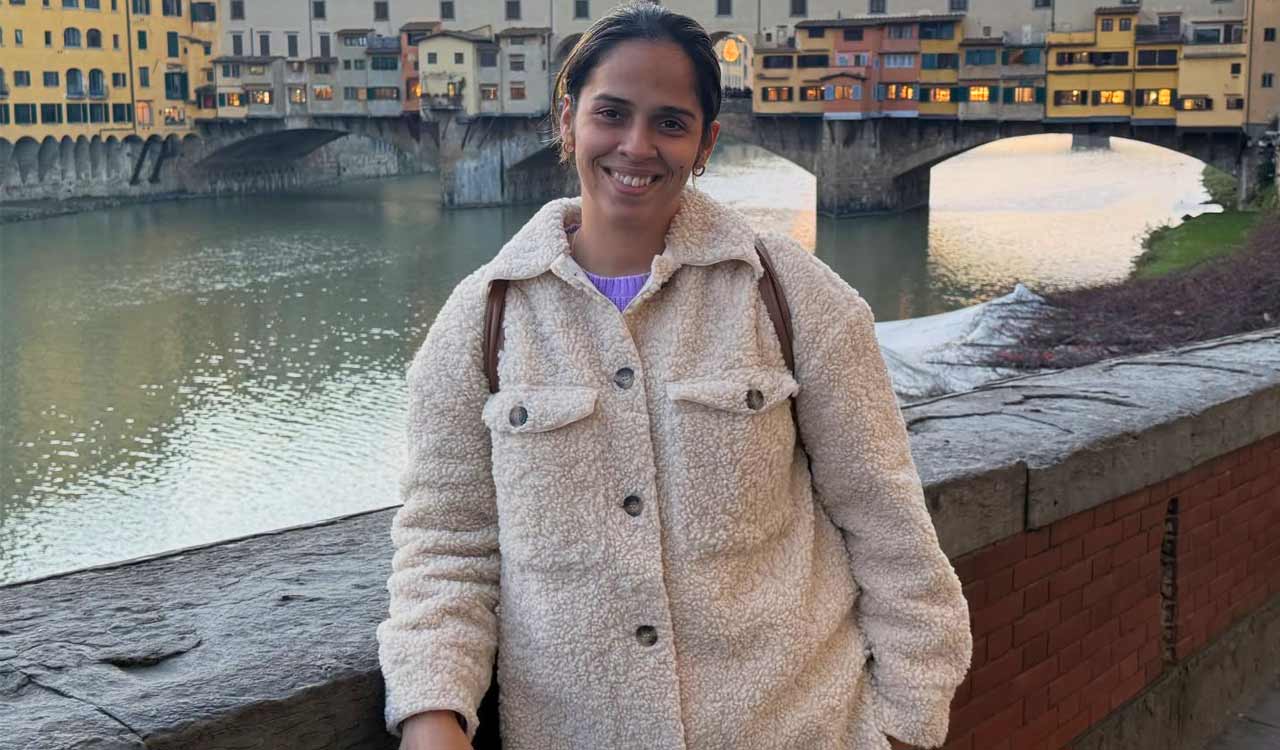


Hyderabad: Olympic medallist and former World No.1 Saina Nehwal reflects I.I.M.U.N.’s conversational podcast “Before I Became Me’, hosted by Rishabh Shah, on a defining phase in Indian sport—her years alongside P. V. Sindhu that helped bring badminton into the mainstream—while also speaking about the importance of early training systems and weighing in on the evolving debate around fairness in sport.
Looking back at that period, Saina said, “We both, I think, made each other very good players. When I look back, I think we both were good rally players, we both could attack very hard, and we could actually pull over such difficult matches. We both had similar qualities of playing tough matches.”
“ I think that era, the last 10–15 years, was very, very good because of her and me. We were winning back to back, people started knowing about badminton, and they began watching it like they watched cricket,” she said.
Speaking about how talent is shaped early on, Saina noted, “If he or she is capable of doing well, they should ideally come into the circuit at 14–15.” She added, “if schools can support kids, especially for those kids who cannot go to an academy and train, they can at least get facilities at school.”
“ If they get to play for one hour instead of just 30 minutes, and are taught something every day about a particular sportsperson, maybe show about them on the screen, about the game, what they train, it could be a cricket, badminton, it could be any sport, if you teach them how you teach them a particular subject, they will learn faster,” Saina explained.
“I observed and learnt smash from my parents, and I had never played badminton before that… So imagine how much you can learn just by observing,” she said.
Addressing the debate around gender transition in sports, Saina said, “In sports, if a man plays even after changing gender, he may still be physically strong. He may hit harder, jump better, and be faster.”
“ You need to understand from childhood what kind of gender is given to that person, and that is how you are actually divided, like men’s singles and women’s singles,” she said.
“It’s a very difficult question to answer, till the time it doesn’t come up in my particular sports, I would not be able to give a correct answer for this. Because physical ability is different, gender change is something very new that I have heard of in sports,” Saina concluded.

Related News