SC cautions police against unnecessary arrests
The Supreme Court said police cannot arrest people merely for questioning and must use arrest powers only when necessary. Interpreting BNSS provisions, the court stressed that arrest is discretionary and should be exercised cautiously to protect personal liberty
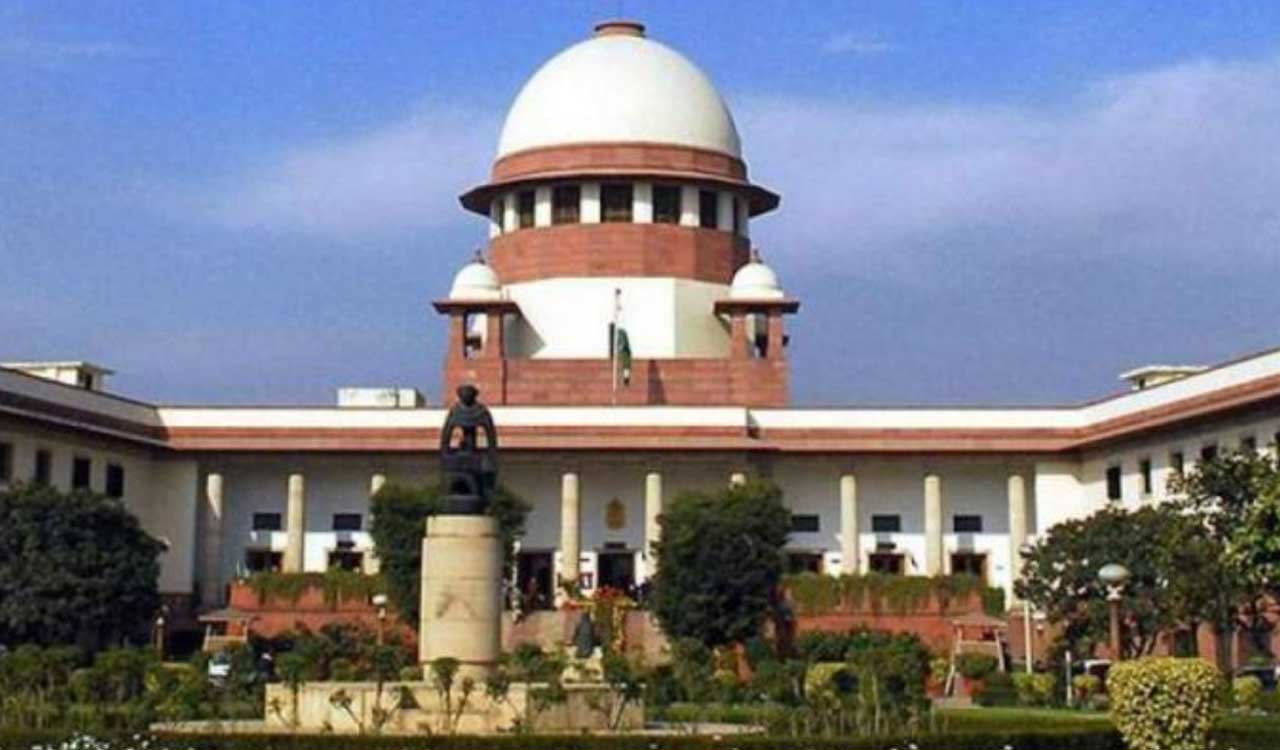


New Delhi: The Supreme Court has said the arrest of a person cannot be made simply for asking questions, holding that arrest by a police officer is a mere statutory discretion and cannot be termed mandatory.
A bench of Justices M M Sundresh and N K Singh said the power of arrest under the provisions of the Bharatiya Nagarik Suraksha Sanhita (BNSS), 2023 must be interpreted as a strict objective necessity and not as a subjective convenience for the police officer.
“It does not mean the police officer can arrest simply to ask questions. However, it means that the police officer must satisfy himself that the investigation, qua an offence punishable with imprisonment up to seven years, cannot proceed effectively without taking the concerned individual into custody. Any interpretation to the contrary would clearly frustrate the purpose and legislative intent of Sections 35(1)(b) and Sections 35(3) to 35(6) of the BNSS, 2023,” it said.
The bench passed the order while hearing an appeal against an order of the Allahabad High Court and was deciding whether notices under Section 35(3) of the BNSS, 2023 are to be mandatorily issued in all cases related to offences punishable with imprisonment up to seven years.
The top court said the power of arrest under the provisions pursuant to a notice issued under Section 35(3) of the BNSS, 2023 is not a matter of routine but an exception, and the police officer is expected to be circumspect and slow in exercising the power.
“An arrest by a police officer is a mere statutory discretion which facilitates him to conduct proper investigation in the form of collection of evidence and, therefore, shall not be termed mandatory,” it said.
The court said the police officer shall ask himself whether an arrest is necessary before undertaking the exercise.
“For effecting an arrest, qua an offence punishable with imprisonment up to seven years, the mandate of Section 35(1)(b)(i) of the BNSS, 2023 along with any one of the conditions mentioned in Section 35(1)(b)(ii) of the BNSS, 2023 must be in existence,” it said.
The bench, in its order passed in January but uploaded recently, said even if circumstances warranting arrest are available under Section 35(1)(b) of the BNSS, 2023, the arrest shall not be made unless it is absolutely necessary.
“Suffice it is to state that an investigation can go on even without an arrest. While undertaking the exercise of collecting evidence for forming an opinion over the commission of a cognisable offence, a police officer shall pose a question to himself on the necessity of an arrest.
“This safeguard is provided as, in any case, the power to arrest an accused person is always available with a police officer even after he records his reasons, in writing, for not doing so at an earlier stage,” the bench held.
The top court noted that an investigation by a police officer generally begins with the recording of information regarding an offence and is a process primarily aimed at ascertaining facts and circumstances surrounding an alleged crime. It involves proceeding to the spot of occurrence to collect evidence and ends with the formation of an opinion for filing of a chargesheet.
It said an arrest is an act done by a police officer in furtherance of an investigation and is discretionary and optional, to be applied to the facts of a particular case.

Related News