Selfies are linked to perceiving slimness more favorably: Study
Analyzing results from four different experiments, the researchers found that participants tended to judge bodies in the selfie images as slimmer than bodies in the external perspective images, however, there were no significant differences in attractiveness ratings.
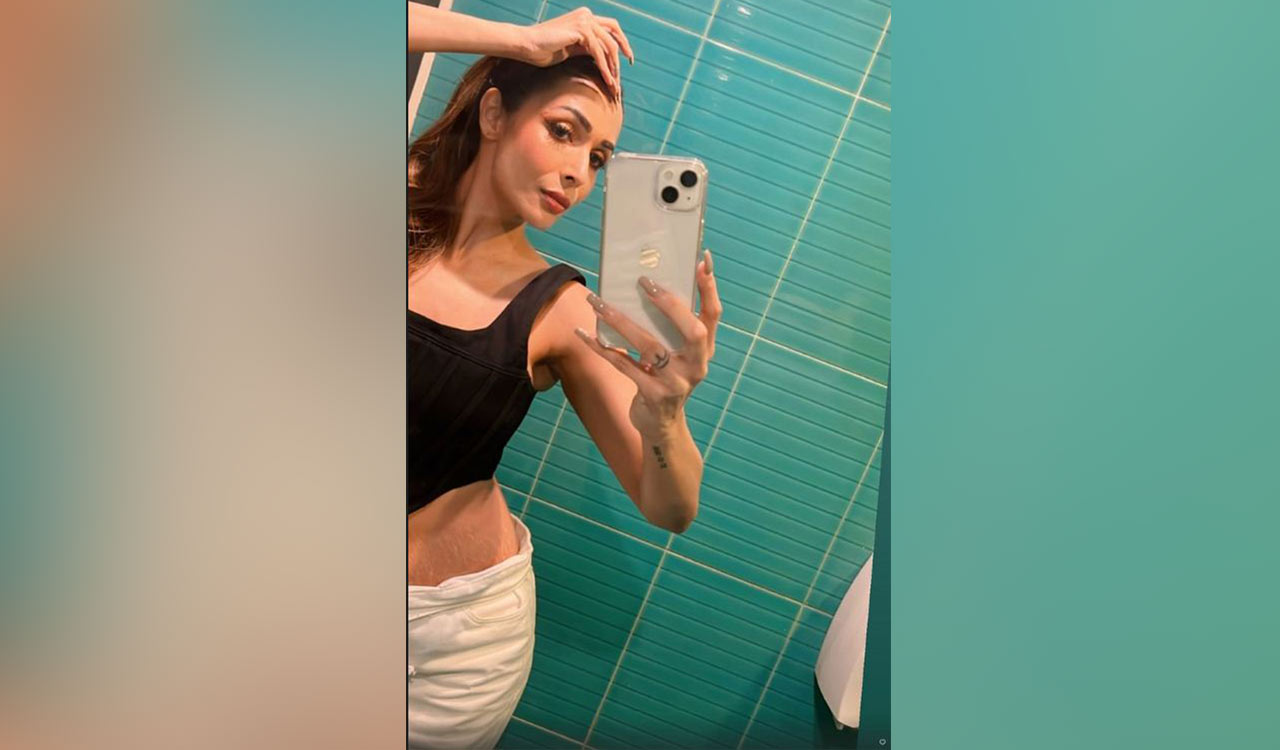


Washington: In a recent study, participants found that selfie images made women’s bodies appear slimmer than when viewed from other angles.
In the open-access publication PLoS ONE, Ruth Knight of York St. John University in the United Kingdom and Catherine Preston of the University of York in the United Kingdom present their research.
Selfies, which are popular on social media, are portraits made by the person in the photo, who sets the camera away from their body but points back at themselves. Previous research has revealed that viewing selfies may influence viewers’ judgements of the attractiveness of the photo subjects and, in some situations, may lead to comparisons that affect viewers’ happiness with their own appearance. However, such study is rare and has concentrated on the impression of faces rather than bodies in images.
To shed new light, Knight and colleagues evaluated the judgments of female participants in response to photos from different angles of 10 female volunteer models dressed in exercise clothing. With faces excluded, each volunteer’s body was photographed at several angles: from a traditional external perspective, a selfie taken an arm’s length away, a selfie taken using a selfie stick, or from the volunteer’s own perspective, with the camera looking down from the chin. Participants also completed a questionnaire to measure the degree to which they engaged in thoughts and behaviours related to disordered eating.
Analyzing results from four different experiments, the researchers found that participants tended to judge bodies in the selfie images as slimmer than bodies in the external perspective images, however, there were no significant differences in attractiveness ratings. Chin-down images were judged to be less slim than selfies, and the least attractive of all the perspectives analyzed.
They also found some evidence that participants with a higher level of certain disordered eating symptoms tended to rate bodies in selfies more favourably. On the basis of this finding and prior findings from other studies, the researchers suggest that viewing selfies could be more damaging than other types of photos to people who are vulnerable to developing eating disorders.
These findings highlight potential links between social media use and body satisfaction. However, the researchers note several limitations of the study, such as a small number of participants and a lack of precise matching of photo angles between volunteer models, which could have influenced judgments.
Future research could deepen understanding by, for instance, evaluating how different photo angles might influence judgments of different body types, or whether viewers’ own weight-to-height-ratio might influence their photo judgments.
The authors added, “Many of us see selfies every day as we browse the growing number of social media platforms. We know that filters can change the way that bodies appear. This research suggests that the angle from which the photo is taken can change our judgments about body size, so that when consuming images on the internet, even simple unfiltered selfies, what we see is not necessarily an accurate representation of real life.”

Related News