Switch 2 review: Power, portability and practical limits
Nintendo’s Switch 2 delivers strong handheld performance, smoother gameplay and solid third-party support. However, limited battery life, inconsistent upgrades and lack of official availability in India mean buyers may want to wait, despite its strengths.


The successor to the Switch has a lot going for it, including a larger screen, larger Joy-Cons designed to resist stick drift, new silicon from Nvidia that enables DLSS and VRR, 12 GB of RAM, and increased storage. If you are coming from the original Switch and are looking for an upgrade, the Switch 2 is a no-brainer.
With new devices launching every quarter, it is essential to ask whether Nintendo’s ecosystem and the Switch 2 are viable options for those looking for portable play. For those of you who have doubts, I would urge you to play last year’s smash hits Hades II or Hollow Knight: Silksong on the Switch 2, if you can. There are few experiences that are more immersive or compelling.
For those of you who prefer your gaming experiences to be more of the flagship AAA kind, I would recommend Donkey Kong Bananza or the Switch 2 upgrades of Breath of the Wild or Tears of the Kingdom.
However, a few moments of magic seldom justify buying a gaming console, especially one priced on par with the PS5 and not officially available in India. Thus, if you are considering buying one or are still on the fence, indulge me a bit more before you arrive at a decision.
First, let us get the most obvious point out of the way. Nintendo has a secret sauce that allows its exclusives to run smoothly, no matter how limited the hardware might seem. We saw this with Tears of the Kingdom, and for that reason, games like Donkey Kong Bananza and the Switch 2 upgrades for Zelda almost do not count.
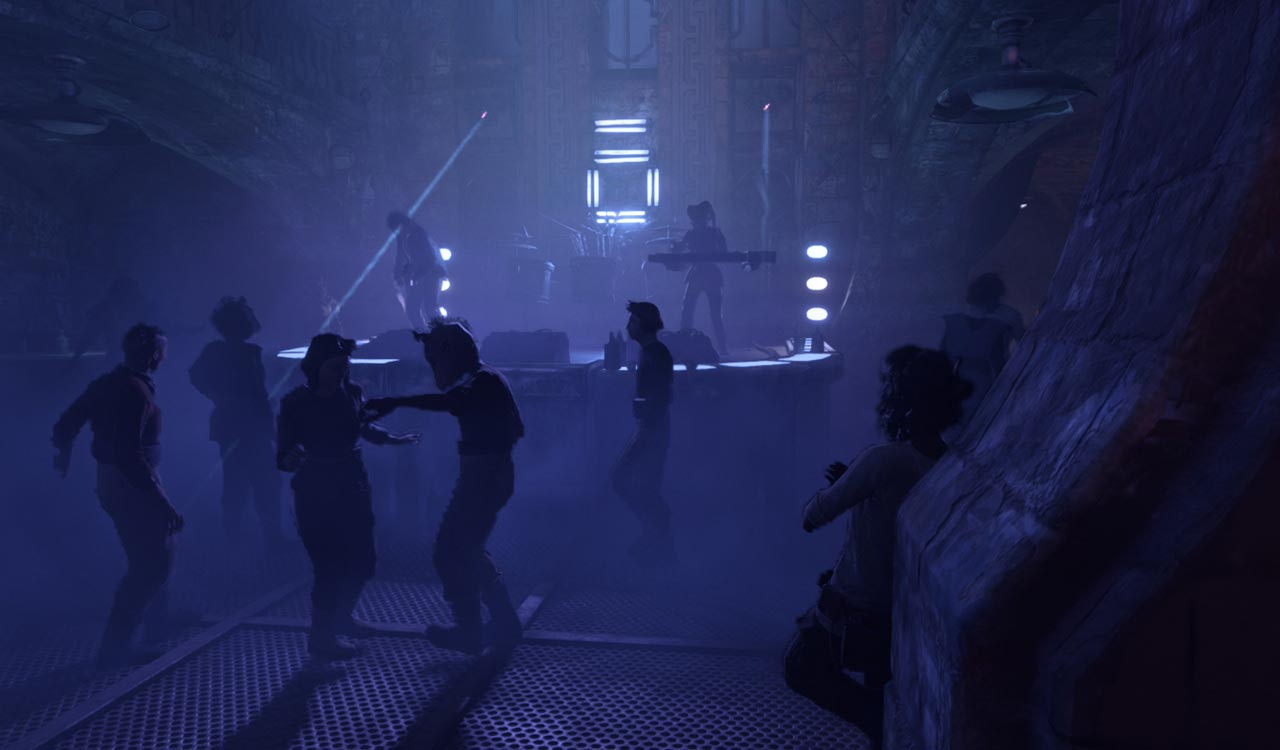
Instead, we should focus on third-party flagship titles and evaluate how they perform and what they offer on the platform. I played several third-party flagship titles such as Star Wars: Outlaws, Assassin’s Creed: Shadows and Cyberpunk 2077. While I firmly believe games of this size and scale are not ideally suited for handheld play, they ran impressively well on the Switch 2 in both docked and undocked modes.
Cyberpunk relies heavily on DLSS in docked mode, while Outlaws and Shadows, despite being locked at 30 frames per second, ran without a hitch. It is not just flagship titles that are well supported on the Switch 2. Smaller indie games shine here as well. Titles like last week’s reviewed Memories in Orbit (MIO) are an absolute joy to play on the console. On remasters and remakes, something Nintendo fans have always had a soft spot for, there is plenty to look forward to, with a wide range of classic titles making their way to the console.
As is becoming increasingly evident, the Switch 2 is, in many ways, a converging console for classic and current games, one where you can play classics, remakes and newer titles with little to no friction. I expect this strength to grow as more games become available on the platform. However, this is also where the hitches begin. Switch 2 upgrades are not always guaranteed, and there is no clear logic behind which games receive them and which do not.
Secondly, while games generally look better, not all of them benefit meaningfully from the new hardware. Some upgrades have even broken games, with Skyrim being a notable example. Most importantly, the battery life on the Switch 2 is not an improvement over the original. Thus, despite its many strengths, the console does come with its fair share of limitations.
In my seven months with it, I believe that the Switch 2 is by far the best handheld you can buy. That said, considering you could wait for a mid-generation upgrade with an OLED screen, I think you should. It might even come with a larger battery pack. Given that the console is not officially available in India, I would advise you to wait and watch. But if you do decide to pull the trigger, you are not making a bad decision whatsoever.

Related News