Telangana caste survey findings trigger criticism
The SEEEPC Survey-2024 in Telangana has revealed caste-wise disparities and classifications, drawing criticism. The report highlights population shares, backwardness categories, and socio-economic trends across BC, SC and ST communities.
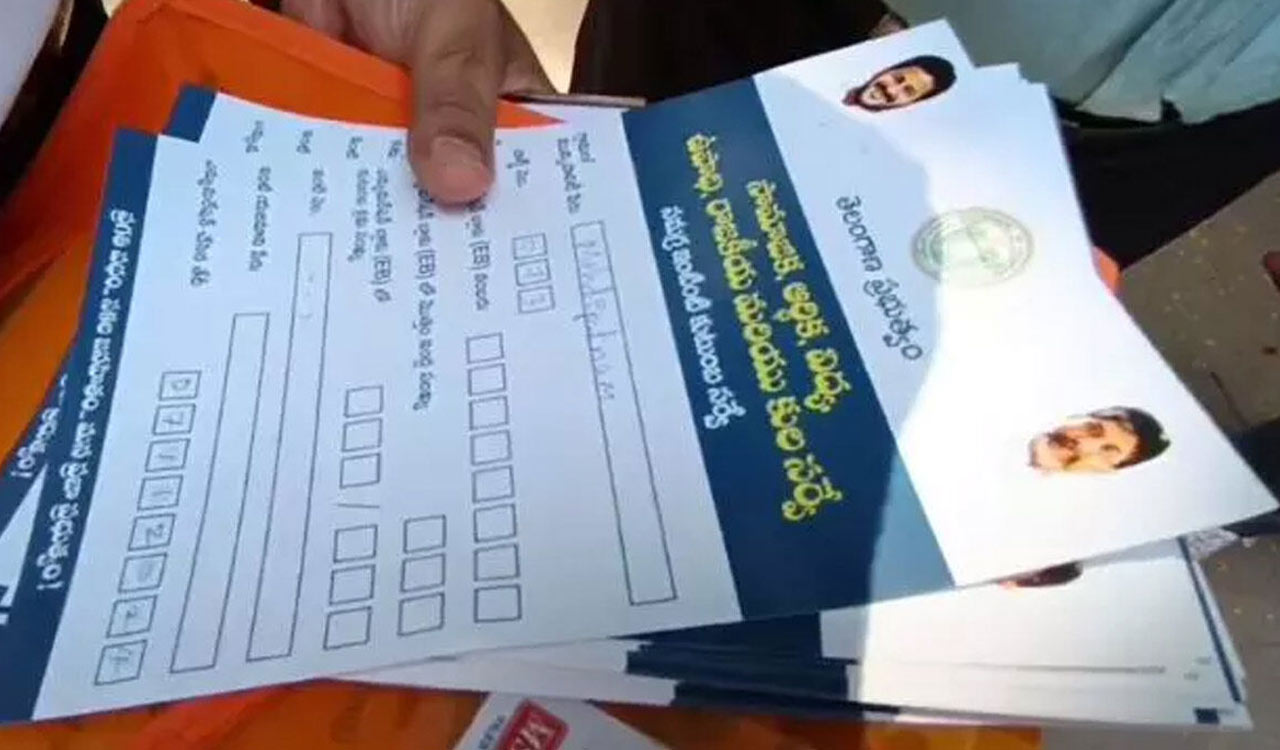


Hyderabad: The Telangana government’s Socio, Economic, Educational, Employment, Political and Caste (SEEEPC) Survey-2024 has been released, and some of its findings have drawn criticism from sections of society.
The caste survey was initiated in 2024 and conducted in two phases last year. The data has now been uploaded on the official website www.des.telangana.gov.in.
BC Welfare Minister Ponnam Prabhakar defended the delay in releasing the data. He said elections and other factors prevented an earlier release.
The survey covered about 1.12 crore families, accounting for a population of 3.55 crore. It began on November 6, 2024, and the first phase was completed over 50 days.
The second phase was conducted through multiple channels. These included direct enumeration at GHMC offices, a missed call facility, a mobile application and enrolment through Mee Seva centres.
However, several findings have triggered criticism. Among 133 BC castes, 69 were classified as most backward, while 64 were listed as lesser backward.
Among SC communities, 41 of the 59 castes were categorised as most backward, and 18 as lesser backward. In the ST category, 25 of the 32 castes were identified as most backward, while seven were placed in the lesser backward group.
The survey also noted that some BC groups are on a par with OC communities in social and economic terms. The total BC population was estimated at 46.25 percent, with Muslim BCs accounting for 10.08 percent.
Another key finding relates to population share among BC communities. The Shaik community in the BC ‘E’ category has the highest share at 7.9 percent, with a population of 27,95,727. It is followed by the Mudiraj community at 7.4 percent.
The survey further observed that SC Christians and Kamsalis are performing better than the State average on several backwardness indicators.

Related News