Telangana’s free hearse service crippled by shortage of vehicles, poor working conditions
Telangana’s free hearse service is struggling due to vehicle shortages, poor funding and harsh working conditions for drivers. With limited fleet availability at Gandhi Hospital and OGH, many poor families rely on costly private transport. Officials say urgent reforms and expansion are needed
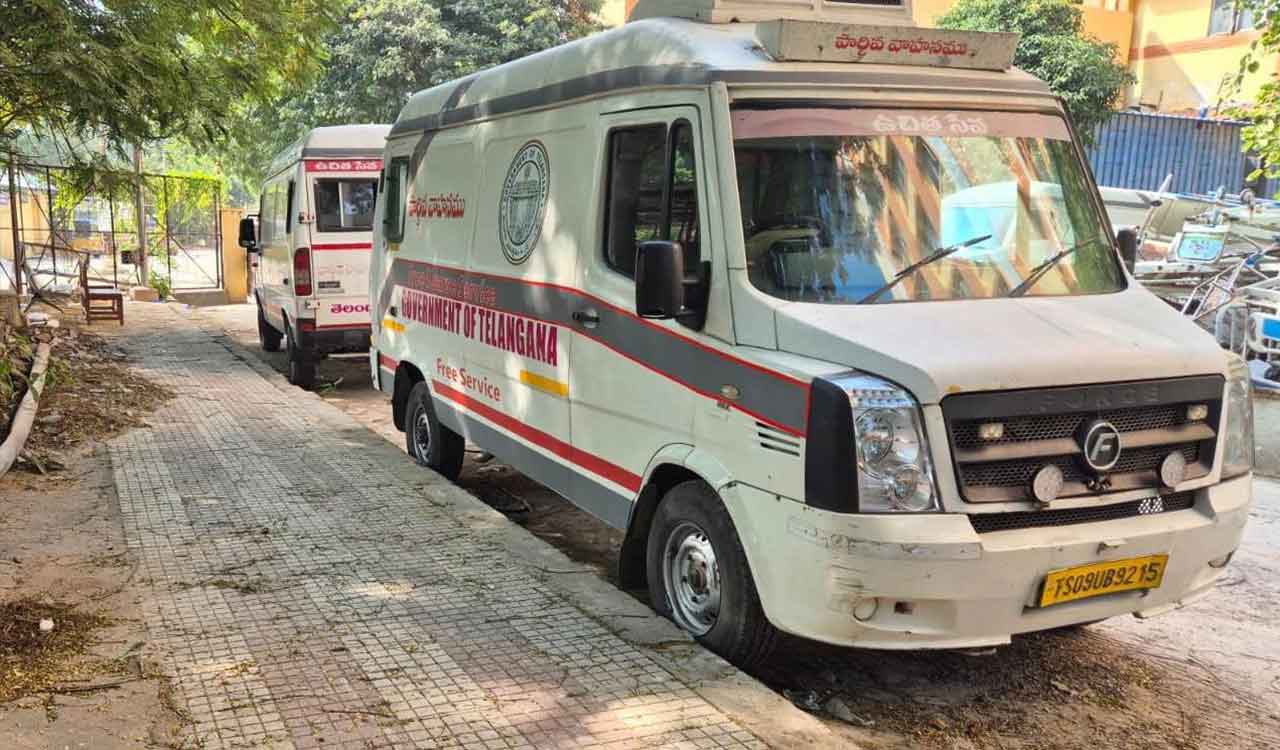


HYDERABAD: The free hearse vehicle service in Telangana, which provides transport facilities of deceased bodies for the poor, is struggling with severe operational deficiencies which need immediate revamp, modernisation and scaling-up.
A visit to Gandhi Hospital and Osmania General Hospital (OGH) in Hyderabad reveals how the novel initiative is severely under-financed and under-resourced by the State government.
At present, there is a fleet of 10 hearse vehicles at Gandhi Hospital. However, at any point in time, only six vehicles are available. Similarly is the situation at OGH, where available hearse vehicles to transport dead bodies range from five to six.
As a result, the demand easily outstrips the supply and a substantial number of poor families end up hiring private vehicles to transport bodies of their deceased relatives to districts. There are occasions where the poor families are not aware of the availability of such a novel service, forcing them to opt for expensive private transport.
The shortfall severely compromises the service’s primary objective of ensuring dignified transport of deceased bodies, often forcing delays and hardship on grieving families. As a result, the hearse vehicle services are now just functioning for namesake.
The condition of the service is exacerbated by the difficult working conditions faced by the drivers. The drivers, the backbone of the entire hearse facility scheme, operate alone, without a designated helper or conductor.
“At present, we are paid a meager salary of Rs 12,000 per month, and overtime compensation is not consistently provided, despite the nature of the emergency service. At a time of grief, we can’t even ask the grieving relatives to provide us with a place for an overnight stay. There have been occasions where I have slept in village temples to spend the night and then come back to Hyderabad in the morning,” a driver said on condition of anonymity.
The drivers are routinely expected to perform minor repairs themselves when a vehicle breaks down, just to keep the service running. Basic logistical support, such as provision for overnight accommodation while transporting bodies on long-distance trips, is entirely absent. Coupled with nagging maintenance issues across the remaining fleet, the drivers’ burden is substantial.
Senior public health officials, familiar with hearse vehicle services since 2016 when it was launched, said, “The service needs to be strengthened and carefully monitored. The initiative must be made humane towards drivers. Considering the nature of service, they must be provided better pay, a proper place to take rest, overtime, etc. At present, drivers sleep in their vehicles. The fleet must be expanded and a comprehensive revamp must be taken up. These steps will ensure hearse vehicles meet their intended humanitarian purposes”.

Related News