Two years of Congress regime: Harish Rao points out violations in Assembly rules
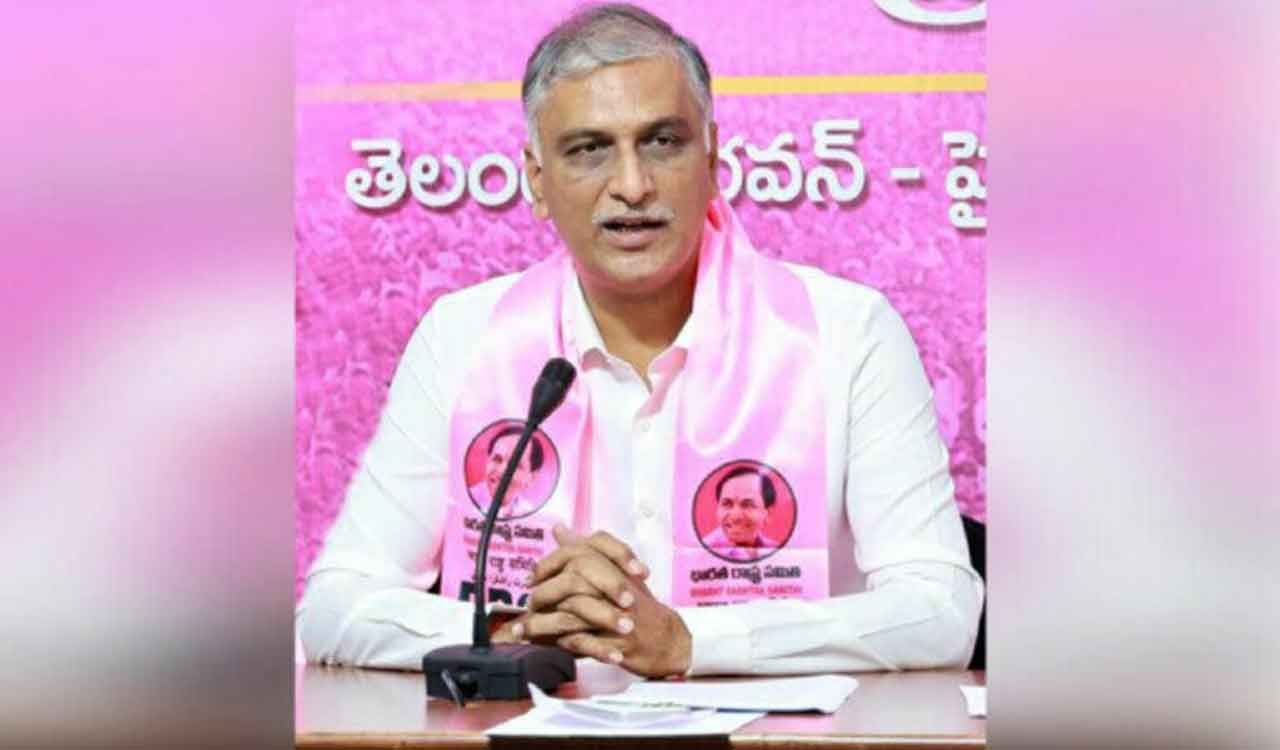
BRS leader T Harish Rao wrote to Telangana Assembly Speaker Gaddam Prasad Kumar alleging serious rule violations over two years, including fewer sittings, curtailed Question Hour, no House Committees, and inaction on defections, warning that such lapses undermine the Legislature’s constitutional integrity.
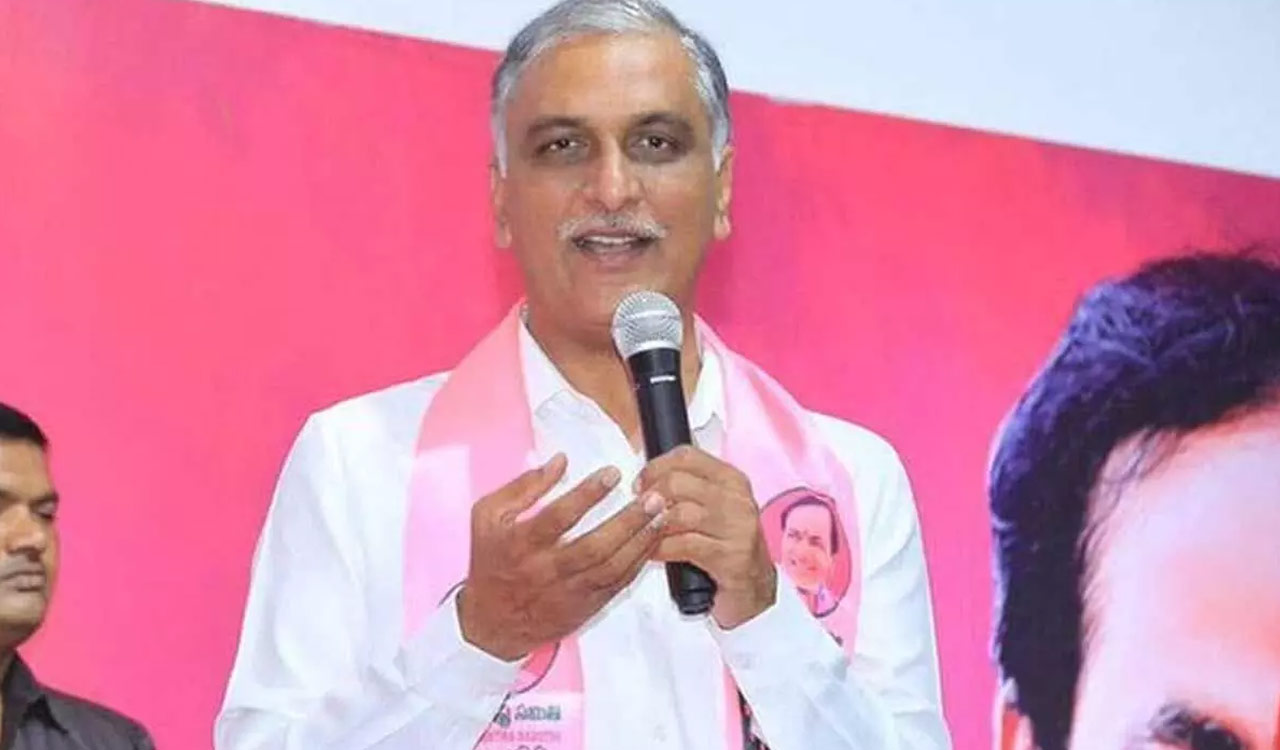
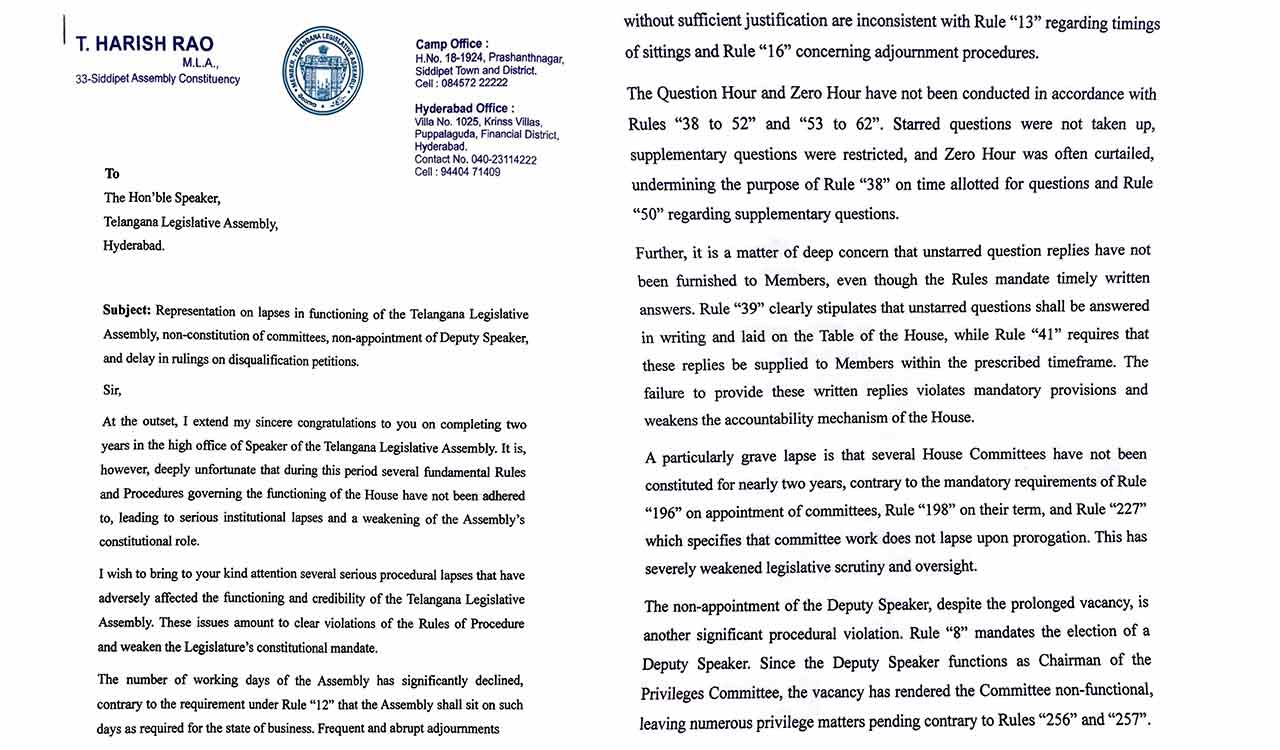


Hyderabad: Pointing out severe lapses in managing the State legislature during the past two years, senior BRS leader and MLA T. Harish Rao on Sunday stated that constitutional norms and assembly rules were being flagrantly violated in Telangana.
In an open letter to Assembly Speaker Gaddam Prasad Kumar, released on the occasion of his completion of two years in office, Harish Rao highlighted a range of issues from inaction on MLA defections to reduced session days and urged immediate corrective measures to uphold the Assembly’s dignity.
Rao began by extending congratulations to the Speaker but in the same breath, he expressed deep concern over what he described as ‘serious failures’ in assembly operations over the past two years. He argued that these shortcomings had undermined the constitutional spirit and the prestige of the Telangana Legislative Assembly. One of the primary grievances outlined in the letter was the reduction in the number of working days for assembly sessions.
Rao pointed out that Rule 12 mandated conducting sessions for as many days as necessary for legislative business, yet this was not followed. He further criticized the frequent and abrupt adjournments without valid reasons, which he said contravened Rule 13 on session timings and Rule 16 on adjournment procedures.
Rao also flayed the handling of Question Hour and Zero Hour, key mechanisms for MLAs to hold the government accountable on public issues. He alleged violations of Rules 38 to 52 and 53 to 62, noting that starred questions, intended for direct oral responses from ministers, are being sidelined, depriving members of their right under Rule 38. Supplementary questions, which allow for deeper probing under Rule 50, are being denied or curtailed, he added.
Similarly, Zero Hour for raising urgent matters is routinely shortened, infringing on members’ privileges. Unstarred questions, which require written responses, have also been neglected, according to Rao. He cited Rule 39, which requires these answers to be tabled in the house, and Rule 41, which sets deadlines for providing them to members. The failure to comply has eroded the assembly’s accountability, he lamented.
No House Committee so far
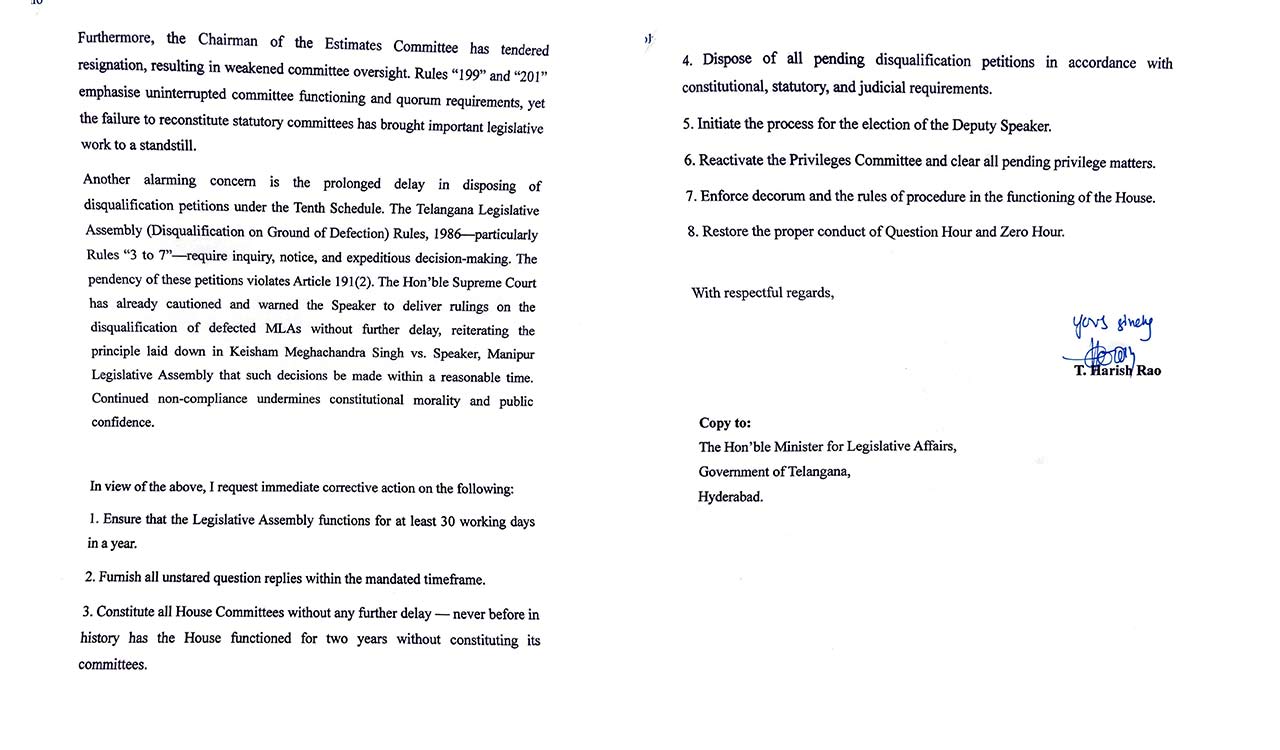
A major point of contention is the absence of House Committees for the past two years, which Rao called ‘deeply regrettable’. Rules 196 and 198 require the mandatory formation of such committees, while Rule 227 emphasises that their work should continue even after sessions end. Without these bodies, oversight of government functioning has been completely absent, he argued. Rao specifically mentioned the Estimates Committee, which has not been reconstituted despite its chairman’s resignation, violating Rules 199 and 201.
The delayed appointment of a Deputy Speaker was highlighted as another critical breach. Rule 8 makes this position mandatory, and the Deputy Speaker chairs the Privilege Committee, responsible for protecting members’ rights. With the post vacant, the committee has become ineffective, leading to unresolved complaints on privilege violations under Rules 256 and 257.
No action against defections
The most alarming issue raised by Rao is the lack of action against MLAs who defected from their parties. He invoked the Telangana Legislative Assembly (Prevention of Defection) Rules, 1986, specifically Rules 3 to 7, which require inquiries, notices, and swift decisions. This inaction, he said, directly contradicts Article 191(2) of the Indian Constitution. To bolster his point, Rao referenced a Supreme Court judgment in the case of Keisham Meghachandra Singh from Manipur, where the court emphasised timely action on defection cases.
Harish Rao also called for urgent reforms to restore the assembly’s functionality and adherence to rules and warned that continued neglect could further damage democratic institutions in Telangana.

Related News