MRI or ultrasound: Which is greener and easier on the pocket?
AIG Hospitals’ EVERGREEN-IBD study found intestinal ultrasound had the lowest carbon emissions and hospital cost among imaging tests for inflammatory bowel disease, supporting its use in suitable follow-up monitoring.


Hyderabad: A Hyderabad-based AIG Hospitals study released on Friday found that intestinal ultrasound had the lowest carbon emissions and hospital cost among imaging tests evaluated for inflammatory bowel disease (IBD) care, supporting its wider use in suitable follow-up monitoring.
Published in Alimentary Pharmacology & Therapeutics, the EVERGREEN-IBD study compared the operational carbon footprint of laboratory tests, colonoscopy and enteroscopy, CT, MRI and intestinal ultrasound using a common assessment framework.
Estimated carbon emissions per procedure were 0.85 kg of carbon dioxide equivalent for intestinal ultrasound, compared with 3.87 kg for colonoscopy or enteroscopy, 5.82 kg for CT and 21.25 kg for MRI — an estimated footprint roughly 96 per cent lower than MRI per examination.
At AIG Hospitals, the hospital cost of intestinal ultrasound was about half that of colonoscopy and one-sixth that of MR enterography, a specialised bowel MRI.
Researchers noted that colonoscopy with biopsy remains essential for diagnosis and cancer surveillance, while CT and MRI still play important roles in assessing disease extent and complications.
AIG Hospitals Chairman D. Nageshwar Reddy said, “For chronic diseases, when a less resource-intensive diagnostic test can reliably answer the clinical question, its use deserves serious consideration.”
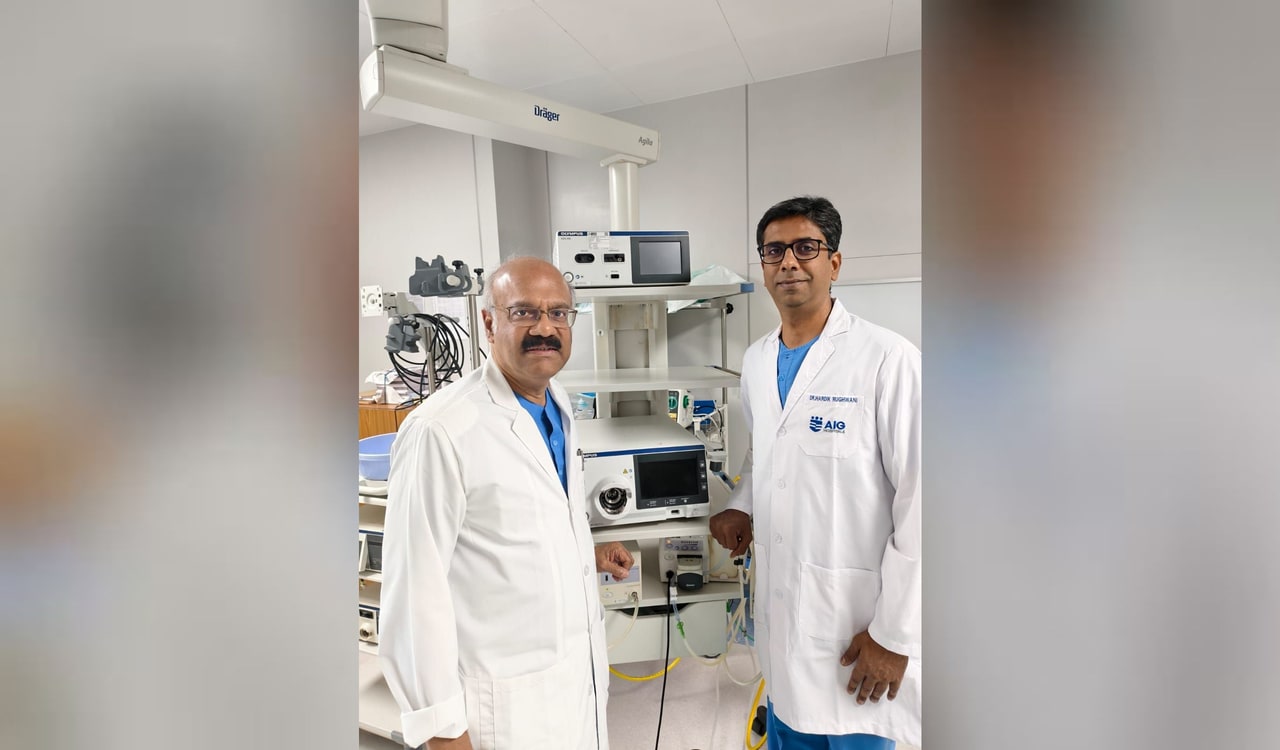
Lead author Hardik Rughwani, Consultant Gastroenterologist at AIG Hospitals, said, “Intestinal ultrasound stood out for its low operational carbon footprint and lower hospital cost. The practical need is to expand access to appropriately perform ultrasound and integrate it into suitable follow-up assessments.”

Related News
-

AIG Hospitals, Boston Scientific collaborate to train doctors in advanced endoscopy
-
AIG Hospitals launches anonymous breast health awareness initiative
-
AIG Hospitals performs complex skull-to-spine tumour surgery using AR/MR, robotic exoscope
-
Yashoda Hospitals earns Guinness World Records recognition for IBD awareness session