Waterman of India warns against demolition of check dams for sand mining
Renowned environmentalist Rajendra Singh has alleged that the destruction of check dams in Telangana was a deliberate act to facilitate illegal sand mining. After inspecting sites in Karimnagar and Peddapalli, he urged the government to act swiftly to protect farmers and water resources
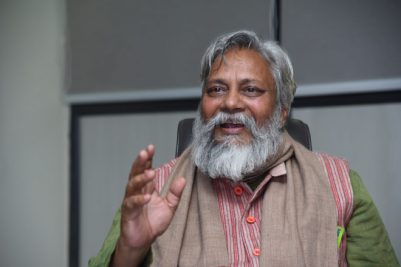


Hyderabad: Renowned environmentalist and Ramon Magsaysay Award winner Rajendra Singh, known as the ‘Waterman of India’, has alleged that recent destruction of check dams in Telangana are deliberate acts of sabotage aimed at illegal sand mining. After inspecting damaged sites in Karimnagar and Peddapalli districts, he urged the State government to act swiftly, warning that neglect could lead to further losses for farmers and people in rural areas.
Singh, who has spearheaded the construction of over 15,800 check dams across 23 rivers in India to revive water bodies, visited the affected check dams in Tanugul village (Jammikunta mandal, Karimnagar district) and Adavi Somanapalli village (Manthani mandal, Peddapalli district).
He described the incidents as unprecedented in his decades-long career in water conservation.” Upon close inspection, it’s clear these are outright demolitions,” he said. “Holes were drilled, and gelatin sticks were used to blast them. Check dams typically collapse under water pressure from the flow direction, but these fell against the natural flow—something impossible without human intervention.”
He dismissed claims of structural failures or natural causes, noting that the dams withstood heavy floods and water levels but collapsed only after the water receded. “If a barrage survives intense floods and heavy rains, how can it fall when it is stable and dry? This wasn’t natural. It was demolished,” he emphasised, pointing to sand mining as the motive. “The valuable sand at the riverbed is the only apparent reason. Once the water is gone, they dig it up and sell it, harming farmers who depend on these structures.”
Singh highlighted the critical role of check dams in rural livelihoods. “These small barrages, often just 2.5 metres high, provide irrigation and drinking water to communities on both sides of the river. The sand in the riverbed naturally purifies water, supporting economic, cultural, and ecological aspects of life. But selfish individuals are destroying them for profit, leading to injustice for farmers and environmental degradation.”
Expressing deep concern over the ‘sand mafia’s’ involvement, he called for immediate government intervention. “The government must respond urgently—arrest the culprits, conduct an investigation on war footing, and punish them severely.
He announced the People’s Inquiry Commission to probe these incidents. Any delay will endanger more check dams. “Reflecting on past attempts, Dr Singh noted that farmers had previously filed police complaints against similar conspiracies.
“Farmers protect nature and sustain life. They don’t destroy it for greed. The government should identify these selfish actors and jail them. No one has the right to harm the environment for personal gain.”
Singh outlined his action plan stating, “Water conservation should be the mission of all stakeholders.” Water resource experts including W Prakash Rao, former chairman of Telangana Water Resources Development Corporation, accompanied Singh during the inspections.

Related News