Where do seashells come from?
Seashells, the durable skeletons of marine animals, are abundant and long-lasting, offering scientists vital clues about ancient ecosystems, climates and species interactions. Through biomineralization and fossilization, shells act as natural archives, revealing how marine life lived, evolved and died
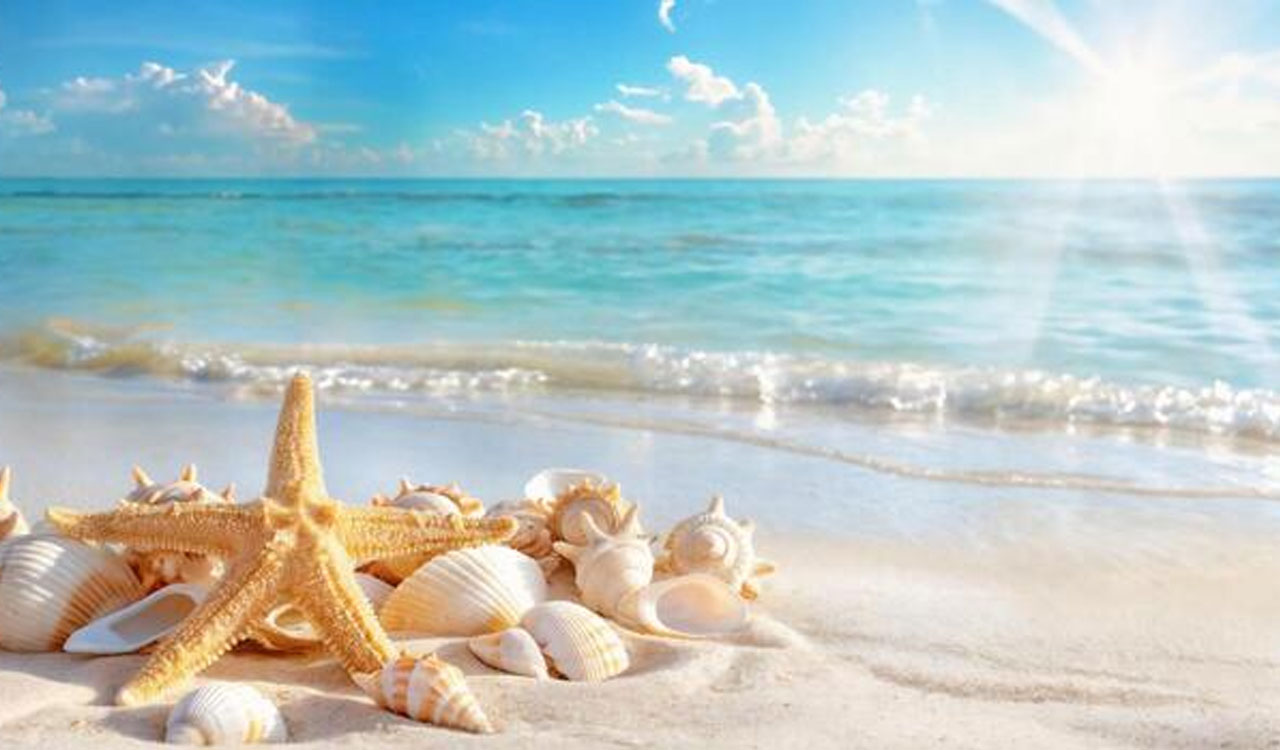


Florida: Seashells are so plentiful that you may sometimes take them for granted.
Scientists have estimated that just one small stretch of beaches along the Gulf of California contained at least 2 trillion shells. That is 2 followed by 12 zeros. 2,000,000,000,000 shells – in just one small stretch of coast! Imagine if every human alive today went there to collect shells. Each of them would be able to claim nearly 1,000 shells.
But where do all these shells come from, and what tales can they tell us? We are a paleontologist and marine ecologist, and our scientific research involves looking at shells and discovering where they came from and how old they are.
Skeletons on the beach
Shells are simply skeletons of animals, the remains of dead organisms. But unlike humans and most other animals, these mollusks, such as snails, clams, oysters and mussels, have an exoskeleton, meaning it’s on the outside of their bodies.
When people talk about seashells, they usually mean shells of mollusks. And these are, indeed, the most common types of shells we find on the beach today. Many other marine animals also make skeletons, including, among others, echinoids such as sand dollars that make internal skeletons called tests, and brachiopods, also known as “lampshells.” These marine animals build their own shells to protect their soft bodies from external threats, such as predators or changes that happen around them in their habitat. Shells can also help these sea creatures stay stable on the seafloor, grow bigger or move around more efficiently.
Just as our bones provide a scaffold to which we attach our muscles, shells provide a rigid frame to which sea creatures attach their muscles. Some mollusks, such as scallops, can even swim by using powerful muscles to vigorously flap the two valves that make their shell. Other sea creatures use muscles attached to their shells to quickly bury themselves in the sediment.
Variety is the spice of marine life
The process of making a shell is known as biomineralization. How marine animals build their shells can vary greatly depending on the species, but all of these animals have special tissues to make their shells, just as humans have special tissues to grow and strengthen our bones.
Most marine animals form their shells from calcium carbonate, which is a tough mineral also found in limestone. Some sponges and microorganisms use another compound silica. There is also a group of brachiopods that build shells using calcium phosphate, which we use to build our bones, too.
More than 50,000 mollusk species live today on our planet, and most of them make shells. But each species makes a different shell. This accounts for the huge variety of shapes and sizes in the seashells you find on the beach.
Just as with bones, shells can last for a very long time. The shells of dead animals are moved around by currents and waves. Many eventually wash up on shorelines. Other shells get buried beneath the seafloor. With pressure and time, the buried seafloor sediment becomes a rock, and shells turn into fossils. In fact, seashells are among the most common types of fossils large enough to see with the naked eye.
When an experienced hunter finds a bone in the forest, they know right away whether it came from a deer, rabbit or wild boar. Similarly, when a seashell expert finds a shell, they can tell you what sea creature made it.
What shells can teach us
Besides the sheer number of sea creatures, another reason shells are so prolific is that they last for a very long time. In our research, we use a process called carbon dating to figure out how old a shell is. Mollusks and many other animals use calcium, carbon and oxygen to build their shell.
There are three types of carbon called isotopes and one of them, known as radiocarbon, is unstable. As a shell ages, its radiocarbon decays at a constant rate. Older shells have less radiocarbon, and we scientists can estimate their age based on that fact.
This process has allowed us and other researchers to date thousands of shells collected from modern beaches and sea bottoms all around the globe. We discovered that many of those shells are hundreds or thousands of years old.
These shells are not just beautiful to look at – they’re also very useful. Like little time machines, these shells carry within them a wealth of information about the past, including details about the habitats in which they lived. Scientists like us can often tell from a shell whether the animal that created it was a predator, a plant eater or even a parasite.
By studying the chemical makeup of the shell, scientists can learn about past climates and environments. We can often even discern how the owner of a shell died and the hazards it faced during its life.
So the next time you admire shells on your favorite beach, inspect them for clues about their past lives. Does the shell contain a round hole? That reveals that the animal was killed by a drilling predator. Does it have a repair scar? It may have survived an attack by a crab. Does the shell belong to an animal that lived in a seagrass meadow that is no longer there? Each shell is a little diary, and if you know how to read it, it can tell you exciting stories of animals and habitats from the past.

Related News
-

2,000 volunteers join a painstaking effort to restore massive skeleton of prehistoric predator
-
My Space: From Jhalmuri to Maach: Two global days, one connected reality
-
Scientists document largest trove of dinosaur footprints in central Bolivia
-
Coral reefs have orchestrated Earth’s climate for 250 million years