Why Invest in a Nifty 500 Index Fund for Long-Term Growth?
In this article, we explain what a Nifty 500 Index Fund is and why it is often considered for long-term growth-oriented investment planning.
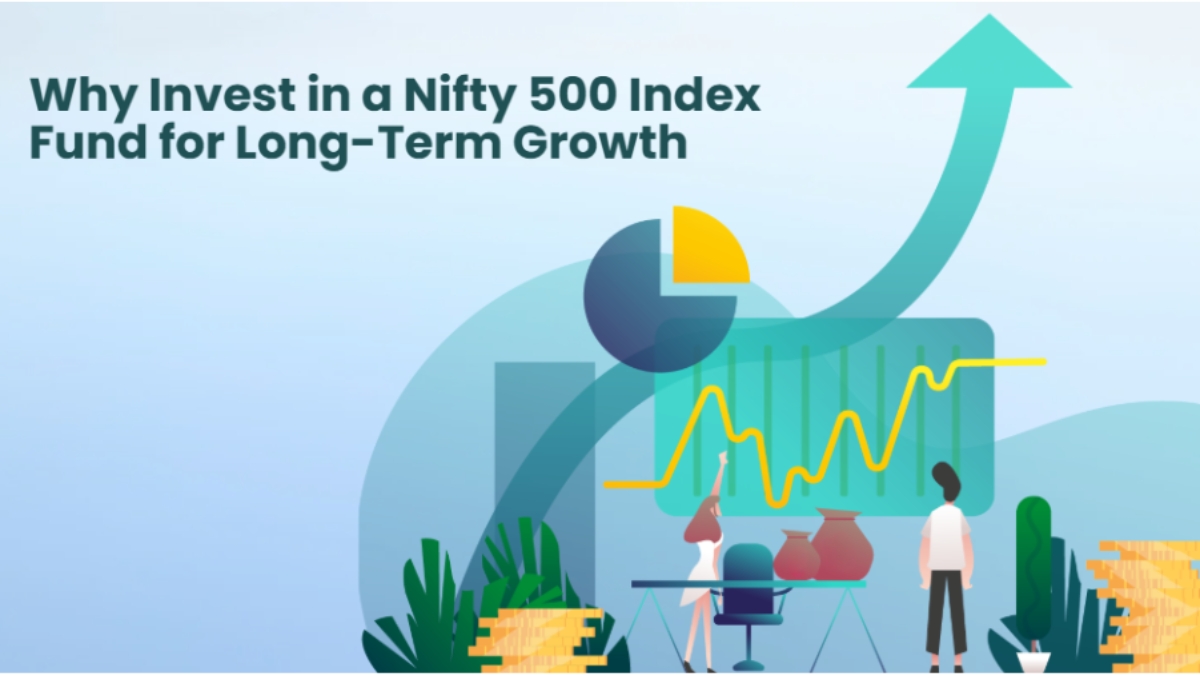


Long-term investing often focuses on building wealth gradually while managing risk through diversification and disciplined investment strategies. Among equity mutual funds, index funds have gained popularity because of their transparent structure and rule-based approach. One such option is the Nifty 500 Index Fund, which provides exposure to a broad range of companies across different sectors and market capitalisation segments. In this article, we explain what a Nifty 500 Index Fund is and why it is often considered for long-term growth-oriented investment planning.
What is a Nifty 500 Index Fund?
A Nifty 500 Index Fund is a passive mutual fund that aims to replicate the performance of the Nifty 500 Index. The Nifty 500 Index represents the top 500 listed companies on the National Stock Exchange based on market capitalisation and liquidity. It covers large-cap, mid-cap, and small-cap companies, making it one of the broadest equity market benchmarks in India.
Since the fund mirrors the index composition, it invests in the same stocks and in nearly the same proportion as the index. The objective is not to outperform the market but to match the overall performance of the Nifty 500 Index, subject to tracking differences and expense ratios.
Broad Market Exposure
One of the key reasons investors consider a Nifty 500 Index Fund for long-term investing is its wide market coverage. By including companies across market capitalisations, the fund provides exposure to different stages of business growth.
Large-cap companies may offer relatively stable earnings and established market presence, while mid-cap and small-cap companies may contribute to higher growth potential over time. This combination allows investors to participate in multiple growth drivers within a single investment.
Diversification Across Sectors
The Nifty 500 Index includes companies from various industries such as banking, technology, manufacturing, pharmaceuticals, energy, and consumer sectors. This wide sector representation helps reduce dependence on the performance of a single industry.
Over long investment periods, different sectors tend to perform differently depending on economic conditions. A diversified index fund can help spread risk across multiple industries, which may support more balanced long-term growth.
Simple and Transparent Investment Approach
Index funds follow a predefined methodology, which makes their investment strategy transparent. Since stock selection is based on index rules rather than individual fund manager decisions, investors can easily understand where their money is invested.
Fund holdings and index composition are publicly available, allowing investors to track portfolio changes and performance updates regularly. Many investors also prefer monitoring their investments and portfolio allocation through digital platforms or a mutual fund app, which can provide updates on fund holdings, NAV movements, and investment statements in one place.
Cost Efficiency
Another factor often associated with index funds is lower expense ratios compared to actively managed equity funds. Since index funds do not require active stock selection or frequent portfolio reshuffling, operational costs may be lower.
Over long investment horizons, lower expenses can help investors retain a larger portion of their returns, though overall returns still depend on market performance.
Reduced Fund Manager Bias
In actively managed funds, performance depends on the fund manager’s ability to select stocks and allocate assets effectively. While active management can generate opportunities, it also introduces manager-related risks.
Nifty 500 Index Funds follow a rules-based strategy, which removes discretionary stock selection. This may appeal to investors who prefer a systematic and market-linked investment approach.
Participation in India’s Economic Growth
The Nifty 500 Index covers a large portion of the listed equity market and includes companies that reflect India’s economic activity across sectors. As businesses expand and industries evolve, the index composition changes to include companies that meet eligibility criteria.
Investing in a Nifty 500 Index Fund allows investors to participate in this evolving market structure over the long term, without needing to track individual stocks or sectors.
Suitable for Long-Term Wealth Creation
Equity investments generally experience short-term fluctuations but have historically been associated with long-term growth potential. Since the Nifty 500 Index includes companies across business cycles and market segments, it is often considered for investors with long investment horizons.
Long-term investing also benefits from compounding, where returns generated over time may contribute to overall wealth accumulation. Regular investment strategies such as SIPs are often used alongside index funds to support disciplined investing.
Who May Consider Investing in a Nifty 500 Index Fund?
Nifty 500 Index Funds may suit investors who:
- Prefer diversified equity exposure through a single investment
- Have a long-term financial goal
- Want a passive and rule-based investment strategy
- Already follow disciplined investing through SIPs or lump sum investments
These funds are often used as core equity holdings within diversified portfolios.
Conclusion
A Nifty 500 Index Fund provides diversified exposure to large-cap, mid-cap, and small-cap companies across sectors, making it a commonly considered option for long-term investment planning. Several platforms, like Axis MF, offer index-based investment solutions that follow structured and rule-based strategies. As with any equity investment, understanding market risks and aligning the fund with long-term financial goals remains important.

Related News
-

Indian markets open higher amid positive global cues; PSU bank stocks lead
-
Market outlook: RBI policy stance, Q2 earnings, West Asia tensions key triggers next week
-
Domestic investors infuse Rs 33,460 crore this week, FIIs remain sellers
-
Sensex slips 49 points, Nifty falls 96 points as market extends losses