Why Trump makes fast, furious statements?
Donald Trump’s emotional outburst after a failed Iran-Israel ceasefire underscores his impulsive decision-making style. His language and behavior reflect instinct-driven thinking, raising concerns about leadership stability amid conflict. Critics urge greater deliberation in global diplomacy
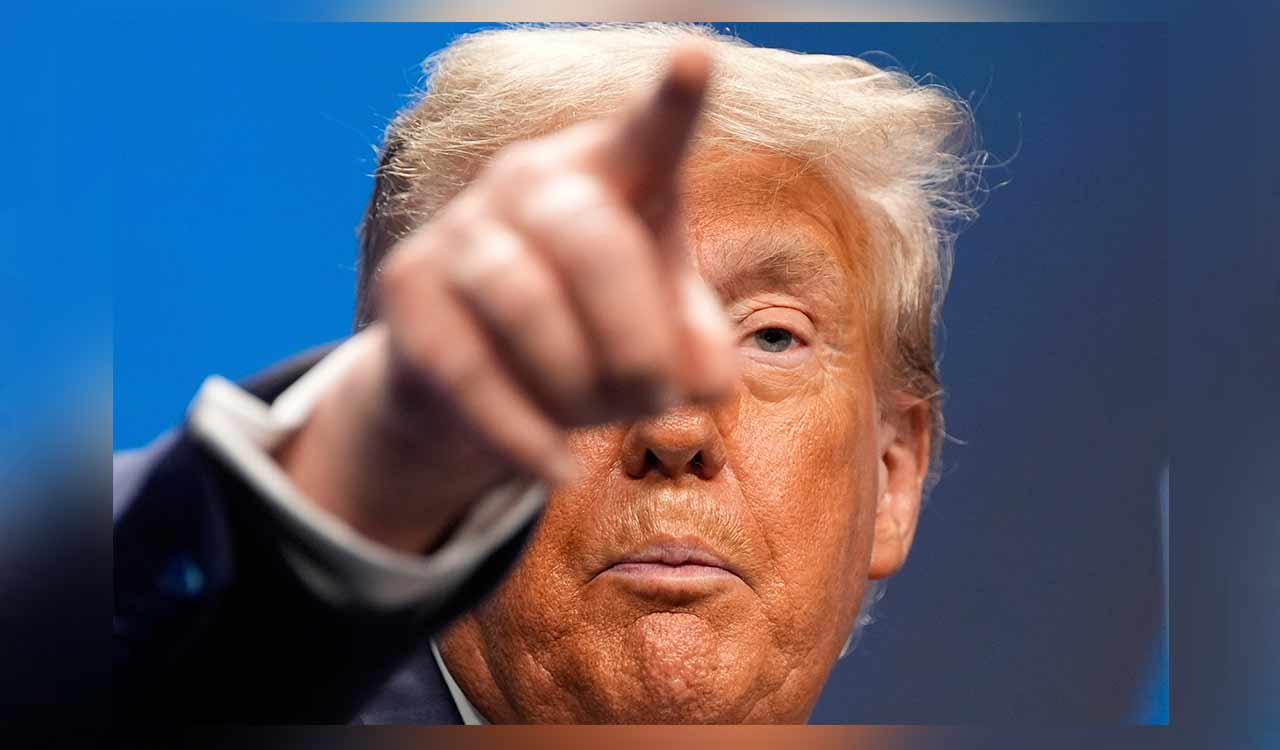


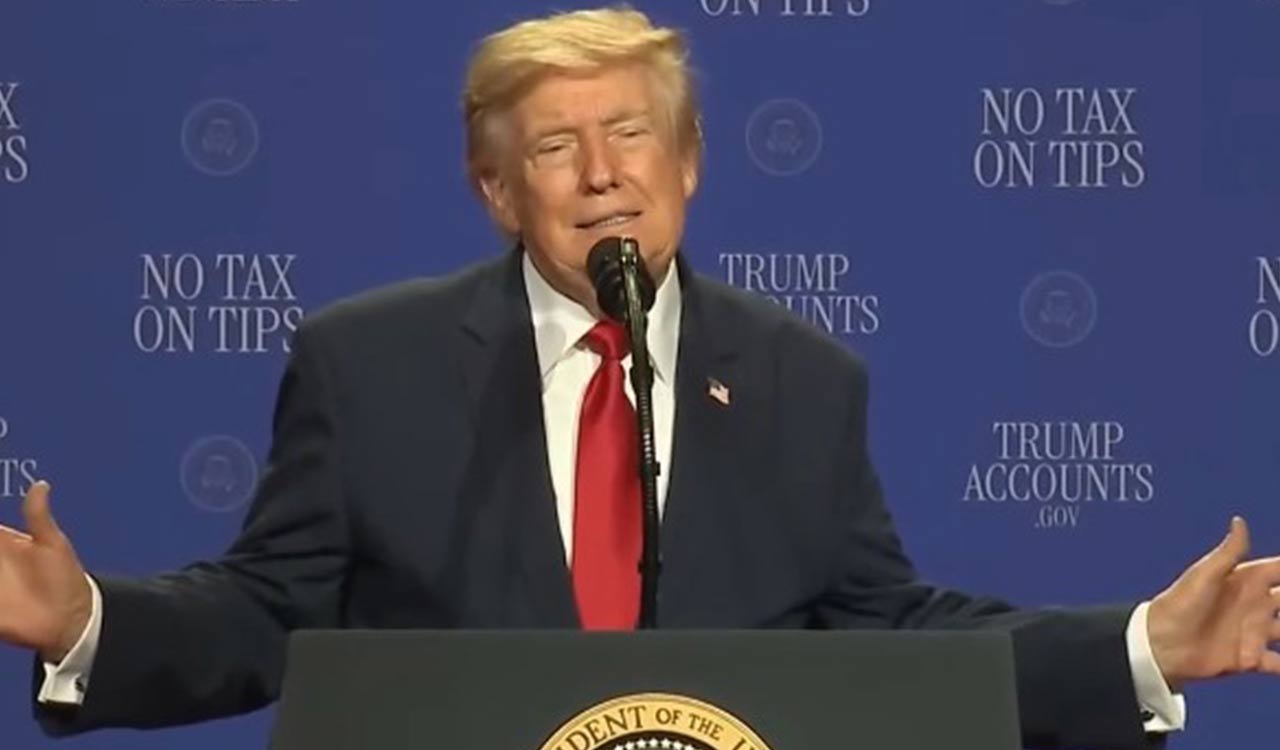
Ormskirk: Donald Trump’s latest forthright outburst was made as part of his attempts to create a peace deal with Iran and Israel. “I’m not happy with Israel,” he told reporters on June 24. “We basically have two countries that have been fighting so long and so hard that they don’t know what the fuck they’re doing.”
This came a day after Trump had announced a ceasefire between Israel and Iran. By the next day, the ceasefire had been violated by both Iran and Israel. Trump was clearly furious, and his language showed it. This was not a verbal slip – there was no immediate correction, no apology, no nonverbal indication of embarrassment. He just stormed off, clearly angry.
This is not the kind of language that is normally associated with a president. Some have been reported to use the f-word before, but usually behind closed doors. We expect presidents to be calm, measured, thoughtful, considered. Trump’s comment was none of these things.
Theodore Roosevelt, the 26th US president, once recommended a foreign policy strategy that was based on speaking softly and carrying a big stick. He was suggesting quiet menace, but Trump showed frustration, barely contained. His furious, aggressive response was like something straight out of an old psychology textbook.
In the 1930s, psychologists developed the frustration-aggression hypothesis to explain how aggressive behaviour can arise. The hypothesis suggested that when a person’s goal is blocked in some way, it leads to frustration, which then results in aggression.
Aggression was considered a “natural” way of releasing this unpleasant state of frustration. They were clearly different times. Over the next few decades, this hypothesis was thought by most psychologists to be a gross oversimplification of complex human behaviour. It assumed a direct causal relationship between frustration and aggression, ignoring all the other situational and cognitive factors that can intervene.
Human beings are more complex than that, psychologists argued — they find other ways of dealing with their frustrations. They use their rational system of thought to find solutions. They don’t have to lash out when they’re frustrated in this seemingly primitive way.
Perhaps, that’s why many people feel shocked when they watch this US president in certain situations. To many of us, it all seems so basic, so unsophisticated, so frightening.
Fast v slow thinking
The Nobel laureate and psychologist Daniel Kahneman, in his book Thinking, Fast and Slow (2011), characterised the two systems that underpin everyday decision-making. His work may help with understanding of what’s going on here.
He describes system one as the evolutionary, basic system. It operates unconsciously, automatically and very quickly, handling everyday tasks like reading other people’s emotions, without any effort. It is an intuitive system designed to work in a world full of approach and avoidance, scary animals and friendly animals. It is heavily reliant on affect to guide decision-making.
In contrast, system two is slower, more deliberative. It requires conscious effort and is used for complex thinking, solving difficult problems, or making careful decisions. The relationship between the two systems is critical, and that may get us thinking about Trump in more detail.
Kahneman says that system one is a bit of a “workaholic”, beavering away all the time, making “suggestions” for system two to endorse. Good decisions – depend upon system two checking the suggestions of system one. But system one often jumps quickly and unconsciously to certain conclusions.System two should check them, but often doesn’t, even when it would be easy.
Here is a well-known example. Answer the following question: “A bat and ball cost one pound ten pence, the bat costs one pound more than the ball. How much does the ball cost?” One answer looks blatantly obvious – but it isn’t correct. The correct answer (after a bit of thought) is five pence. About 80 per cent of university students give the very quick and incorrect answer of ten pence because it “looks” right. Their system two never checked.
In many people, it seems system two is not used nearly enough. There are striking individual differences in the way that people rely on emotion and gut instinct versus the rational system in making decisions.
Emotional decisions?
It appears that Trump makes decisions very quickly (classic system one), often without extensive deliberation or consultation with advisers. Both in his presidency and in his business career, he seemed to prioritise immediate action over any sort of prolonged and thoughtful analysis. That’s why he changes his mind so often.
His decisions seem to be driven by strong emotions. His response to events, opponents and issues are often passionate and visceral. This could lead to to decisions being unduly influenced by personal feelings, first impressions based on arbitrary cues, and interpersonal perceptions, rather than anything more substantial.
Trump’s style of decision-making emphasises immediacy and emotional conviction, which can be effective in rallying supporters and creating a sense of decisiveness. However, it also can lead to unpredictable outcomes and, as has been seen again and again, somewhat controversial, impulsive actions.
Many suggest that Trump’s decision-making style reflects his background in the high-pressure and high-stakes world of business, where quick judgements and gut instinct can be advantageous in these sorts of competitive winner-takes-all environments.
But the world at war is a more precarious place, where system one needs to be kept more firmly in check. Gut instincts may have a role to play, but that old lazy system two needs to be more vigilant. Especially, it would seem, in Trump’s case.

Related News