-
Fifteen people, including Indian tourists, are feared dead after a speedboat carrying 32 Indian tourists and four crew members capsized near Vietnam's Phu Quoc Island. Search and rescue operations are underway, while the Indian Embassy has established emergency control rooms
-
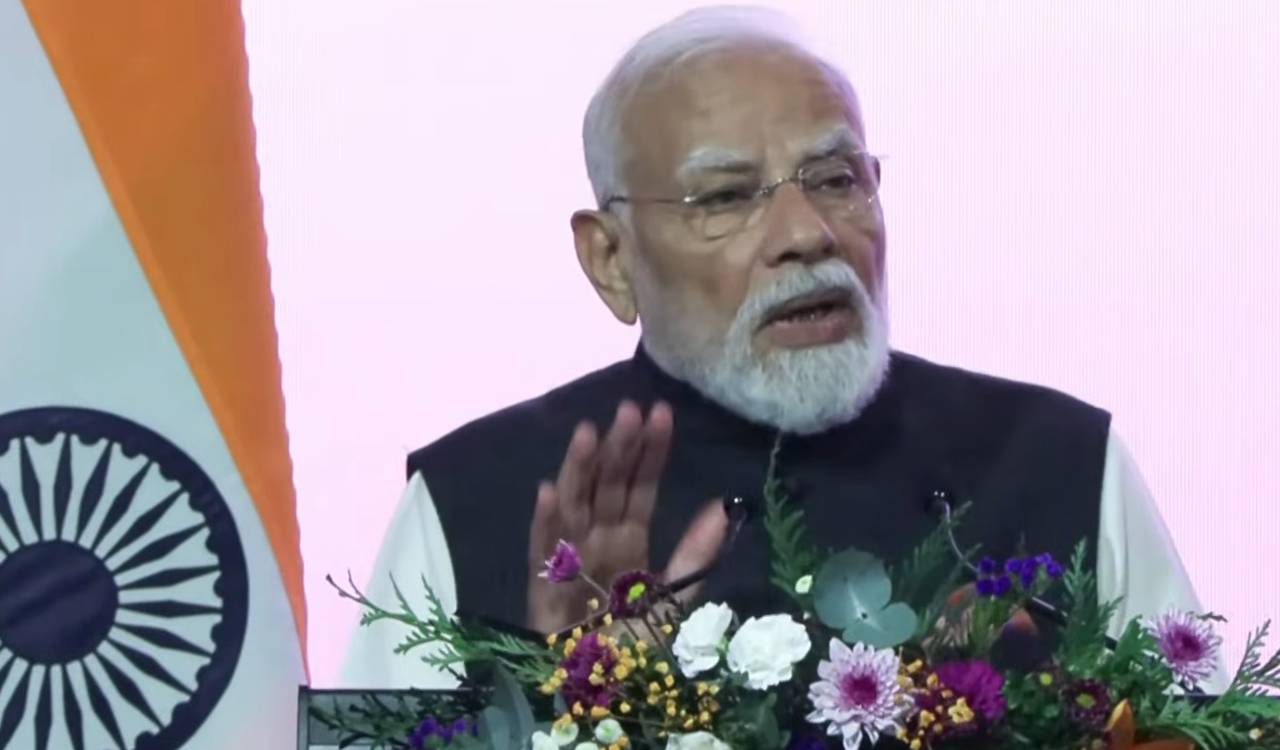
Prime Minister Narendra Modi said India is setting a new global development model despite worldwide challenges, highlighting rapid economic growth, digital innovation and technological progress. Addressing the Indian community in Auckland, he also emphasised stronger India-New Zealand ties and future trade opportunities
-
Christopher Nolan said he had planned to premiere Tenet in India, but the COVID-19 pandemic disrupted those plans. Speaking at The Odyssey's Mumbai premiere, the filmmaker praised India's deep cinema culture and called films a universal language that unites audiences worldwide
-
Prime Minister Narendra Modi met New Zealand Opposition Leader Chris Hipkins in Auckland to discuss strengthening bilateral ties, trade and people-to-people relations. The meeting followed Modi's talks with Prime Minister Christopher Luxon, during which both countries elevated ties to a strategic partnership
-
Apple has sued OpenAI, alleging it orchestrated a campaign to obtain confidential information about unreleased products through former employees. The lawsuit seeks the destruction of allegedly misappropriated materials and accuses OpenAI of encouraging employees to retain sensitive company information.
-
US President Donald Trump issued a fresh warning to Iran amid escalating tensions over the Strait of Hormuz. The remarks came after US demands for assurances on maritime safety and followed renewed military exchanges between Washington and Tehran.
-
Prime Minister Narendra Modi said the India-New Zealand Free Trade Agreement will strengthen bilateral economic ties by boosting trade, investment and talent mobility. Addressing business leaders in Auckland, he invited New Zealand companies to invest in India's rapidly growing economy and infrastructure sectors.
-
Martha Lillard, believed to be the last polio survivor in the United States to depend on an iron lung, has died at 78 in Oklahoma. Her remarkable life reflected resilience, overcoming decades of paralysis while living independently despite severe physical limitations.
-
Prime Minister Narendra Modi and New Zealand Prime Minister Christopher Luxon elevated bilateral relations to a Strategic Partnership during talks in Auckland. The leaders reviewed cooperation across key sectors, exchanged multiple MoUs and discussed the proposed India-New Zealand Free Trade Agreement.
-
US President Donald Trump announced that Washington will continue talks with Iran even as he declared the ceasefire between the two nations “over.” The statement comes amid escalating military strikes, including US attacks on Iranian targets and retaliatory strikes on American bases in the Gulf.
-
Jannik Sinner defeated Novak Djokovic 6-4, 6-4, 6-4 to reach his second successive Wimbledon final. The defending champion displayed exceptional serving and control, while Djokovic missed another chance at a record-extending Grand Slam title. Sinner will face Alexander Zverev
-
Findings in the Nijjar murder investigation strengthen India’s long-held position, ease tensions in India-Canada relations and shift the focus to transnational organised crime networks
-
The European Commission accused Meta of breaching the Digital Services Act by using addictive features on Facebook and Instagram. It urged the company to disable autoplay and infinite scrolling by default, warning of fines if violations are confirmed
-
Prime Minister Narendra Modi arrived in New Zealand on the final leg of his three-nation tour. He will hold talks with Prime Minister Christopher Luxon on trade and bilateral ties, address the Indian diaspora and strengthen cooperation under India's Indo-Pacific vision
-
Three former crew members of Thai cargo ship Mayuree Naree sued its operator over alleged labour rights violations and unfair dismissal after a March Strait of Hormuz attack. They claim inadequate compensation and seek damages over trauma and inability to work
-
Typhoon Bavi is approaching China’s east coast after passing north of Taiwan, prompting mass evacuations and emergency preparations. The storm follows deadly flooding and severe weather that killed 50 people this week across Guangxi and Hubei provinces, raising fresh safety concerns
-
Prime Minister Narendra Modi visited the Melbourne Cricket Ground with Australian leaders, celebrating India-Australia sporting ties. The nations unveiled a Sports Collaboration Roadmap, aiming to strengthen cooperation in sports, youth engagement, infrastructure and talent development ahead of major global sporting events
-
The European Parliament condemned the abduction, forced conversion and child marriage of minority girls in Pakistan, citing Maria Shahbaz’s case. Lawmakers urged stronger legal protections, independent investigations, prosecution of offenders, and nationwide measures to end child marriage and safeguard religious minorities
-
NASA astronaut Anil Menon, of Indian descent, will launch to the International Space Station on July 14 aboard Soyuz MS-29 for an eight-month mission. He will conduct medical, semiconductor and artificial intelligence-based research to support future long-duration space exploration
-
Iran has accused the United States of endangering maritime security through strikes on ports and coastal infrastructure. The allegations were raised at the IMO meeting in London, while Washington said its operations targeted Iranian military assets linked to threats against shipping.
-
Fresh US airstrikes on Iran and Iranian missile attacks targeting Gulf countries have heightened fears of a wider regional conflict, threatening an interim ceasefire and raising concerns over global energy supplies as diplomatic efforts struggle to prevent further escalation.
-
Australia's Victoria University received approval to establish a campus in Gurugram, while Flinders University secured a Letter of Intent for a Bengaluru campus. The agreements, announced during Prime Minister Narendra Modi's Australia visit, aim to deepen education, research and people-to-people ties
-
Kerala student Harsha Koorimannil Valiyamannil graduated with First Class Honours in Computing Science from Ulster University. She co-founded the Women in STEM Society, launched the Hack4Health Hackathon, mentored international students and now hopes to build her career in Northern Ireland
-
Finance Minister Nirmala Sitharaman welcomed AustralianSuper's additional AU$500 million investment in the National Investment and Infrastructure Fund, calling it a vote of confidence in India's growth. The announcement coincided with Prime Minister Narendra Modi's Australia visit and broader energy and investment cooperation