11th-century Telugu-Kannada inscription discovered at Dundigal temple in Telangana
An 11th-century stone inscription found at a temple in Dundigal, Medchal district, records a land donation during the reign of Kalyani Chalukya ruler Vikramaditya VI. The 41-line inscription also contains references to Jainism, a basadi and the Soma lineage.
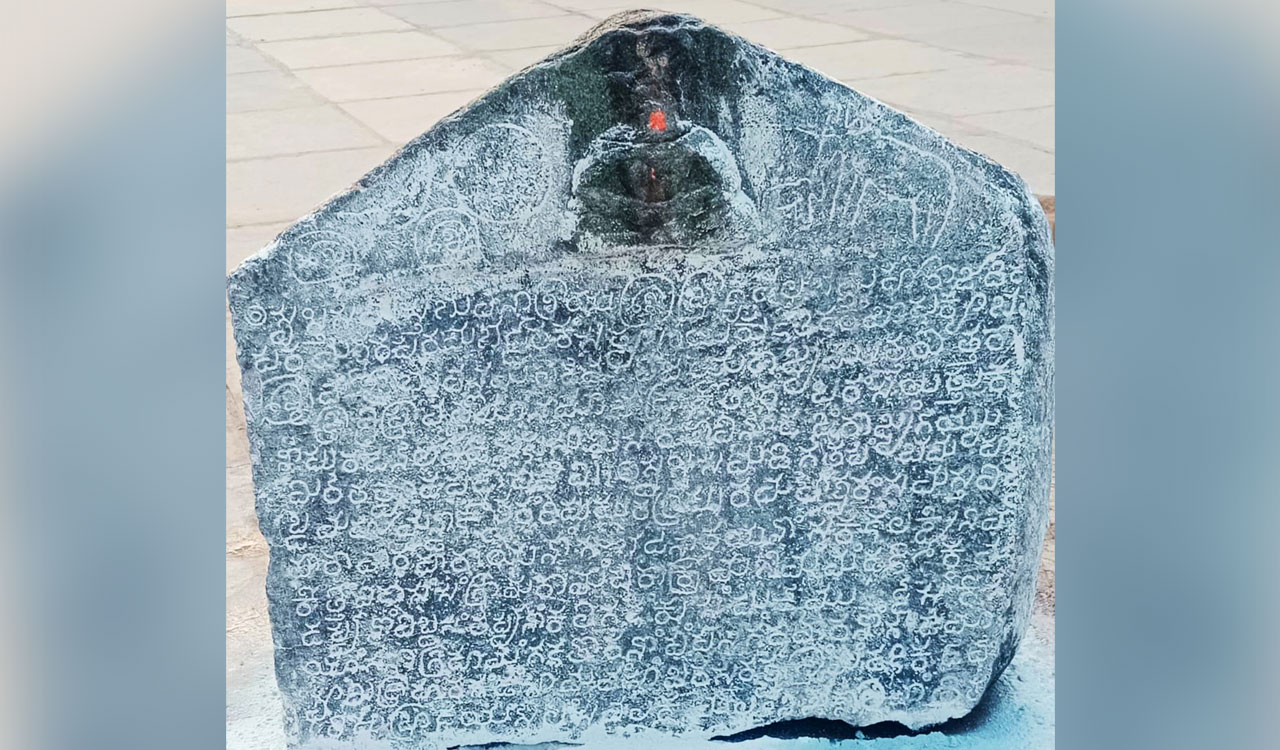


Hyderabad: A stone inscription found in the premises of the Lakshmi Narayana Swamy temple in Dundigal village of Medchal district was sent by Narsagari Jagan to Sriramoju Haragopal, President of the Kotha Telangana Charitra Brundam, for study.
The pillar was brought from near the small tank in Dundigal and was broken in the middle, with an inscription engraved on three sides in 11th-century Telugu-Kannada script and in the Kannada language, in 41 lines.
At the beginning of the inscription are carved the Moon, the Sun, a Jain Tirthankara, a cow and a calf. This is a donation inscription issued when the Kalyani Chalukya emperor Tribhuvanamalla Deva (Vikramaditya VI, reign AD 1076–1126) was camping at Kalyanapura Nelavidu (temporary camp).
It was caused to be engraved by his Mahamandalesvara belonging to the Soma lineage, named Deven (dru… the stone is broken at the place where the name appears), who is described with many titles of praise. Out of devotion to the feet of Jina, “Nalama, who resembles Sri Lalana (Sri Lakshmi)”, had a basadi constructed for Jain Sasanadevata. Many marturu (one marturu = one and a half acres) of land were donated by the Mandalesvara.
Sriramoju Haragopal, who deciphered the inscription, said Muppana also participated in this event. Earlier, a similar half-broken pillar inscription had been discovered by the History Group in a village in Warangal.

Related News