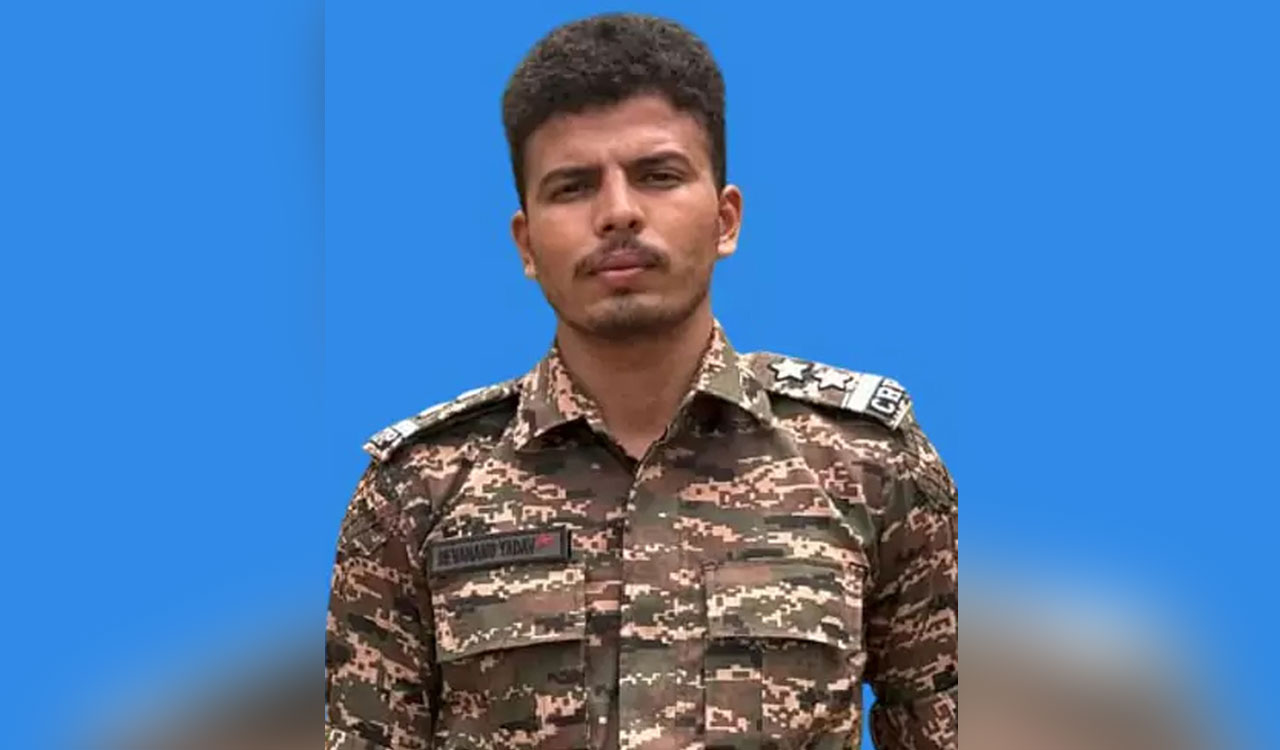
51 Maoists, including 34 women, surrender in Chhattisgarh
Fifty-one Maoists, including 34 women cadres with a combined bounty of Rs 1.61 crore, surrendered in Sukma and Bijapur districts under Chhattisgarh Police’s ‘Puna Margam’ campaign, coinciding with Union Home Minister Amit Shah’s visit
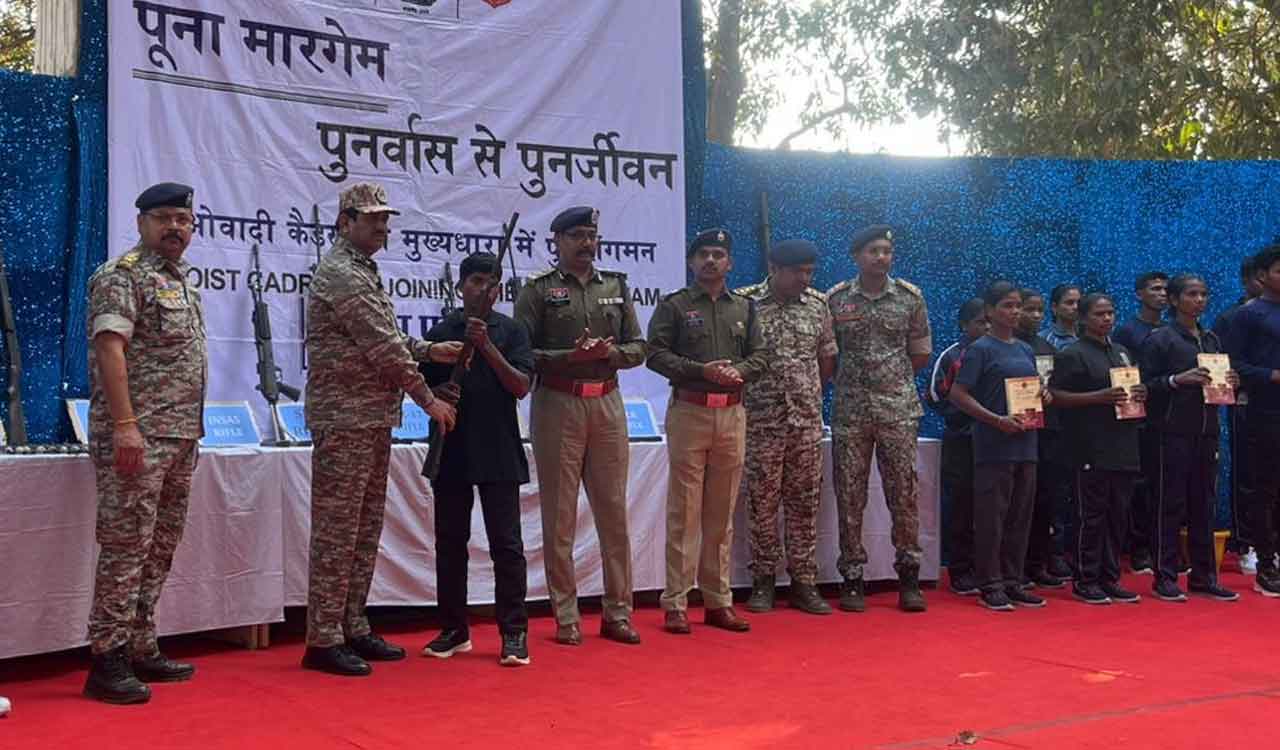


Kothagudem: As many as 51 Maoists, including 34 women cadres, carrying a cumulative bounty of Rs 1.61 crore surrendered before police in Chhattisgarh’s Sukma and Bijapur districts, coinciding with Union Home Minister Amit Shah’s visit to the State on Saturday.
Amit Shah arrived in Raipur on a three-day visit during which he would chair a meeting on Left Wing Extremism (LWE).
In Bijapur, 30 Maoists returned to mainstream life in the presence of DIG (CRPF) Ops Bijapur Sector BS Negi and SP Dr Jitendra Kumar Yadav. In Sukma, 21 Maoists, including three DVCMs, five ACMs and 13 party members, laid down their weapons before Bastar Range Inspector General of Police P Sundarraj, Sukma SP Kiran Chavan and DIG (CRPF) Anand Singh Rajpurohit under Chhattisgarh Police’s ‘Puna Margam’ campaign.
They handed over three AK-47 rifles with eight magazines and 120 live rounds, two SLRs with four magazines and 40 live rounds, one INSAS rifle with two magazines and 50 live rounds, five single shot rifles, three BGL launchers and 20 live rounds to the police.
The surrendered cadres were active in the Darbha division, South Bastar division, Kalahandi-Kandhamal-Boudh-Nayagarh (KKBN) division of Odisha and Indravati Area Committee. Sundarraj stated that the surrender of 21 Maoists was a major success in establishing peace in Bastar.
Meanwhile, President Droupadi Murmu, who was in Chhattisgarh to inaugurate the Bastar Pandum festival at Jagdalpur, said that the Bastar region had remained affected by Maoists for the past four decades.
She noted that tribal communities, youth and Dalit sections of society had suffered the most due to the Maoists. Decisive action taken by the Central government against Maoist violence was putting an end to the atmosphere of fear, insecurity and mistrust that had prevailed in the region for years.

Related News