Adivasis’ Self-Confidence: The Transformational Legacy of Potlapally Kamala Manohar Rao
Potlapally Kamala Manohar Rao was a pioneering anthropologist and government officer who transformed the lives of tribal communities in Telangana and Andhra Pradesh. Rao’s legacy is remembered not just as policy but as empowerment of Adivasis.
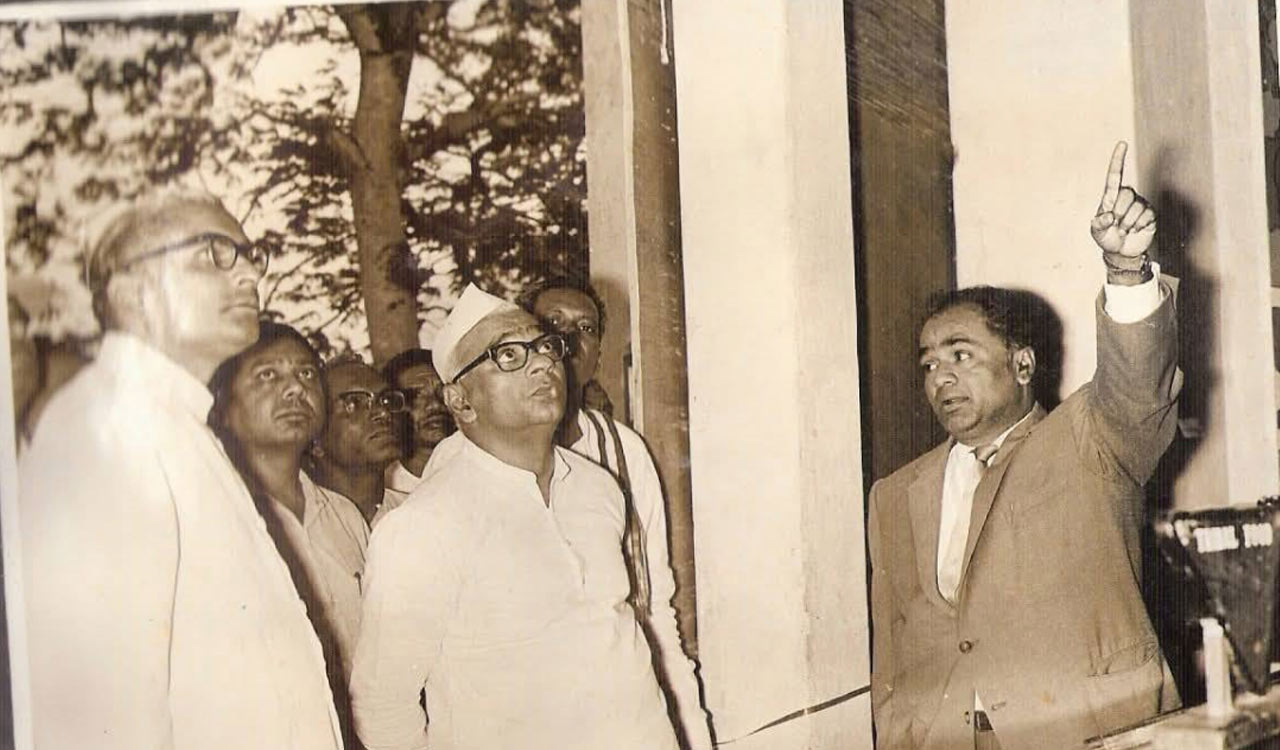


“He Was Not an Officer… He Was God to Us”
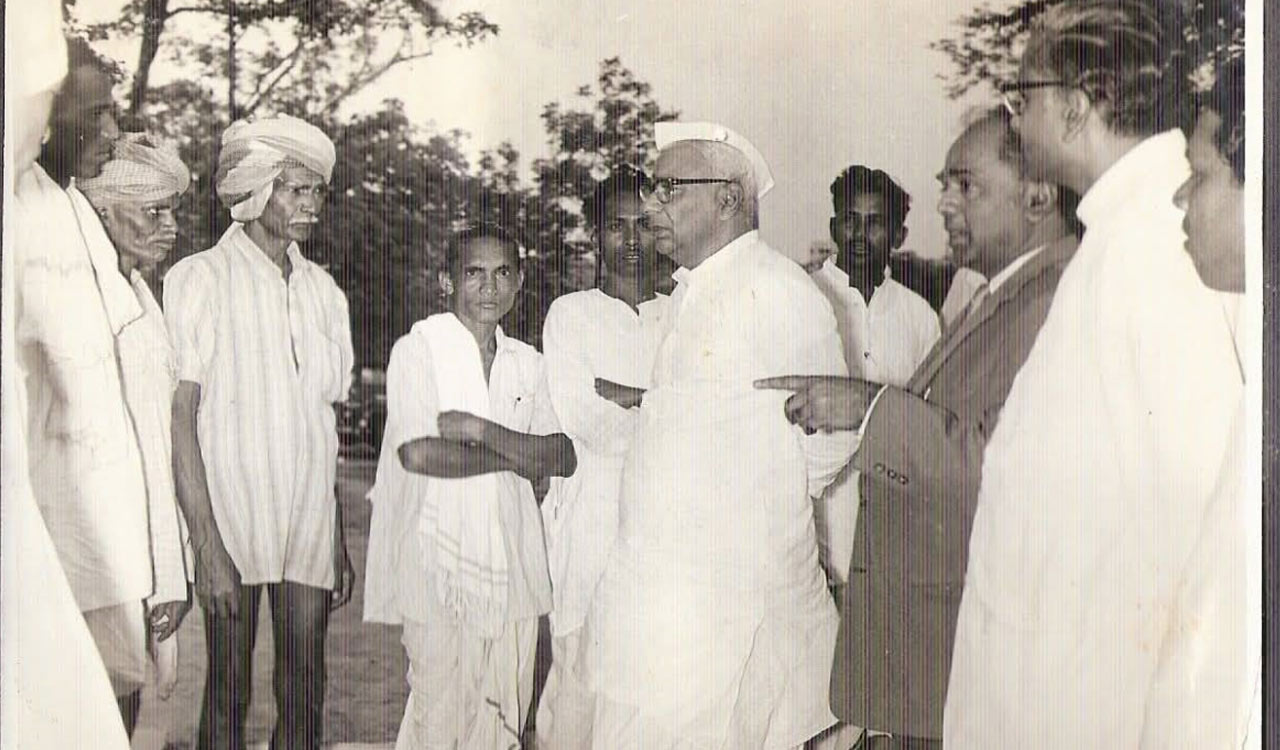
“Kamala Manohar Rao was not just an officer to us — he was like God. He taught us the value of education and gave us new lives. Because of him, people from our Gond community have today become teachers, doctors, and officers,” says retired MRO Kova Manohar from Adilabad.
Renowned anthropologist V.S.V.K. Sastry observes:
“Kamala Manohar Rao’s policies did not remain confined to files. They entered the lives of tribal communities. His contribution in securing land titles for indigenous people across hundreds of acres in Telangana is unparalleled. He saw tribal welfare not as charity… but as a right. That is what made him immortal in history.”
Believing firmly that “Land may exist on paper… but for a tribal person it is self-respect,” Potlapally Kamala Manohar Rao dedicated his life to transforming tribal futures.
Many read history. Some write history.
But rarely does someone reshape the destiny of entire communities.
This is not merely the story of a government employee — it is the story of a man who instilled confidence among forest-dwelling people, secured land for the landless, and brought education to children who had never seen school.
Voice from the Hamlets
“We remember how he came to our hamlets, sat on the ground with us, spoke as one among us, united us, and educated our children. I am one among those children — I became a teacher and today serve as a leader for Gond tribals. He opened our minds. So he was not an officer… he was our own man,” recalls Gond tribal leader Sidam Arju from Asifabad.
WHO WAS KAMALA MANOHAR RAO?
Potlapally Kamala Manohar Rao was born on 20 December 1919 in Ashwaraopally village, Jangaon district, Telangana. Having closely witnessed rural life, he pursued Post-Graduation in Anthropology from Osmania University.
During his student days, one question shaped his life:
“Why are tribal communities left behind?”
After joining the Social Welfare Department under the Nizam government, he realized tribal welfare services were scattered across departments.
He questioned: “Why should one tribal problem require visits to ten different offices?”
This thinking led to the concept of Single-Window Administration. After years of effort, the Tribal Welfare Department was established in 1966.
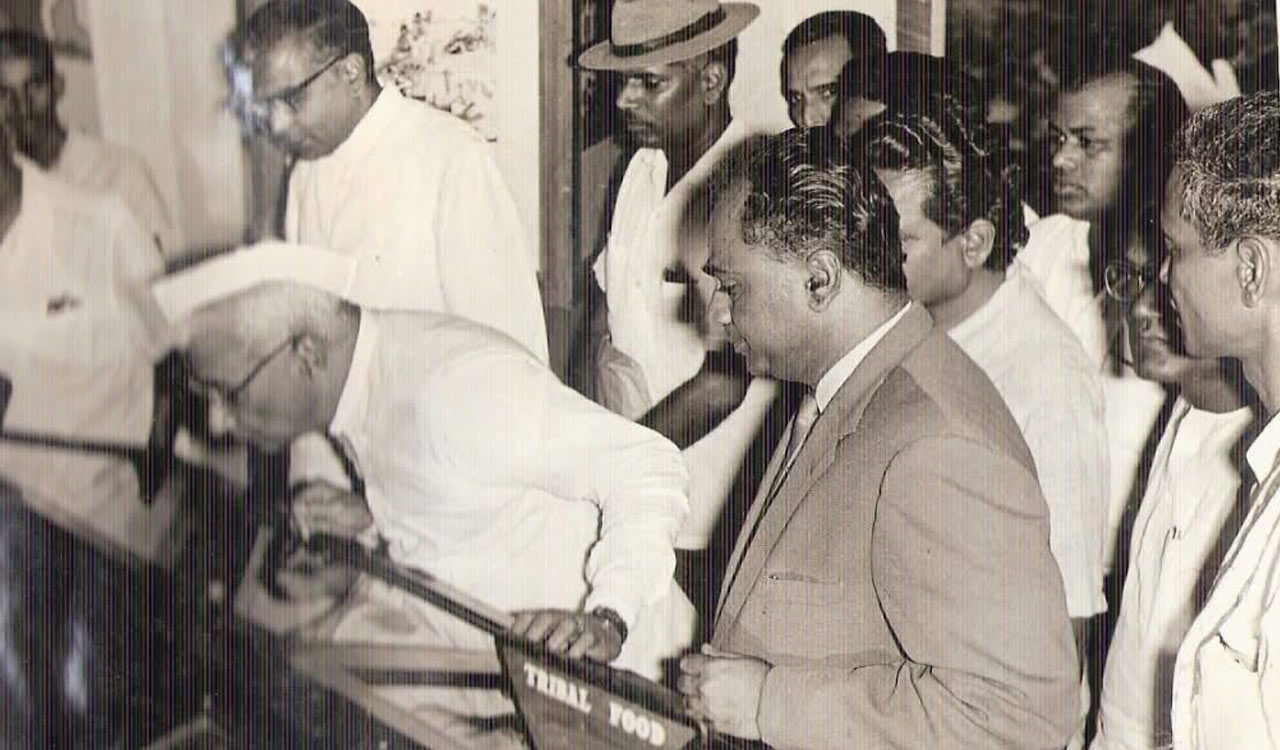
With the initiative of then Chief Minister Kasu Brahmananda Reddy, he became the first Director of Tribal Welfare in Andhra Pradesh.
FROM ADILABAD TO ARAKU — AMONG THE PEOPLE
As Director, he did not remain confined to office chambers. He travelled deep into tribal belts — working among Gond, Kolam, Konda Reddy, Lambada, and Koya communities.
He secured land rights for forest-dwelling families and established schools and hostels where they were most needed.
“He Gave Us Land… He Gave Us Life”
“The day he gave us land, a lamp was lit in our home. He taught us that land means livelihood. In Mahabubabad, Narsampet, and Mulugu regions of Warangal district, 40,000 acres were allocated to poor SC and ST families, along with housing colonies and water tanks,” says former Ashwaraopally Sarpanch Ramchander.
HAIMENDORF’S PRAISE — INTERNATIONAL RECOGNITION
World-renowned anthropologist Dr. Christoph von Fürer-Haimendorf of the University of London praised Kamala Manohar Rao’s work through special letters.
A mentor to Rao at Osmania University, Haimendorf’s recognition brought global academic attention to Rao’s contributions in tribal studies.
A JOURNEY THAT CONTINUED AFTER RETIREMENT
Even after retiring in 1975, his mission did not stop.
His books and research on tribal life remain guiding references. His 1968 case study on Madagada tribal village laid early foundations for the later development of the Araku region as a tourism hub.
A LIVING LEGACY
Potlapally Kamala Manohar Rao was not merely a government officer — he became a symbol of trust in the hearts of Adivasis.
Because of his relentless efforts, thousands of tribal children today are educated, employed, and living with dignity and self-confidence.
Author: Shyam Mohan

Related News