Can Hyderabad become AI hub without becoming energy hub?
For Hyderabad, ensuring a reliable supply of resources will be as important as attracting investment. Planning for this now could give the city a stronger foundation for the next phase of AI growth


By Kalyan Sivalenka
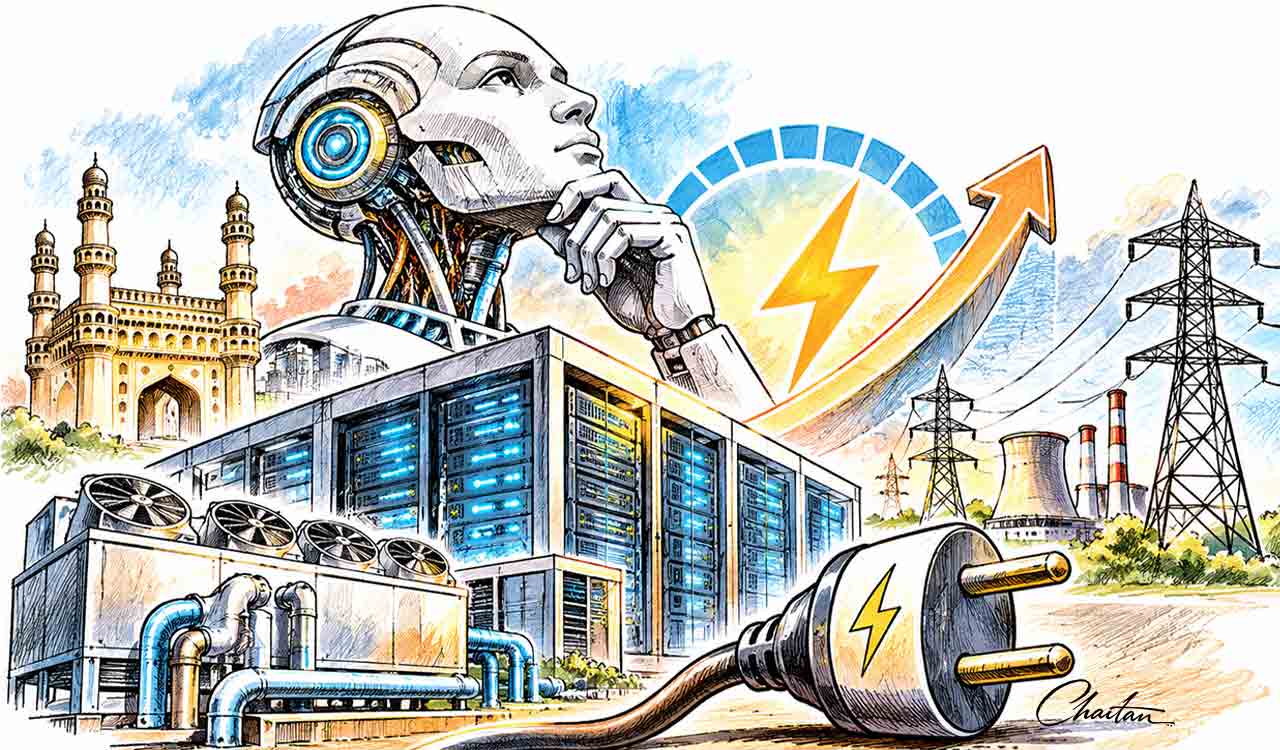
The rapid growth of artificial intelligence is creating new demand for the infrastructure that supports it. As AI systems become more widely used, data centres are growing larger and more power-intensive. The IEA estimates that global electricity consumption by data centres could more than double, from around 460 terawatt-hours (TWh) in 2024 to over 1,000 TWh by 2030. For India, where data-centre capacity is expected to expand rapidly, the question is not only how much computing infrastructure can be built, but also how the electricity needed to run it can be supplied reliably.
Also Read
The energy cost of AI
AI data centres consume electricity in two main ways. Servers use power to process information, while cooling systems remove the heat generated by increasingly powerful computing equipment. The balance varies across facilities, but both contribute to overall energy demand. As AI consumption grows, individual facilities require substantially more power than conventional data centres. BCG estimates that India’s data-centre capacity could increase from around 1.5 GW in 2025 to 6–8 GW by 2030.
The infrastructure required for this can take longer to develop than the data centres themselves. Facilities need reliable grid connections, substations and transmission capacity to operate continuously. The IEA notes that data centres can be built within two to three years, while energy infrastructure often takes longer to plan. Virginia, a major US data-centre market, has faced similar challenges, where growing demand has contributed to lengthy waits for grid connections. Even established markets are struggling to expand power infrastructure quickly enough to accommodate new computing capacity.
Renewable energy can help meet this additional demand, but solar and wind cannot guarantee a steady supply at every hour. Data centres operate around the clock, making energy storage and reliable grid connections important to maintaining supply while reducing dependency on fossil fuels. The IEA expects renewables to meet nearly half of the additional global electricity demand from data centres between 2024 and 2030. The extent to which data-centre growth can be powered more with clean energy will depend on how quickly renewable generation, storage and grid infrastructure develop together.
Hyderabad’s growing power requirements
Hyderabad provides a useful example of how these pressures are playing out in India. The city has an established technology industry, and Telangana is attracting investment in new data-centre facilities. Amazon Web Services announced plans to invest Rs 60,000 crore in expanding its data-centre operations in Telangana. The State has also signed an MoU with CtrlS Datacenters for a proposed Rs 10,000 crore, 400 MW AI data-centre cluster.
These announcements indicate the scale of investor interest, but the proposed capacity will take time to materialise. The wider economic impact will depend on how much supporting activity develops alongside the facilities.
The Telangana government’s data-centre investment portal lists around 200 MW of operational IT capacity, alongside 4.7 GW of committed or early-stage capacity. Much of this pipeline is still at different stages of development. The scale of the proposed expansion also raises questions about whether Telangana’s power infrastructure can keep pace as new data centres become operational.
Telangana has identified areas including Chandanvelly and Bharat Future City for data-centre development. Building beyond established technology districts could accommodate larger facilities, but these locations need supporting infrastructure.
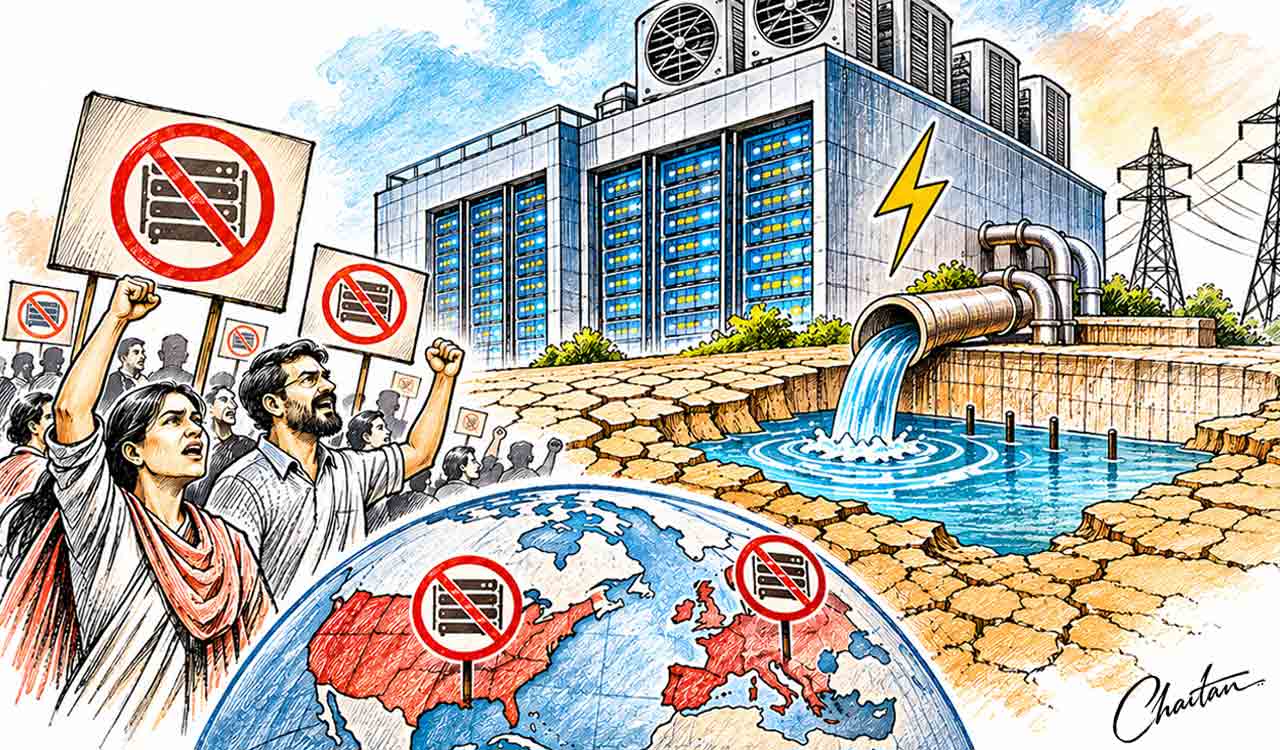
Data centres also need cooling systems to prevent equipment from overheating, and these systems use substantial quantities of water. Alternatives can reduce water consumption, depending on the technology used, while cooling choices also affect energy efficiency. For Hyderabad, the implications will depend on the design of individual facilities and the resources available at their locations. Treated wastewater and other non-potable sources could help reduce dependency on freshwater where suitable treatment and supply infrastructure are available.
Telangana’s Clean and Green Energy Policy reports approximately 11.4 GW of existing renewable-energy capacity and targets an additional 20 GW of renewable energy and storage capacity by 2030. Installed capacity is not the same as electricity generated or available at any given time. For data centres that need a continuous power supply, the challenge will be to combine renewable generation with storage and reliable grid infrastructure. The State is also aiming for data centres to run entirely on renewable power by 2047, supported by energy storage, advanced cooling, water recycling, and efficiency standards.
The Hyderabad compute question
Much of India’s planned data-centre capacity has yet to be built, giving Telangana time to prepare for the additional demand these facilities will place on its power and water systems. The State could require developers to disclose projected resource consumption, coordinate approvals with power and water utilities, and assess the combined impact of facilities planned in the same region. Renewable power backed by battery storage, efficient cooling systems, and treated wastewater could help reduce pressure on existing infrastructure.
Hyderabad’s deep-tech startups could contribute to Telangana’s energy transition by developing new energy technologies, improving energy storage and finding better ways to integrate solar and wind power into the grid. Research institutions and universities such as IIT Hyderabad and IIIT Hyderabad provide a base for work in areas such as AI, advanced materials and energy systems.
Collaboration between researchers, startups, and industry could help turn these ideas into practical solutions for the State’s growing energy needs. For Hyderabad, reliable resource supply will be as important as attracting investment, and planning for it now could give the city a stronger foundation for the next phase of AI growth.
(The author is Managing Partner, Hyderabad Angels Fund)

Related News