Editorial: AAP’s moment of reckoning
The Aam Aadmi Party no longer speaks for the common man—it revolves around just one man: Arvind Kejriwal, who seems to have mastered the art of shedding close allies with remarkable consistency
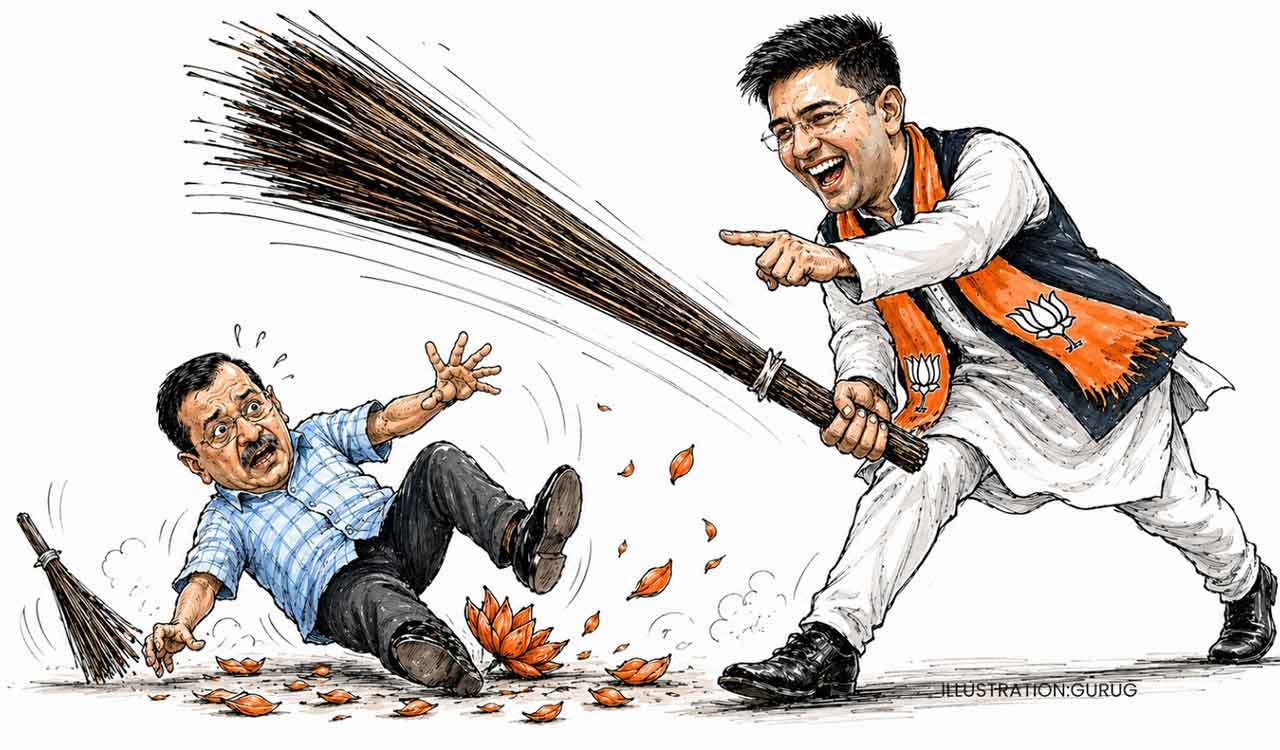


A party meant to rebel against the established political culture is on the receiving end of a rebellion. A party born out of an anti-corruption movement is caught in the throes of corruption cases. A party that promised to herald a new brand of politics is grappling with the old, familiar ways of political management. The irony of it all cannot get any worse as the Aam Aadmi Party (AAP) is no longer about the common man but about just one man — Arvind Kejriwal — who seems to have perfected the art of losing close friends at regular intervals. The latest to jump ship are those who were among his closest lieutenants. Raghav Chadha —among the seven Rajya Sabha MPs who defected to the BJP — was once Kejriwal’s blue-eyed boy who was credited with the party’s success in Punjab. Similarly, Sandeep Pathak was once one of the most powerful persons in AAP. Another rebel, Swati Maliwal, was a member of Kejriwal’s core team even before the Anna Movement. She became the chairperson of the Delhi Commission for Women at a very young age and was promoted to the Rajya Sabha, ignoring the claims of senior leaders. Ironically, she parted ways with Kejriwal in the most acrimonious way. The latest internal crisis — following two-thirds of the party MPs crossing the floor — comes as a moment of reckoning for a party that saw a meteoric rise initially but over the years has grappled with allegations of a lack of internal democracy and an autocratic style of functioning.
The writing was on the wall ever since Chadha upped the ante against the party top brass over his removal from the post of AAP’s Deputy Leader in the Rajya Sabha. Ironically, Ashok Mittal, who replaced Chadha, has also joined hands with him. This is undoubtedly the biggest setback for the party after its defeat by the BJP in the Delhi Assembly elections last year. Allegations of marginalisation of key leaders and the concentration of decision-making suggest deeper organisational fissures. While Kejriwal, who is fighting a court battle in the Delhi excise policy case, has framed the exodus as a betrayal of the trust reposed in these MPs by the party as well as the people of Punjab, the defectors claimed that the party is giving precedence to “personal benefits” over public service. Following this huge jolt, the challenge for AAP is to keep its flock together and regain the lost ground in Punjab. The possibility of more party leaders switching over to the saffron party cannot be ruled out. Punjab Chief Minister Bhagwant Mann has branded them as traitors and accused the BJP of engineering defections to weaken AAP. The saffron party, which has already poached several Punjab Congress leaders in recent years, is looking to boost its prospects in the border State going to polls early next year.
Also Read

Related News