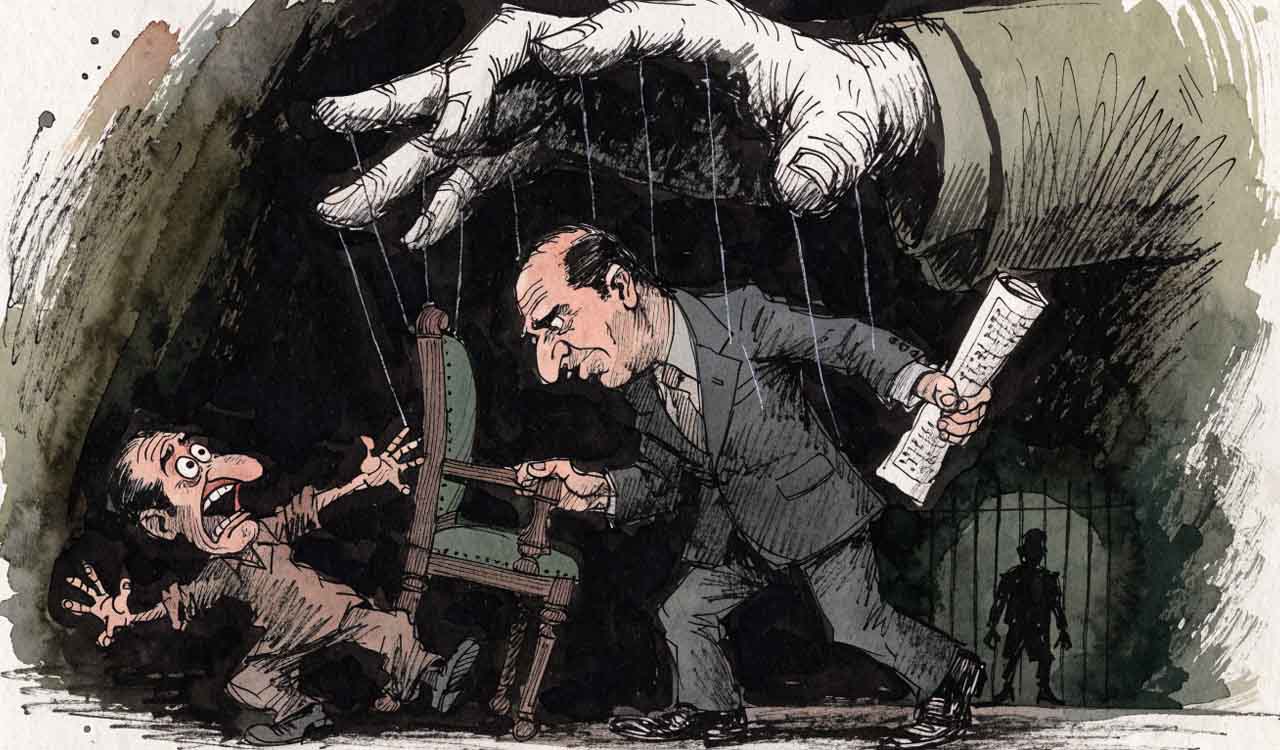
Editorial: Address farmers’ concerns
The Indian government must allay growing fears that the Seeds Bills will increase corporate control and marginalise farmers



At a time when the farming community is grappling with multiple problems that make agriculture a challenging endeavour, the draft Seeds Bill proposed by the Union Agriculture Ministry has raised fresh concerns. The Centre must address these apprehensions before moving ahead with the legislation aimed at overhauling the regulations governing the seeds sector and replacing the Seeds Act, 1966, and the Seed Control Order, 1983. The proposed legislation gives the government powers to regulate seed prices in specific cases and imposes penalties on those selling fake or substandard seeds. While the government maintains that the proposed law will help improve the supply of quality seeds, curb counterfeits and offer greater protection to farmers, there are growing fears that it will increase the control of private and multinational companies over the seed market. The registration requirements could restrict farmers’ traditional practice of saving and exchanging seeds. The compensation provisions are difficult to enforce and still favour private companies. There is also concern that the proposed regulation may indirectly increase seed prices, making farmers more dependent on commercial suppliers rather than their own seed systems. The seed market has, over the years, become increasingly complex, leading to financial losses caused by substandard products. The porposed legislation has introduced several regulatory changes: All seed varieties will require registration; they must undergo Value for Cultivation and Use (VCU) testing across multiple locations; seed dealers and distributors must obtain a state-issued registration certificate to sell, import or export seeds; every seed container must carry a QR code generated through the central government’s Seed Traceability Portal to enable end-to-end tracking.
A proposed Central Accreditation System would allow companies accredited at the national level to receive automatic recognition across all States — a measure critics say overwhelmingly benefits big corporations. A resounding feedback from the farming community is that the proposed law is better suited to seed companies and agribusinesses than to ordinary cultivators, particularly those relying on traditional, chemical-free farming. The VCU trials, critics say, favour uniform hybrid seeds typically produced by larger companies. Indigenous, diverse and climate-resilient varieties may struggle to meet the standardised criteria and could gradually disappear from formal markets. Similarly, QR codes, online submissions and continuous tracking pose challenges for small rural seed keepers with limited internet access or digital literacy. There are also fears over genetically modified or patented seeds entering India. No wonder the farmer organisations are up in arms. By enabling corporate dominance and predatory pricing of seeds, the proposed law will squeeze small and marginal farmers, increasing their cost of cultivation and making them more vulnerable. Farmers’ bodies contend that the new law introduces a highly centralised and corporatised regulatory framework that risks weakening farmer-centred protections and diluting India’s legal architecture for biodiversity conservation and farmers’ rights.

Related News