Editorial: Being an Indian citizen
Centre's clarification that a passport is not conclusive proof of citizenship raises questions over how Indians can establish their citizenship amid fears of voter deletions during the ongoing SIR exercise
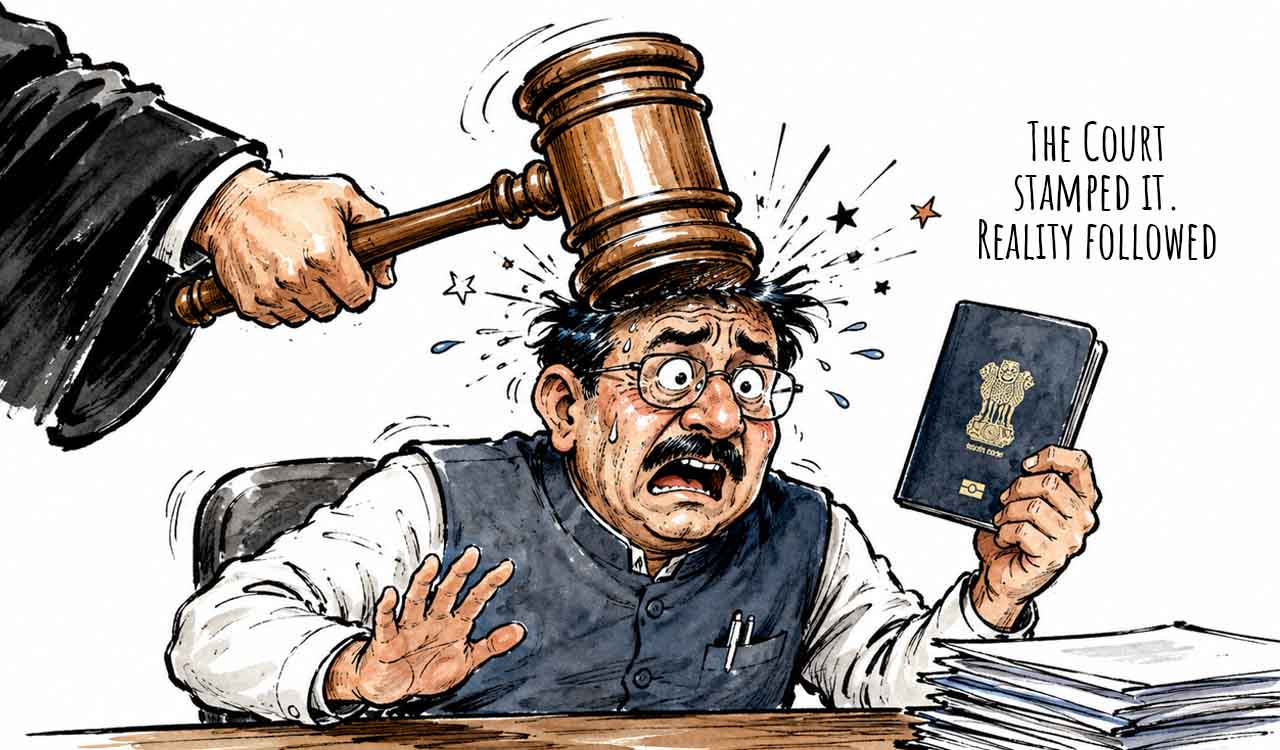


As if public fears over the Citizenship Amendment Act (CAA) were not enough, a new wave of confusion has now been created over the scope of usefulness of the passport. Ever since the Ministry of External Affairs issued a statement that an Indian passport is not conclusive proof of citizenship, a new layer of uncertainty has been added to the public discourse on identity and citizenship. One wonders how a document issued by the government of India after thorough police verification becomes unworthy of recognition as proof of citizenship. While the Ministry’s clarification that a passport serves only as a travel document may be technically correct, an overwhelming majority of Indians view the document as an official recognition of their citizenship. Although nationality and citizenship are legally distinct, this distinction has little practical relevance for the overwhelming majority of citizens. No doubt Section 20 of the Passports Act allows passports to be issued to non-citizens in exceptional cases and in the public interest; such instances are exceedingly rare. Since the Government of India does not issue any citizenship card or certificate, one wonders how one should prove one’s citizenship. Since passports and voter ID cards can be issued only to citizens after thorough verification, they must carry the presumption of citizenship. Wittingly or unwittingly, the government has created confusion at a time when there are growing fears over the possible deletion of a large number of voters in the ongoing Special Intensive Revision (SIR) exercise of the Election Commission.
For anyone born in India, there must be a presumption of citizenship, and voter ID and a passport must be taken as conclusive proof of citizenship. The Supreme Court, in its Bihar SIR judgment, held that the passport is a “conclusive proof” of citizenship. The government cannot deny citizenship to those to whom it has issued a passport or voter ID card, unless the same were obtained fraudulently. The entire issue goes beyond legal technicalities. A passport is one of the most rigorously verified documents issued by the government. It requires extensive documentation, identity checks and police verification. Therefore, the assertion that it cannot conclusively establish citizenship appears bizarre. Indian law does not have any provision for a universally recognised citizenship certificate. Citizenship may be acquired through birth, descent, registration, naturalisation or incorporation of territory under the Citizenship Act, 1955. Consequently, citizenship is often established through a combination of records rather than a single document. A passport, voter ID, Aadhaar card, PAN card, or birth certificate may each support a claim of citizenship, but none is legally unassailable in every circumstance. The key question that arises is what document ultimately proves citizenship. The government’s answer is that citizenship is determined by law and supporting evidence, not by possession of any one document. However, this stance poses a policy challenge.
Also Read

Related News