Editorial: Breaking China’s semiconductor chokehold
Resilient semiconductor networks are essential in a world increasingly shaped by supply chain weaponisation
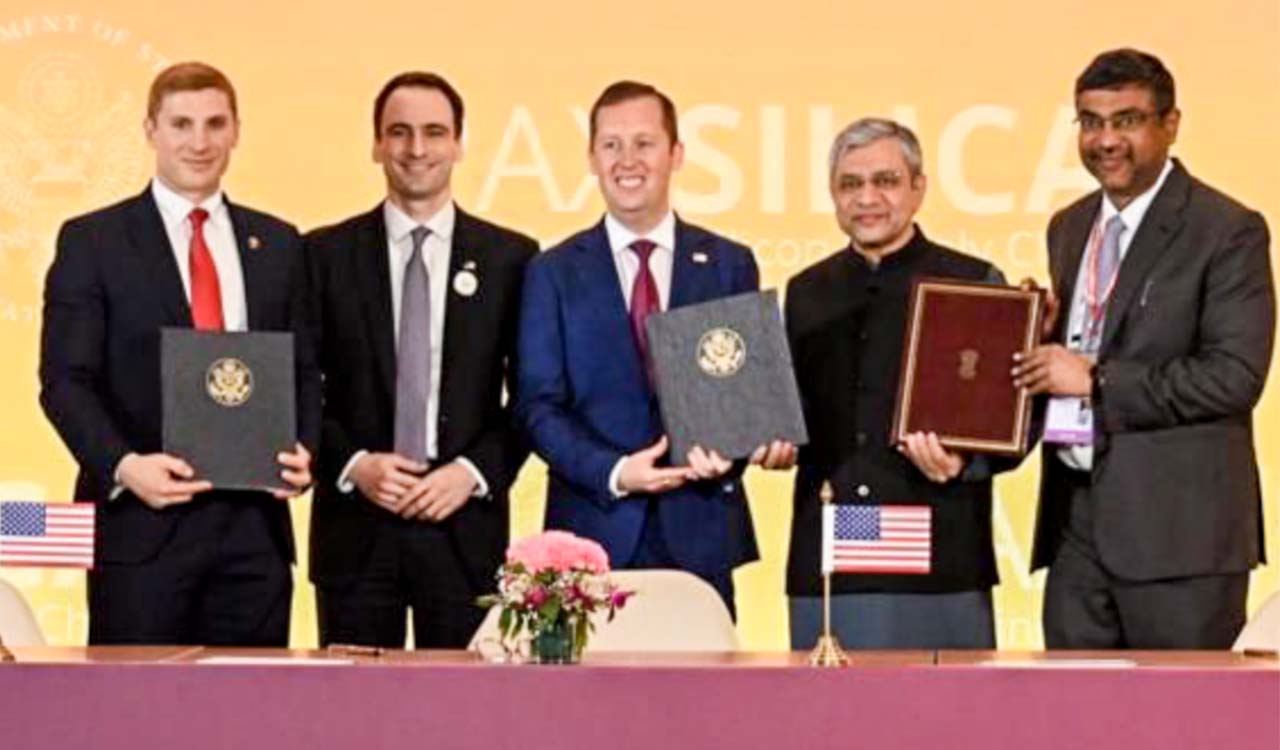


India’s entry into the Pax Silica coalition — a United States-led alliance aimed at building a resilient supply chain for critical minerals and artificial intelligence — is a transformative moment that could significantly accelerate the country’s semiconductor and AI ambitions. The agreement, signed on the sidelines of the AI Impact Summit hosted by India at New Delhi, makes India the 10th full member of a grouping that is essentially working in tandem to counter China’s oversized influence on global supply chains. The move also assumes significance as it comes amid efforts by India and America to finalise a trade deal and move forward on several other initiatives to solidify bilateral ties after a spell of severe strain in relations due to a steep hike in US tariffs. The pact has the potential to reshape tech alliances. In the last few years, there has been a convergence among global economies on the need for joint efforts to “de-risk” critical technologies, linking artificial intelligence governance with resilient supply chains and long-term economic security partnerships. For this to happen, it is essential to break China’s semiconductor chokehold and build a reliable supply chain for economic security. For instance, Beijing currently controls 90% of India’s rare earth imports. Becoming a member of Pax Silica will open up avenues for India. Launched in December last year, the initiative includes Israel, Japan, Greece, Australia, Qatar, the United Arab Emirates, Singapore, South Korea, and the United Kingdom.
India was excluded from the coalition when it was founded. The sharp reversal on the part of the US sends across a clear signal that Washington is now serious about including New Delhi within its technology orbit to counter China. The Pax Silica declaration lays out a shared vision of economic and technology cooperation across supply chains — from raw materials to semiconductors and AI infrastructure — and commitment to mutual prosperity and security. Resilient semiconductor supply chains are critical in a world that has witnessed supply chain weaponisation. According to estimates by the International Energy Agency, China accounts for about 61% of global rare earth production and 92% of processing. Rare earths are used across a wide range of modern industries, from semiconductor chips and electric vehicles to defence equipment and consumer electronics. In recent months, China has tightened controls on rare earth exports, requiring government clearance before the minerals can be shipped abroad. The dominance in production and processing gives China considerable leverage in trade talks. Against this backdrop, efforts such as Pax Silica are seen as moves by partner nations to reduce their reliance on heavily concentrated supply chains and build alternative, trusted networks for critical technologies. Joining this coalition is crucial for India at a time when it is building a complete ecosystem for the critical sector.
Also Read

Related News