Editorial: Chaos continues in SIR process
The Election Commission of India must adopt a more flexible approach so that all eligible voters can exercise their franchise
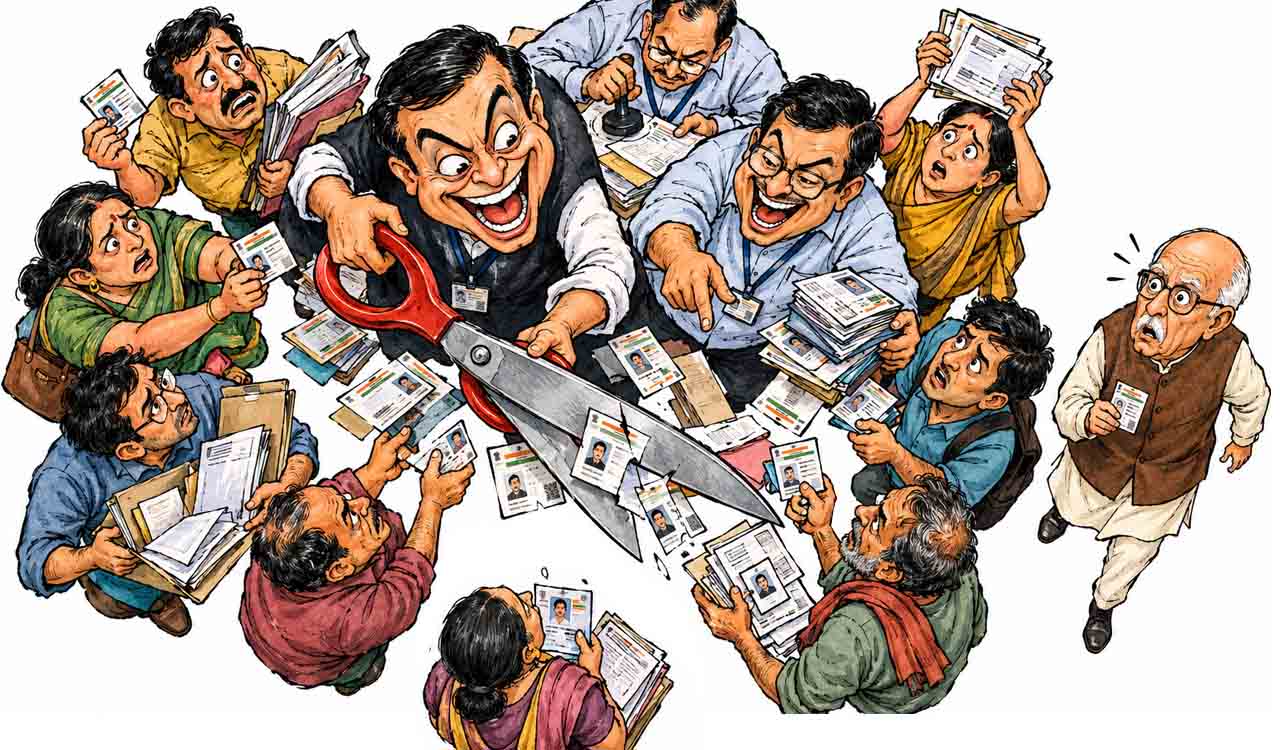


Placing the burden of proof on voters is the key problematic area of the ongoing electoral rolls revision exercise in several States. Authorities are issuing notices at random, asking people to submit additional documents to prove they are genuine voters. Despite the Supreme Court’s intervention to simplify the process and provide relief to ordinary citizens from the stifling procedures, the Special Intensive Revision (SIR) of electoral rolls remains mired in controversy. Some of the country’s most prominent citizens have received notices over discrepancies in their voter records. A look at the list would certainly leave one baffled. It includes former Deputy Prime Minister LK Advani, External Affairs Minister S Jaishankar, former Vice-President Jagdeep Dhankhar, Delhi Chief Minister Rekha Gupta and AAP national convener Arvind Kejriwal. Ironic as it may seem, even Election Commissioner SS Sandhu has been issued a notice under this exercise being conducted by the Election Commission of India (ECI). If this is the situation befalling high-profile individuals, one can well imagine the plight of lesser mortals who are at risk of being removed from the rolls. While there should be no two opinions about the need for revision of electoral rolls as mandated under the Constitution, it is the manner in which the EC is going about the process that has raised concerns. The poll panel must adopt a more flexible approach so that all eligible voters can exercise their franchise. There are genuine concerns that unreasonable procedures and an ever-expanding set of additional documents could lead to mass disenfranchisement.
Marginalised groups such as migrant labourers, women and the poor would be the most affected. This negates the very purpose of democracy, which is to facilitate accessibility, rather than raise barriers. Instead of inspiring confidence, the Election Commission’s hasty drive has created confusion among the people. More than 33 lakh notices have been issued in Delhi alone, particularly in cases where voters could not be mapped to the 2002 intensive revision. The ECI and Delhi’s Chief Electoral Officer have stressed that receiving a notice does not mean vote deletion. Voters are being given an opportunity to submit documents and respond, with final decisions subject to due process. Electoral rolls must be periodically updated to remove duplicate, ineligible or deceased voters while ensuring that eligible citizens are not excluded. Both objectives are equally important. However, the appearance of late economist Bibek Debroy’s name among those “unmapped with last SIR” — almost two years after his death — illustrates how database-driven exercises can produce glaring anomalies. On receiving a notice, electors are required to submit their responses and the required documents to the authorities concerned. It must be ensured that every eligible voter gets a fair opportunity to remain on the rolls. A transparent, reviewable procedure is needed to prevent the exercise from losing credibility.
Also Read

Related News