Editorial: Diluting institutional autonomy may boomerang
Opening the doors to private players in ICMR and ISRO may help in capacity building, but regulating their work through bureaucrats toeing the line of political masters raises disturbing questions
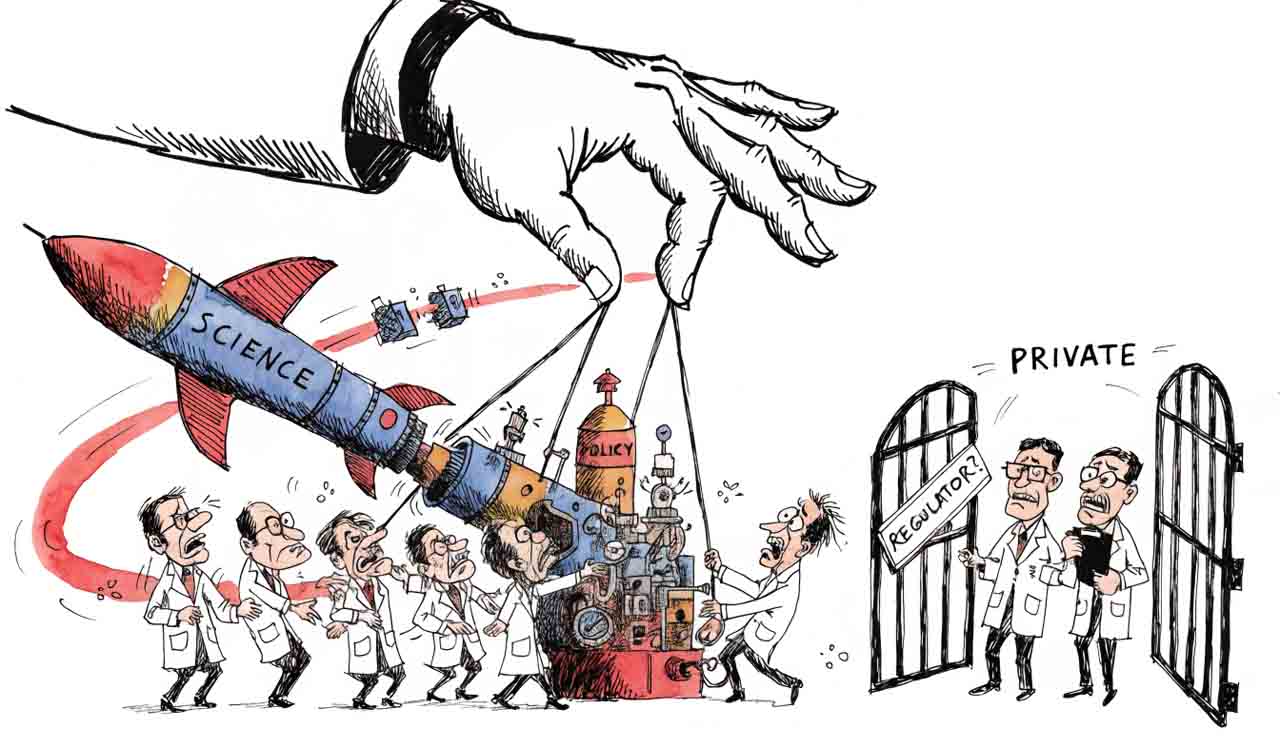


Over the last decade, the NDA government has been displaying a dangerous propensity to dilute the autonomy of public institutions and move towards overcentralisation of powers. The latest targets are the Indian Council of Medical Research (ICMR) and the Indian Space Research Organisation (ISRO). Opening the doors to select private players may help in capacity building, but regulating their work through bureaucrats toeing the line of political masters raises disturbing questions. Scientists need autonomy to function to their full potential. No country can afford to sideline the vision of its scientific community. The reorganisation of the ICMR raises questions over the future of its autonomy. Instead of medical scientists and public health specialists guiding health research, the national health research agenda will now be set by a highly centralised National Health Research Stewardship Committee headed by the Principal Scientific Adviser and having bureaucrats as members. The Department of Health Research will act as the implementing agency, and the ICMR will be at the last tier as the in charge of “scientific and technical execution.” There has been a systematic attempt to place the decision-making powers in the hands of non-technical people, centralise decision-making, and undermine the autonomy of scientific agencies. All this could eventually lead to the hollowing out of expertise and talent in public-funded R&D bodies. In the case of ISRO, a recent policy shift to involve the private sector in many operations has raised the hackles of employees.
Representatives of nine employee bodies, comprising over 5,000 members, addressed a joint letter to ISRO chairman V Narayanan, seeking clarification about the organisation’s future role. The exodus of senior scientists has further deepened concerns over the future of the premier organisation. The government has pushed for the entry of private players into the space sector without a legally binding regulatory framework. Space activities involve a plethora of international obligations and regulations, ranging from allocation of orbital slots for satellites to liability and insurance in the case of accidents on Earth or in orbit. It is, therefore, important to have a proper regulatory system in place. ISRO first proposed a space law in 2015, and while deliberations were ongoing, the government announced a new space policy in 2023, under which IN-SPACe (Indian National Space Promotion and Authorisation Centre) was formed. Its role is still unclear, and it is not backed by any statutory provisions. While its enabling role as a single-window point for startups is obvious, calling it a regulator is misleading. If private-sector facilitation is all that IN-SPACe is doing, then ISRO and its two commercial arms — Antrix Corporation and New Space India Limited — were better placed to do that, given their cumulative experience of interfacing with the private sector over the past four decades. Private-sector engagement and technology transfer are functions that the three agencies have handled internally all along.
Also Read

Related News