Editorial: Global warming—point of no return
Climate diplomacy cannot remain trapped in a cycle of lofty declarations of ambition and patchy implementation
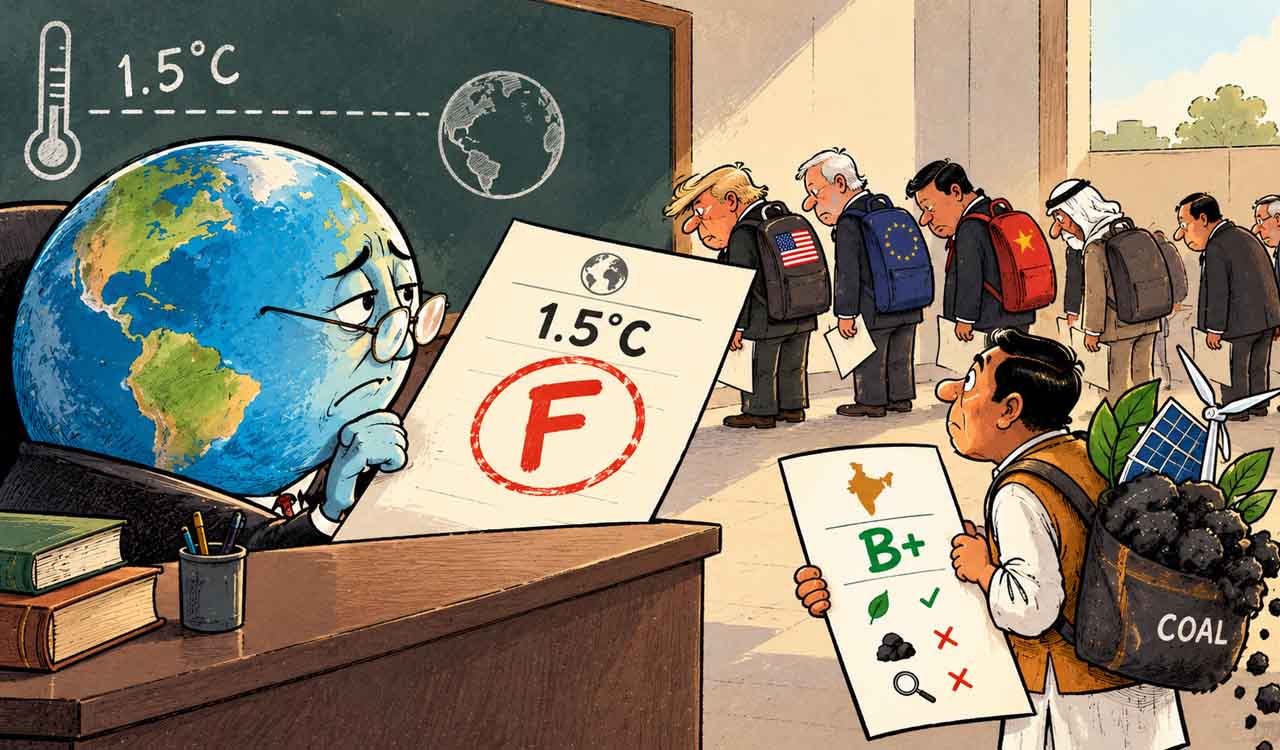


It is now official. We have failed to achieve global emission targets. The sum and substance of the latest Emissions Gap Report 2026, released by the United Nations Environment Programme (UNEP), is that the world has reached a point of no return. Nearly a decade ago, at the Paris Climate Summit—Conference of the Parties (COP) 21—nations agreed to strive to limit the global temperature rise to 1.5 degrees Celsius above pre-industrial levels. That goal is out of reach now. The best option before the world now is to limit the duration of this ‘overshoot’ as short as possible and bring temperatures back down by 2100. This appears a far cry, given the gap between what the nations promise and what they actually deliver. Climate diplomacy cannot remain a cycle of lofty declarations of ambition followed by patchy implementation. There is consensus among experts that extreme temperatures are directly linked to climate change. The silver lining for India is that it has delivered more than most nations despite being under pressure to meet the growing energy requirements. India is one of only six G20 countries likely to achieve its 2030 NDCs (Nationally Determined Contributions) with existing policies. UNEP says India is also likely to meet its updated 2035 targets, even though these allow total emissions to rise. However, UNEP has flagged concerns over India’s net-zero strategy, citing a lack of transparency on carbon removal and the absence of annual reporting.
These concerns could invite international scrutiny at COP31, to be held in Turkiye next month. India’s domestic goals are in line with its self-imposed 2070 deadline for reaching net-zero emissions. However, challenges persist in aligning policy with sustainable development. It continues to rely on coal as the main source to meet energy needs. Non-fossil sources make up about 52% of installed capacity but produce only a quarter of the electricity. For India, the key strategic takeaway from the UNEP Report is that its climate strategy must pivot from capacity building to structural integration and resilience. With a global overshoot of the 1.5 degrees Celsius threshold now increasingly difficult to avoid, India faces a double imperative: it must accelerate deep decarbonisation across industrial sectors while rapidly shielding its economy, agriculture, and citizens from severe climate impacts. Adding intermittent renewables alone is no longer enough for India because the core challenge is grid integration and system stability. As an expanding manufacturing hub, India’s biggest growth in emissions will stem from industrial sectors such as steel, cement, chemicals, and heavy transport. Therefore, there is a need to move from pilot projects to large-scale commercial adoption of green hydrogen in steelmaking, fertilizer production, and refineries. India can drive transition through public incentives like PLI schemes, but long-term success hinges on multilateral finance. The country must lead Global South negotiations to demand predictable, concessional financing and technology transfers from developed nations.
Also Read

Related News