Opinion: Counting what counts after COP30 — Measure adaptation, not just emissions
Without clear measures of livelihoods protected, climate finance will stay carbon-focused, even after COP30



By Sushanta Mahapatra, Madan Meher
COP30 in Belém, Brazil, closed with high expectations and mixed results. Delegates rightly celebrated the Belém Political Package and the Baku-to-Belém roadmap — a recognition that climate finance must scale up dramatically —, but the summit also made clear a stubborn truth: the global system still measures success overwhelmingly in terms of tonnes of carbon, not in terms of livelihoods defended. That imbalance is no longer an academic frustration. It is a practical barrier to protecting workers, markets and incomes as the climate already begins to bite.
Also Read
The scale of the gap is stark. The United Nations’ Adaptation Gap Report (2025) updated the recurring estimate that developing countries will need roughly USD 310 billion per year for adaptation by 2035 under modelled cost approaches — rising to as much as USD365 billion if one extrapolates National Adaptation Plans — while international public adaptation finance to developing countries amounted to only about USD 26 billion in 2023. Those numbers are not abstractions; they are a forecast of unprotected people and unpaid losses unless adaptation is rapidly re-engineered to be investable at scale.
Measurement Matters
At the same time, the labour market implications are profound and immediate. The International Labour Organisation’s analysis on heat stress shows how temperature increases directly translate into lost working hours, lower output, and declining incomes. In absolute terms, because of its population size, India alone faces projected productivity losses equivalent to roughly 34 million full-time jobs by 2030 if heat exposures continue to worsen — a conversion of climate risk into lost livelihoods that policymakers can and must count.
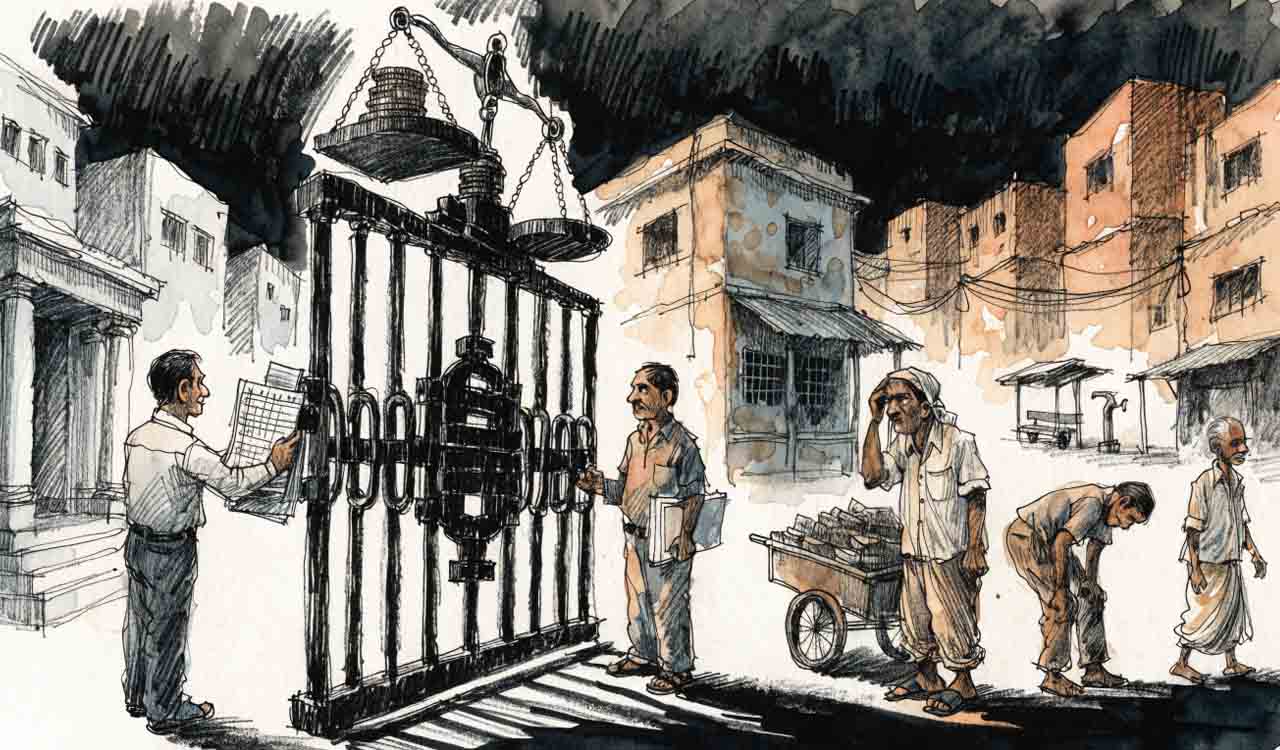
Why does measurement matter? Because markets and ministries respond to what is counted. Mitigation benefits from coherent, fungible units — tonnes of CO₂ avoided — that financial instruments, regulators and carbon markets can aggregate and price. Adaptation has instead produced a mosaic of activities: flood walls, mangrove restoration, early warning systems, heat shelters and social protection top-ups.
Each has value, but they are reported in different units (hectares restored, houses protected, funds disbursed) and with variable rigour. The result is predictable: donors and private investors gravitate to what is comparable and auditable. Without a shared, operational metric framework, adaptation projects struggle to compete for scarce concessional capital and guarantees.
When adaptation is invisible to financiers, the policies that most protect the poor — from shaded markets to rapid pay-out insurance — remain underfunded
COP30 provided an opening. The Belém Political Package reanchored finance and implementation as central aims of the multilateral process. Those initiatives create a policy lever: if large pooled facilities, Multilateral Development Bank (MBD) guarantees and labelled instruments made outcome measurement a condition for concessional support, adaptation could enter a virtuous cycle of verification, risk-reduction and private participation.
Emission-focused Metrics
A pragmatic, evidence-based way forward lies in a two-tier adaptation accounting system that complements emission-focused metrics.
- Tier 1 — Core outcome indicators. Agree on a compact set of cross-cutting outcome metrics that speak to livelihoods and public health. These are not inputs or outputs but outcomes that investors and citizens can understand and aggregate: days of work preserved; avoided income loss during defined climate shocks; beneficiaries in high-exposure occupations reached; reductions in emergency hospital admissions attributable to an intervention; and time-to-pay for microinsurance claims. These indicators anchor adaptation finance in the economic realities it is meant to protect.
- Tier 2 — Standardised reporting and verification. Require that adaptation finance instruments — from labelled bonds and blended finance vehicles to MDB concessional guarantees — report against those indicators using standard baselines and independent third-party verification. Baseline protocols and monitoring templates would be publicly available, and measurement costs recognised as eligible project expenses. This permits scoring and aggregation across projects, allowing adaptation portfolios to be presented to institutional investors and insurers on a like-for-like basis.
This framework addresses three persistent objections. First, attribution. No intervention can be perfectly insulated from context, but adaptation outcomes commonly define a plausible attribution window (for example, income losses avoided during a named flood season). Standardised baselines and plausible counterfactuals — similar to best practice used in development impact evaluations — reduce ambiguity.
Second, measurement costs. These should be treated as part of the project: donors and blended facilities can finance baseline surveys and verification upfront. Third, impact-washing. Independent auditors, transparent reporting templates and penalties for misreporting reduce incentive misalignment.
Of course, the policy design must be sensitive to equity and capacity. Measurement protocols must be simple and low-cost for municipalities with limited administrative capacity. Templates for rapid baseline surveys, standard verification checklists and regional verification hubs would reduce transaction costs. Donors should subsidise the first wave of measurement to create demonstrable track records that private investors can underwrite.
Attracting Investors
COP30’s outcome does not guarantee this reform will happen. As the Adaptation Gap Report warned, current public flows are a fraction of what is needed and have been falling in real terms. That gap will not close through pledges alone; it will close when adaptation can be presented to investors as a set of verifiable, aggregated, credit-enhanced outcomes that reduce economic risk — measured in workdays and income protected as much as hectares and trees.
This is also a moral issue. When adaptation is invisible to financiers, the policies that most protect the poor — shaded markets, informal-sector retrofits, rapid pay-out insurance — remain underfunded. Counting what counts would shift scarce public concessionality toward interventions with proven returns in preserved livelihoods and reduced health burdens.
COP30 in Belém has reset the finance debate; it also left an opening for reform. The Baku-to-Belém roadmap and the Belém Package together create a policy moment to require measurement as a condition of scaled finance.
If adaptation is to receive parity with mitigation, the next step is technical but decisive: agree on a compact set of outcome indicators, fund pilots that link finance to verified preservation of work and income, and make measurement costs eligible within blended facilities. Do that, and pledges will move from promising rhetoric to practical protection for the millions whose paycheques and lives already hang in the balance.

(Sushanta Mahapatra teaches Economics at ICFAI Foundation for Higher Education, Hyderabad. Madan Meher (PhD in Economics) is a former Senior Research Fellow at Gangadhar Meher University, Sambalpur, Odisha)

Related News