Editorial: India must increase R&D spend to retain talent
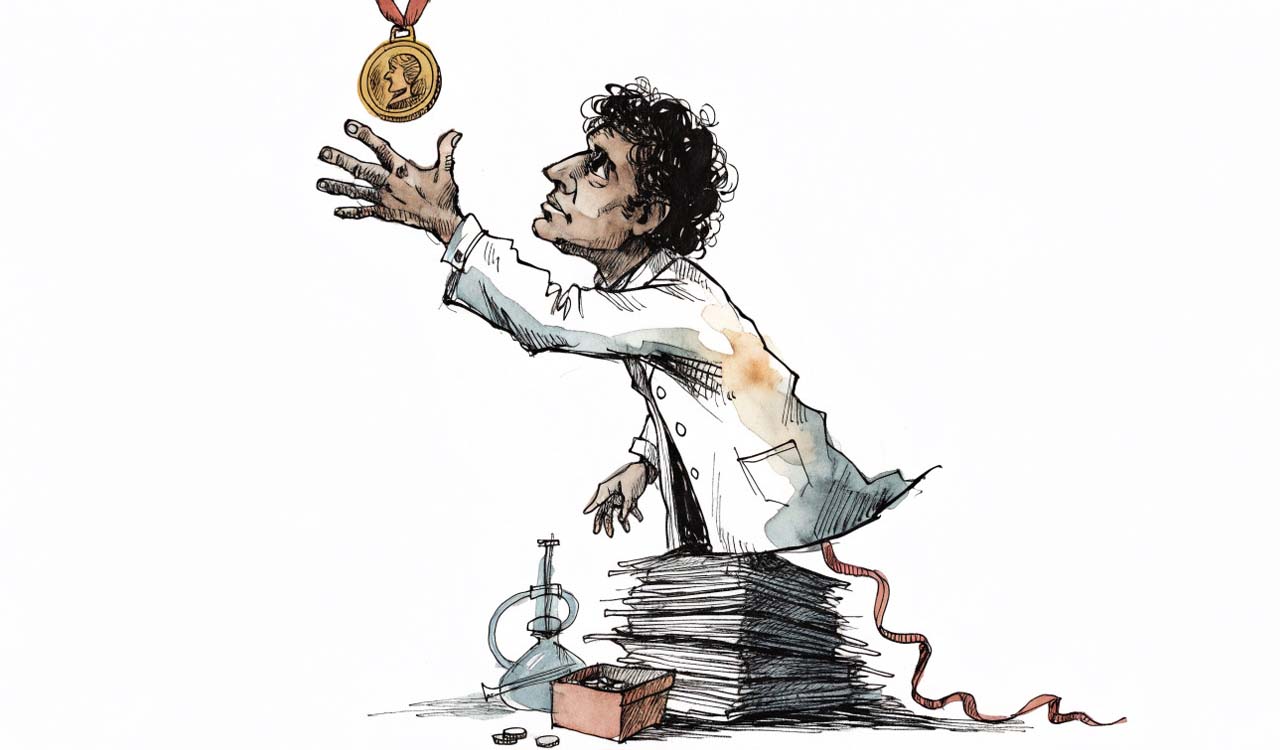
The problem with India is not a lack of talent but the absence of conditions in which talent can flourish


Despite being endowed with immense talent, India has been unable to fully harness it due to a lack of an enabling ecosystem to nurture innovation and research. As a result, the bright minds leave the country in search of greener pastures, and 73% of them never return. This is a distress signal for a country that aspires to become a global technology power by 2047. Though brain drain has been a major challenge for decades, successive governments have not done enough to retain talent and arrest the trend. A recent global study, titled ‘Researcher of the Future 2026’, has revealed that 52% of India-based researchers want to relocate overseas. This figure significantly outpaces other major nations; by comparison, only 13% in China express a desire to move abroad. The findings are based on a survey of more than 3,200 scientists globally conducted by academic publishing and analytics firm Elsevier. India has the highest percentage of researchers worldwide planning to move abroad in the coming years, driven by a search for better funding, higher salaries, and advanced laboratory infrastructure. The United States remains their most preferred destination, followed by Germany and the UK. India’s R&D landscape continues to face several hurdles. The most significant being poor budgetary allocations and research infrastructure. As India aspires to a place at the global high table of scientific innovation, it is imperative that the government acknowledge the elephant in the room and urgently address the issues hindering the progress of the research ecosystem.
The country needs to increase R&D spending to 3% of GDP, from the present 0.64%, to achieve the desired results. For comparison, South Korea and Israel invest over 5% of their GDP in R&D, the US nearly 3.5% and China around 2.7%. The private sector, too, must pitch in and step up spending on innovation and R&D. On other key parameters like the number of PhDs produced annually or citations in scientific literature, the country’s performance has been far from inspiring. With a large youth population and a strong diaspora that is more affluent and accomplished, India has immense potential in pioneering high-tech innovation. An overhaul of the science education and research system, elimination of bureaucracy, structural changes for better administration and the creation a large number of centres of excellence around outstanding individuals would go a long way in harnessing the true potential. India has given the world some of its finest scientific minds, from CV Raman, Srinivasa Ramanujan and Homi Bhabha to Venkatraman Ramakrishnan and Subrahmanyan Chandrasekhar. Yet its domestic research ecosystem consistently fails to convert this human capital into global scientific leadership. The paradox is sharp and painful: the problem is not a lack of talent but the absence of conditions in which talent can flourish.

Related News