Editorial: India’s space mission — Keeping hopes soaring high
From harnessing satellite technologies for societal good to exploring new frontiers of the solar system, the Indian space research community can take pride in the milestones it has achieved and the vision it has set for the journey ahead
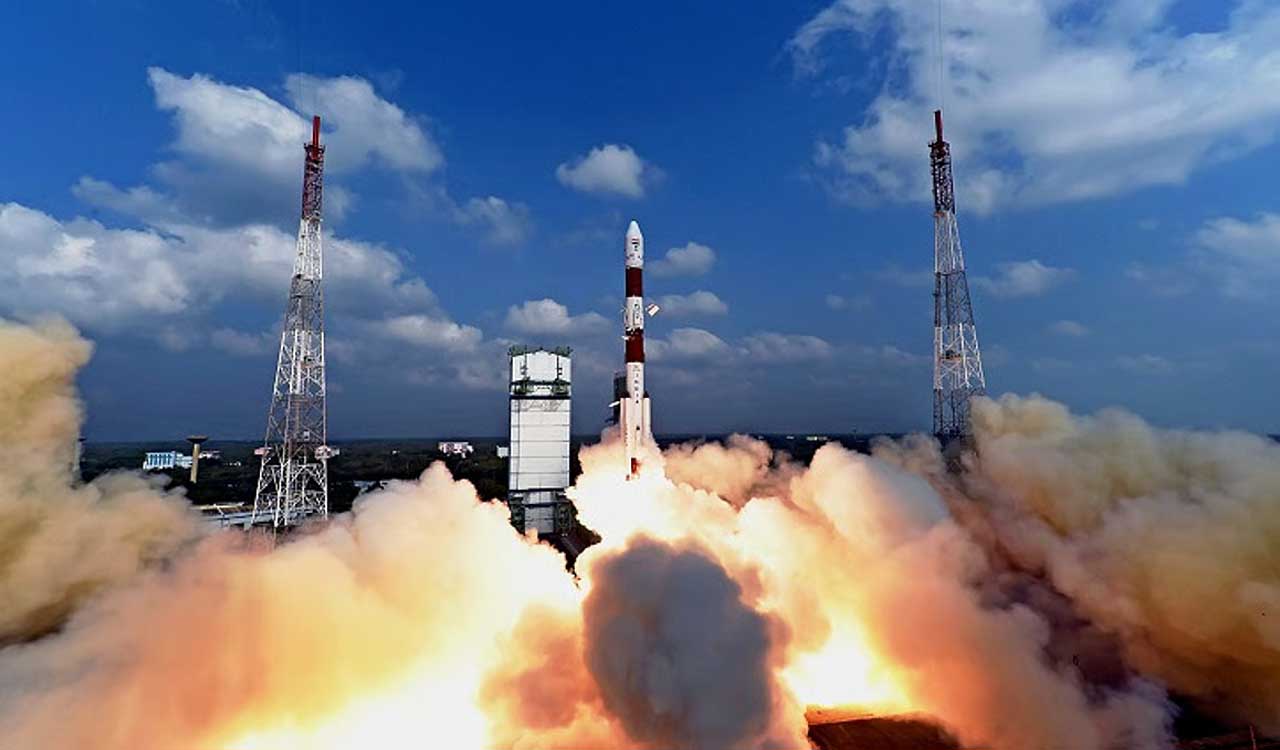


As the year 2025 draws to a close, the Indian space research community can justifiably take pride in the milestones it crossed and the vision it has set for the journey ahead. Amid the gloom and unpredictability of global geopolitics, it is the consistency of achievements in this niche area that brings a sense of comfort and reassurance. Be it harnessing satellite technologies for societal good or exploring new frontiers in the solar system, Indian scientists have been second to none. The parting gift of the year was the successful launch of the heaviest-ever satellite into low Earth orbit — the 6,100 kg American communications satellite BlueBird Block-2, while the coming year will see hectic activity in the skies and also in the deep seas. The Indian Space Research Organisation (ISRO) has set a target to launch seven missions, including its ambitious first uncrewed mission under the ‘Gaganyaan’ programme, before the end of March 2026. The much-awaited ‘Gaganyaan’ mission will enhance India’s role in human spaceflight research and future interplanetary missions, strengthen collaboration with global space agencies and open avenues for commercial space tourism and private sector participation. Another ambitious mission on cards is ‘Samudrayaan’, a deep-sea exploration to study marine biodiversity, mineral resources, and the seabed. The mission, in coordination with the National Institute of Ocean Technology (NIOT), will send a three-member crew in a submersible vehicle to a depth of 6,000 metres. The experience, much like how Axiom-4 supports ‘Gaganyaan’, will provide vital insights for advancing India’s deep-sea exploration capabilities.
This will be followed by ‘Chandrayaan-4’, a mission aimed at returning lunar samples to Earth. These missions mark a transformational phase in India’s scientific journey, enhancing its global leadership in space technology, marine research, and planetary exploration. India’s future missions promise not just technological advancements but also economic and strategic benefits, paving the way for a new era of discovery and innovation. From using a creaking, old bullock-cart to transport a new satellite for a telemetry test in 1981 to emerging as a leading global player in space research now, India has come a long way. This was despite the export controls imposed by the developed world on strategic technologies to prevent India from developing missile or nuclear technology. Now, India is on the other side of the table, having established its niche strengths and earned a place at the high table of elite space-faring nations. ISRO’s arduous journey symbolises the triumph of self-reliance over technological restrictions. Its success is a testament to India’s ability to innovate, adapt, and achieve remarkable feats despite financial and technical constraints. From launching India’s first satellite, Aryabhata, in 1975 to sending the Mars Orbiter Mission (Mangalyaan) into orbit in 2013 at an astonishingly low cost, Indian space scientists have repeatedly defied expectations. And, the Chandrayaan missions have expanded our understanding of the Moon.

Related News