Editorial: Maharashtra’s anti-conversion law—preventing fraud or curbing freedom?
Protection under Maharashtra’s anti-conversion law should not come at the cost of an individual’s constitutional freedom to choose their religion, partner, and personal way of life
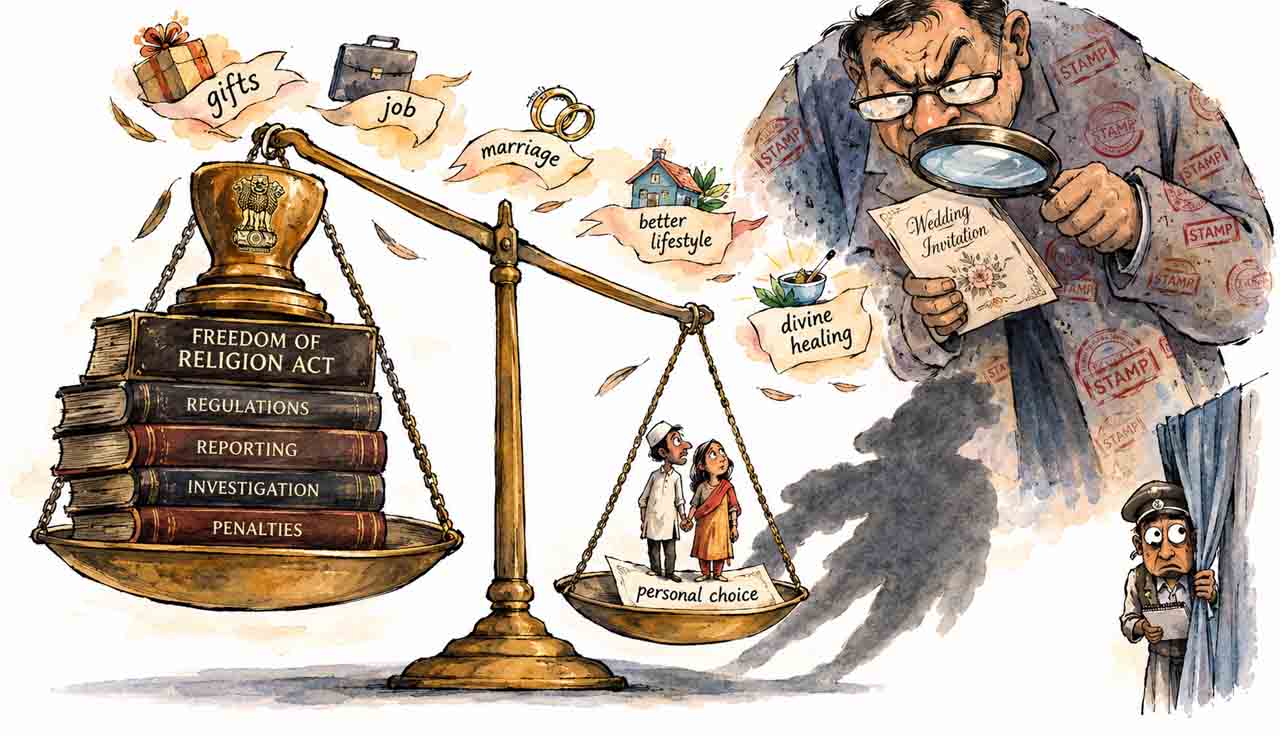


Maharashtra’s anti-conversion law raises several questions that sit at the intersection of religious freedom, constitutional rights, and the protection of vulnerable sections of society from becoming victims of fraudulent manipulation. The Freedom of Religion Act, 2026, is significant because Maharashtra is a large and socially diverse State that serves as a microcosm of India. Moreover, the legislation goes considerably beyond simply criminalising conversion by physical force. It seeks to regulate the process of conversion, creates extensive reporting requirements, and gives relatives and the police a role in initiating proceedings. The Act deals with specified forms of unlawful conversion, including conversion through force, fraud, coercion, misrepresentation, undue influence, inducement, deception connected with marriage or other unlawful means. There is no doubt that the State should protect people from being converted against their will. However, it must be extremely careful not to obstruct them from exercising a will that society happens to dislike. The debate around the law has included questions about ‘Love Jihad’, interfaith relationships, religious freedom, privacy, personal choice and the role of the government in regulating conversions. The manner of implementation of the new law in the coming years and its constitutional scrutiny by the courts will determine whether it becomes a genuine shield against exploitation or a new instrument for policing personal faith and relationships. One of the problematic aspects of the law is that it places the burden on the person who caused or facilitated the conversion to establish that it was lawful.
What makes Maharashtra’s legislation particularly expansive is its definition of allurement. It includes gifts, money or material benefits, employment, free education, a promise to marry, a better lifestyle, divine healing, and even portraying one religion’s practices negatively or glorifying another religion. It also refers to “brainwashing through the medium of education” in its definition of unlawful conversion. Opposition parties and civil-society groups have argued that the new legislation could interfere with the constitutional freedom to choose one’s religion and life partner. They described the law as coercive and potentially discriminatory, particularly in cases involving interfaith couples and minority communities. The BJP-led coalition government’s stated position is that it does not prohibit voluntary religious conversion. It also states that the law does not prohibit genuine interfaith relationships. The government says individuals, particularly vulnerable people, must be protected from religious conversion achieved through force, fraud, coercion or inducement. Ruling party leaders have raised fears that unchecked conversions could eventually alter the demographic balance of Hindu-majority communities. However, critics argue that such protection should not come at the cost of an individual’s constitutional freedom to choose their religion, partner and personal way of life. Maharashtra joins the list of several States that have enacted laws commonly described as anti-conversion or Freedom of Religion laws. They include Odisha, Arunachal Pradesh, Chhattisgarh, Gujarat, Haryana, Himachal Pradesh, Jharkhand, Karnataka, Madhya Pradesh, Uttar Pradesh and Uttarakhand.
Also Read

Related News