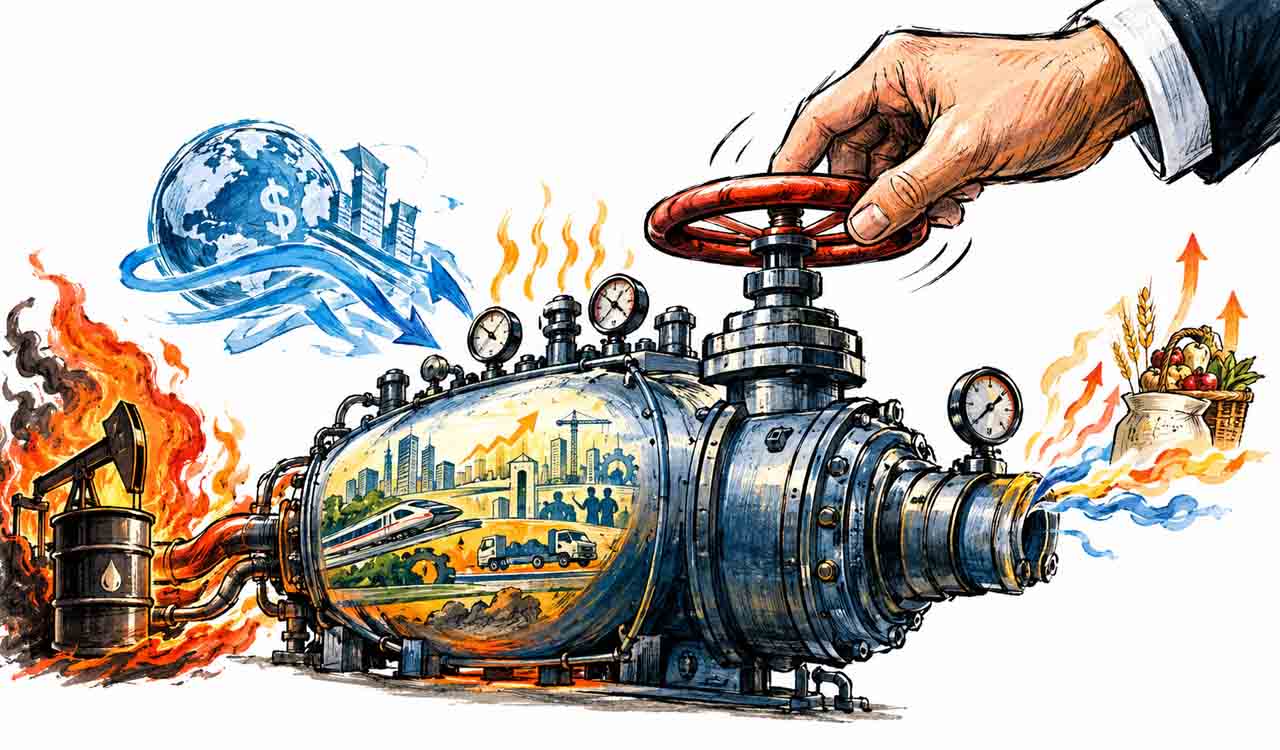
Editorial: Maintaining status quo
Stability in benchmark lending rates, combined with a supply-side push in the recent Union Budget, is expected to complement demand traction across sectors


The Reserve Bank of India’s decision to keep the repo rate unchanged at 5.25% is guided by strong economic growth, despite external headwinds, and benign inflation. In its first meeting in the new year, the Monetary Policy Committee (MPC) has unanimously opted for a neutral stance at a time when macroeconomic conditions are encouraging — consumer inflation levels being well below the target level; domestic demand resilient and global trade linkages getting realigned. The successful completion of the trade deals — first with the European Union and now with the United States —augurs well for the economy, prompting the RBI Governor Sanjay Malhotra to take an optimistic position about strong growth momentum in the days ahead. India’s long term growth outlook remains favourable, with GDP growth estimated at 7.4% for the financial year 2025-26. Stability in benchmark lending rates, combined with a supply-side push in the recent Union Budget, is expected to complement demand traction across sectors. Global growth, supported by tech-investments, accommodative financial conditions and large-scale fiscal stimulus, is expected to be marginally stronger in 2026 than projected earlier. However, the confluence of escalating geopolitical frictions and rising trade tensions could be a matter of concern. The pause in repo rate provides stability for capital-intensive sectors like construction and infrastructure, supporting credit flow and long-term investment. This aligns strongly with the Union Budget, which has reinforced its focus on infrastructure through higher capex of Rs 12.2 lakh crore and an enhanced Construction and Infrastructure Equipment (CIE) scheme to promote domestic manufacturing of high-value, advanced equipment.
Keeping the repo rate unchanged means that home loan EMIs will not change either. The upside of this is that current house loan borrowers will not experience any EMI shocks for now, and new borrowers can plan their housing purchases with the benefit of predictability. For the real estate sector, an unchanged rate environment brings stability to funding costs, supports disciplined cash-flow management, and enables uninterrupted project execution. The RBI has reiterated its commitment towards providing sufficient liquidity for transmission. It has made it clear that, given the durable liquidity injected over the last few weeks, there would be no need for further durable liquidity injections in the fourth quarter of FY26. With headline inflation moving closer to the central bank’s comfort band and real GDP growth continuing to outperform expectations, policy continuity allows the transmission of earlier rate actions to fully play out across the banking system. The trade deals with the EU and the US are significant positives for domestic manufacturing, improving competitiveness versus key markets like China and strengthening the ‘China-plus-one’ opportunity. These deals have boosted the growth outlook for the country and also the chance of improvement in capital flows to the economy. Since exports to the US account for around 20% of the total exports, there will now be a big reprieve to exporters with the lowering of tariffs.
Also Read

Related News