Rewind: Kaleshwaram’s Treasures — Temples, Tussar, Three Rivers
Beyond the famed temples, Kaleshwaram’s rivers, tribal traditions and indigenous Tussar silk weave an untold Telangana story


By Swapnasundari
India’s youngest State, Telangana, constitutes a large part of Dakshinapatha (the Deccan region), which has a hoary civilisational past. Its antiquity is reinforced by ancient volcanic rock formations, a treasure trove of archaeological sites and a plethora of prehistoric rock paintings and burial sites.
Also Read
Present-day Telangana is a vibrant blend of vigorous indigenous tribal cultural expressions and a rich narrative of formal architecture, music, literature, and dance that developed under the patronage of illustrious royal dynasties, such as the Satavahanas and the Kakatiyas. Despite this historical depth, erroneous theories about Telangana’s culture have gained ground, either due to a lack of sufficient information or wilful negligence.
As a performing artiste-cum-researcher, I have always been fascinated by Telangana’s complex past. Its temple culture continues to interest me, as I have been privileged to dance during live worship at Sree Ranganatha Swamy temple in Nanakramguda, RangaReddy district, for almost three decades. I also had the pleasure of choreographing and presenting a large group dance production of an ancient temple ritual to commemorate the 800th year of the founding of the Ramappa Temple at Palampet, Telangana.
Independently, I studied Jayappa Senapati’s Nrrta Ratnavali and built a dance vocabulary inspired by it. All these experiences keep me connected with the lore and lure of Telangana.
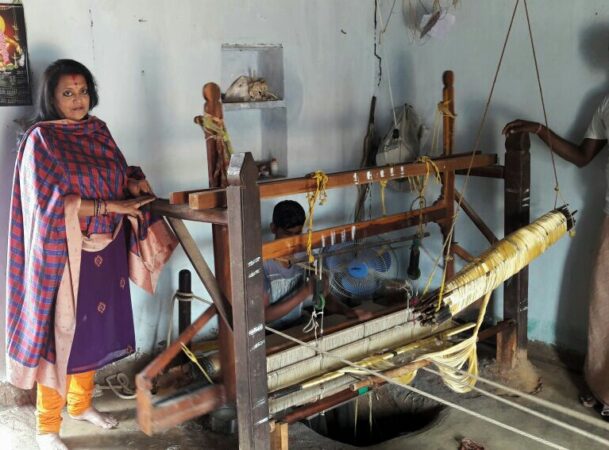
The author, Swapnasundari, stands beside the handloom watching the weaving process, in Mahadevpur near Kaleshwaram.
To obtain authentic information about the now-obsolete temple dances of Dakshinapatha, I have been delving into the history of Shiva temples and researching the worship system followed therein. The Agama Shastras, ancient treatises that prescribe the rules of temple worship, state that music and dance are compulsory features of temple worship. Such dances were performed as sevas(dance service to the deity). Though the Agama Shastras list such ritual dances, along with related songs and rhythms, none of the original dances have survived. Based on my study and analysis, I have developed a pedagogy for Agamic temple dance, which I have named Agama Bharatam. Through this idiom, I continue to create ritual dances afresh and place them in the public domain.
One misconception about Shaivism is that it spread to the Telugu regions from Dravida Desa. This is factually incorrect. Epigraphic, numismatic and literary evidence establish the prevalence of Shaivism in Telangana from early times. Early Shaivism, practised by the Kalamukha and Pasupatha sects, was widely prevalent in Dakshinapatha. Shaiva Siddhanta principles were propagated by Shivacharyas of the Golaki Mathams, who migrated from the Jabalpur region of Madhya Pradesh and established monasteries across the Deccan. They integrated pre-existing practices of Shiva worship with elements of Shaiva Siddhanta from northern and central India.
Several rulers extended patronage to this tradition. Arikesari (775–800 CE) made a donation to a Mugdha Shivacharya of the Kalamukha sect. Baddega (850-895 CE) of the Vemulawada Chalukya lineage built the venerated Shiva temple at Vemulawada. Beta II (1076-1108) constructed the Beteshwara Shiva Temple in Hanumakonda and granted land for establishing a matham. Prola II (1110-1158) similarly contributed to the consolidation of Shaivism.
The Kakatiya nobles and rulers consolidated Telangana’s Shaivite tradition. Some Shivacharyas became Raja Gurus of Kakatiya kings and were appointed as Sthanacharyas in major temples across the Telugu regions. The flourishing temple tradition of Shaivism in Dakshinapatha is further reinforced by the mighty Shiva temples built between c 1195 and c 1262 by Kakatiya rulers Mahadeva and Ganapatideva. Therefore, the view that Shaivism spread to Telangana from other regions must be dismissed as erroneous.
The Temples, Rivers
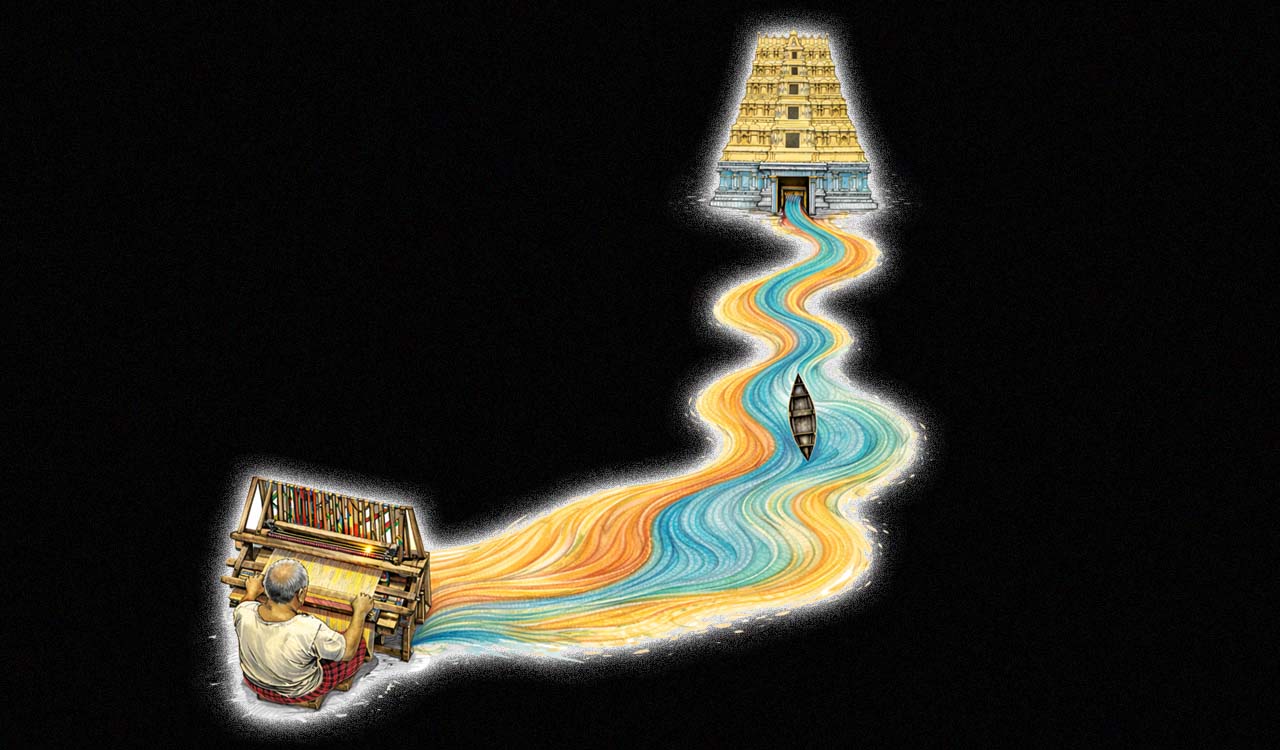
In this Shaiva narrative of Telangana, the famed temple of Kaleshwara-Rudreshwara in Jayashankar Bhupalpally district occupies a special position. The term Telanga itself is derived from Trilinga, which refers to three ancient Shiva temples of the Telugu land ie, Kaleshwaram, Srisailam and Draksharamam. The language spoken in Trilinga Desa was later called Telinga, Telunga or Telugu.
Located at the confluence of the Pranahita and Godavari rivers, Kaleshwaram finds mention in ancient texts and treatises such as the Skanda Purana. A third, invisible underground river is believed to join the above two rivers at Kaleshwaram. Lord Shiva presides over this confluence, where the mystical Saraswati is said to remain subterranean. This holy place is revered much like the Sangam at Prayag in north India.
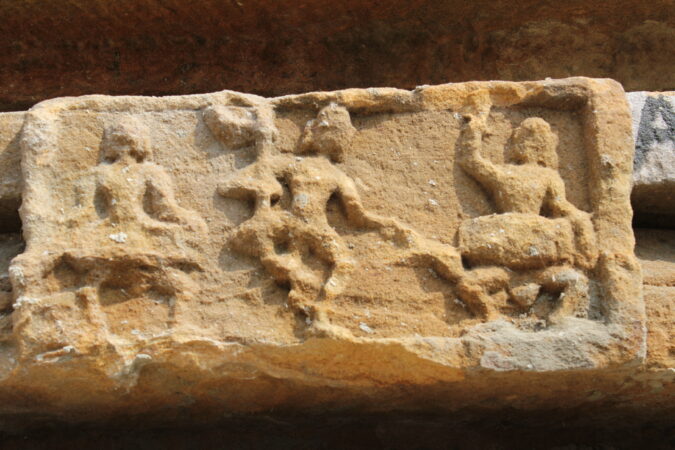
A testament to centuries of artistic activity. Photos by Swapnasundari
Various accounts attribute the establishment of the Kaleshwaram temple to the Shaivite Acharya Rameshwara Deekshita; to Gangadhara, a minister to Kakatiya Rudra Deva; to Vishveshwara Shivacharya of the Pasupata sect and to Kundamamba, sister of Kakatiya ruler Ganapati Deva. A rare and unique feature of the temple is that one peetham (pedestal) has two Lingams — Kaleshwara (Yama) and Mukteshwara (Shiva).
Telangana also provides access to many hidden cultural and natural treasures in its bordering areas. About 10 km from Kaleshwaram lies Somnur Triveni Sangam in Sironcha taluk of Gadchiroli district, Maharashtra. Eighty-four per cent of its population speaks Telugu, while the rest are Marathi speakers.
The forest deity Shiva presides over this picturesque meeting point of the Godavari and Indravati rivers, along with the subterranean Saraswati. Situated at the borders of Maharashtra, Chhattisgarh and Telangana, it attracts pilgrims from all three States for its natural beauty and religious significance.
The climate, soil composition and flora of this part of Telangana have shaped a distinctive cuisine that bears affinities with the food of its neighbouring regions. The traditional diet is wholesome and almost completely millet-based featuring jowar (sorghum), ragi (finger millet), jonna (maize), which are powdered or cooked and mashed into gruels or rotis, accompanied by pungent curries of tubers, seasonal leafy greens and fresh vegetables. Preparations such as Satthu and Ambali are consumed either plain or combined with buttermilk. Nutritious snacks like gudalu, made from black-eyed peas or chickpeas, are also popular. Indigenous tribes consume mahua fruit (Madhuca longifolia) and prepare Kallu, a fermented beverage from the wild date palm. There are even bamboo-based dishes.
Tussar Trove
In north-eastern Telangana, surrounded by lush forests, I discovered another hidden treasure: Tussar silk production in the contiguous weavers’ colony at Mahadevpur near Kaleshwaram. Tussar silk products produced entirely in Telangana remain unknown to many. The silkworms thrive on leaves of trees that grow in lush forests surrounding Mahadevpur. Cocoons are harvested once a year by forest-dwelling tribal communities, who supply them to the weavers.
To extract and process the silk, weavers use implements handmade from TunikiChekka, the wood of the Tendu tree (Diospyros melanoxylon), which grows abundantly in Telangana. The cocoons are boiled for nearly four hours to obtain the silk thread, locally called Dashilee Pattu. It is noteworthy that the boiled cocoons must be processed immediately or else they become unusable. The outer layer of the boiled cocoon is removed to access the fibre within.
This raw silk fibre undergoes many procedures, mostly handled by women. The yarn is divided into skeins, locally called ladee, wound onto a charkha, dyed with pigments, stretched on a wooden frame and brushed repeatedly with a sticky gruel made of natural starch to strengthen the thread. The stiffened yarn is then mounted on a loom to weave sarees, stoles, shawls, and shirting material. A single saree can take 50 to 55 hours to complete.
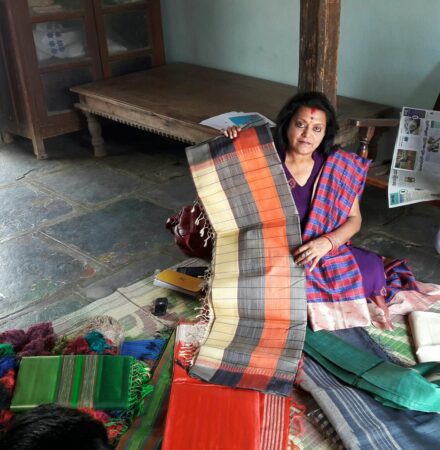
The author with a Tussar silk saree woven in Mahadevpur.
Silk is also procured after the worm abandons its cocoon, a process known as Ahimsa silk, as worms are not boiled. This too undergoes similar processing but is slightly coarser. To colour the natural ivory-hued Tussar silk, Mahadevpur weavers traditionally used vegetable dyes derived from turmeric, allum, dried leaves and flowers, fruit peels, lac and Indigo, among others. The dyed skeins were boiled with a shampoo extracted from Kunkudu kaya or Sapindus mukorossi (Indian soapnut), which softened the silk and fastened the pigments to it. However, market pressures have driven many weavers to shift to cheaper chemical dyes, though some NGOs are trying to revive natural dyeing practices.
During my visit to Mahadevpur, I purchased vegetable-dyed Tussar silk sarees directly from the weavers. I cherish the proud moments of explaining their origin whenever I wear them.
Telangana’s multi-hued cultural fabric is as pliable as its indigenously produced Tussar silk, yet as resilient as the majestic temples and forts that stand as silent witnesses to its chequered past. As Telugu people, we must make concerted efforts to share and celebrate this rich history and traditions in the best way we can.
(The author is a Padma Bhushan awardee, founder and chief proponent of Agama Bharatam and Vilasini Natyam, and acclaimed exponent of Kuchipudi and Bharatanatyam)

Related News