Editorial: Ray of hope in West Asia
A temporary US pause on Iran strikes fuels cautious hopes of de-escalation, but ongoing attacks, conflicting claims, and uncertain back-channel talks suggest it may be a tactical breather
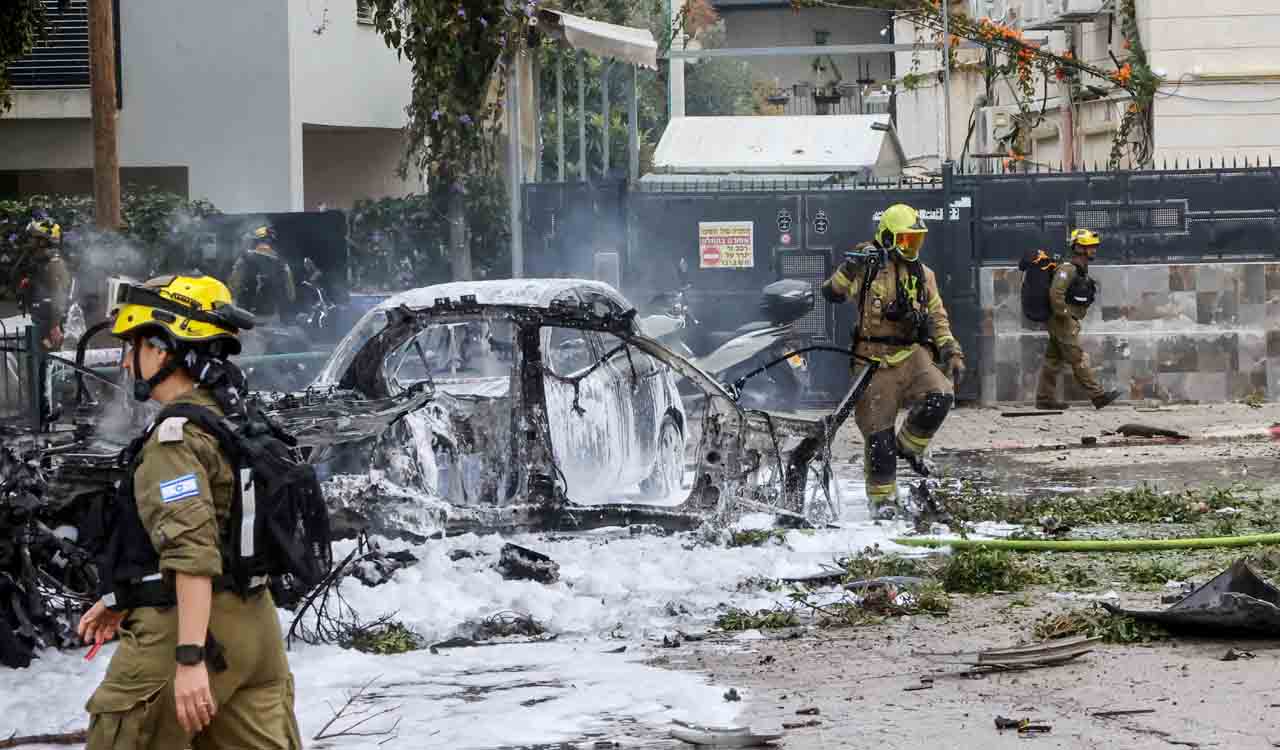


In the ever-changing theatre of conflict in West Asia, United States President Donald Trump’s announcement of a strategic pause in military strikes against Iran raises hopes of a possible breakthrough. The entire world is desperately waiting for the war to end, as its continuation would have disastrous consequences for the global economy. Trump, whose mercurial actions have only worsened the situation, appears to have been rattled by the tit-for-tat responses from Iran so far. He even revealed that the US and Iran have been holding talks to end the war, a positive development amid the all-around gloom. Though media reports suggest that the two warring nations were exchanging messages through intermediaries about de-escalating the conflict, with the immediate goal of averting attacks on critical energy infrastructure, Iran has officially denied it. Israel, on the other hand, has vowed to continue its military campaigns against Iran and its ally Hezbollah in Lebanon. Given the contradictory signals emanating from the conflict zones, any temptation to be overly optimistic about a return to peace must be tempered with caution. Trump’s propensity for impulsive decisions cannot be underestimated. For now, he has taken his foot off the pedal and extended his deadline for Iran to reopen the crucial Strait of Hormuz to international shipping, saying that the US would hold off on threatened strikes against Iranian power plants for five days. The climbdown has come after the US and Iran traded threats over energy targets.
The war’s global fallout has seen the price of oil and gas rise sharply since late February — a crisis that is now worse than the oil shocks in 1973 and 1979 combined. Thankfully, Trump’s statement about talks with Iran immediately reduced energy prices somewhat, but it was unclear how long that could last without tangible progress toward ending the war. The President has repeatedly given optimistic assessments that temporarily eased market jitters, only to have prices rise again. More than 2,000 people have been killed since the US-Israeli attack on Iran that ignited the conflict more than three weeks ago. Despite the back-channel peace negotiations, the war continues to rage on multiple fronts. The US and Israeli militaries have carried out fresh waves of strikes on Iran, while there have been reported attacks on Israel and Persian Gulf countries. While Trump has stated that his Middle East envoy Steve Witkoff and close aide Jared Kushner are talking to “a top Iranian official”, Iran’s Ministry of Foreign Affairs has dismissed his claim that Washington-Tehran discussions are underway. The ministry has described his remarks as an attempt to buy time for further US military operations and to influence energy markets amid soaring prices due to the conflict. The important question that arises is whether the purported talks are aimed at achieving de-escalation or are merely a tactical pause driven by immediate political and military pressures.
Also Read

Related News