Editorial: Tough challenges ahead for BJP in Bengal
Suvendu Adhikari needs to act responsibly and contribute to preserving the State’s inclusive social fabric
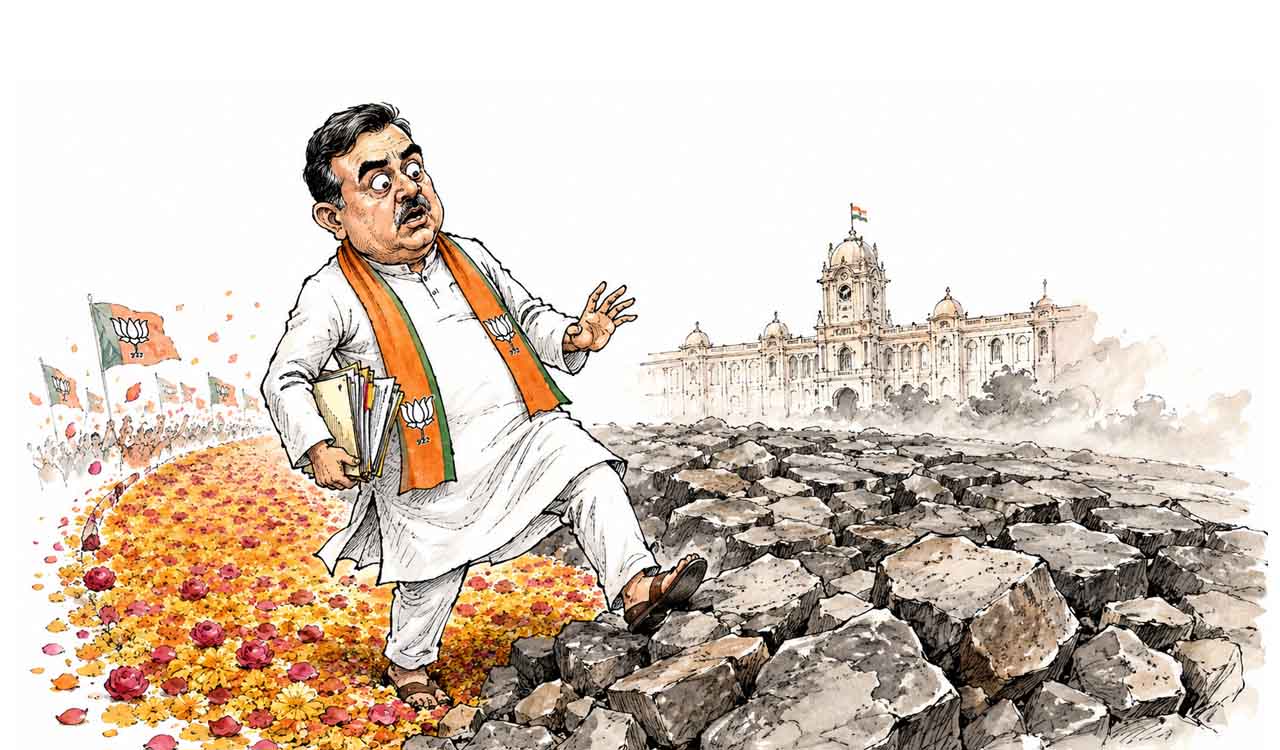


As the political pendulum in West Bengal has swung to the Right with the BJP’s historic win in the recent Assembly elections, a plethora of challenges await the new government. The key among them is the entrenched culture of political violence. Ironically, a State that takes pride in its intellectual heritage has been fertile ground for revenge politics and street violence for decades now. The immediate task before the new Chief Minister, Suvendu Adhikari, is to stem the tide of political violence and transform Bengal from a permanently mobilised political battlefield into a governable State. Soon after the change of guard, sporadic incidents of political violence were reported across the State while a defiant Mamata Banerjee refused to resign despite the defeat of her Trinamool Congress in the elections. But what shook both political stakeholders and civil society was the murder of Suvendu Adhikari’s personal assistant in Madhyamgram. It brought back fears of a vicious cycle of political violence, similar to what the State witnessed after the 2021 Assembly polls. The abysmal state of law and order was one of the key campaign issues of the BJP, while the call for “badlaav” (change) was the focus of Prime Minister Narendra Modi’s victory speech after the election results. It is time for the new government to bring about this much-needed change. Apart from addressing violent political culture, improving the State’s economy, generating employment, and navigating a religiously diverse social landscape are the other important challenges before Adhikari, who was once a close confidante of Banerjee before turning into her bete noire.
The political transition marks a seismic shift in Bengal politics, ending the TMC’s 15-year rule. Banerjee, a firebrand leader who earlier ended the 34-year-long reign of the Left Front government, thrived on regional identity politics, projecting herself as the defender of the State against an overbearing Centre and a majoritarian ideology. The BJP, on the other hand, offered a new identity framework based on national integrity, border security, citizenship, and demographic anxieties. It used issues such as illegal migration and minority appeasement, and succeeded in effecting religious polarisation to create a popular narrative in its favour. As it gets down to the nitty-gritty of running the government, the saffron party will now have to shed some of its divisive rhetoric of the poll campaign. Adhikari, known for his polarising speeches, needs to become a responsible administrator and work towards preserving the State’s inclusive nature. In fact, during electioneering, he had promised to close the border with Bangladesh to prevent infiltration and stop West Bengal from turning into “Western Bangladesh.” Such divisive rhetoric will have no place in a responsible government set up. The new government must focus on pressing public issues like employment, industrial growth and revival of the tea and jute industries.
Also Read

Related News