Explained: How the new TDR rules could increase apartment prices in Hyderabad
Builders in Hyderabad have opposed the new TDR rules mandating usage for high-rise buildings above 10 floors, warning that the policy could significantly increase project costs and lead to higher apartment prices for homebuyers
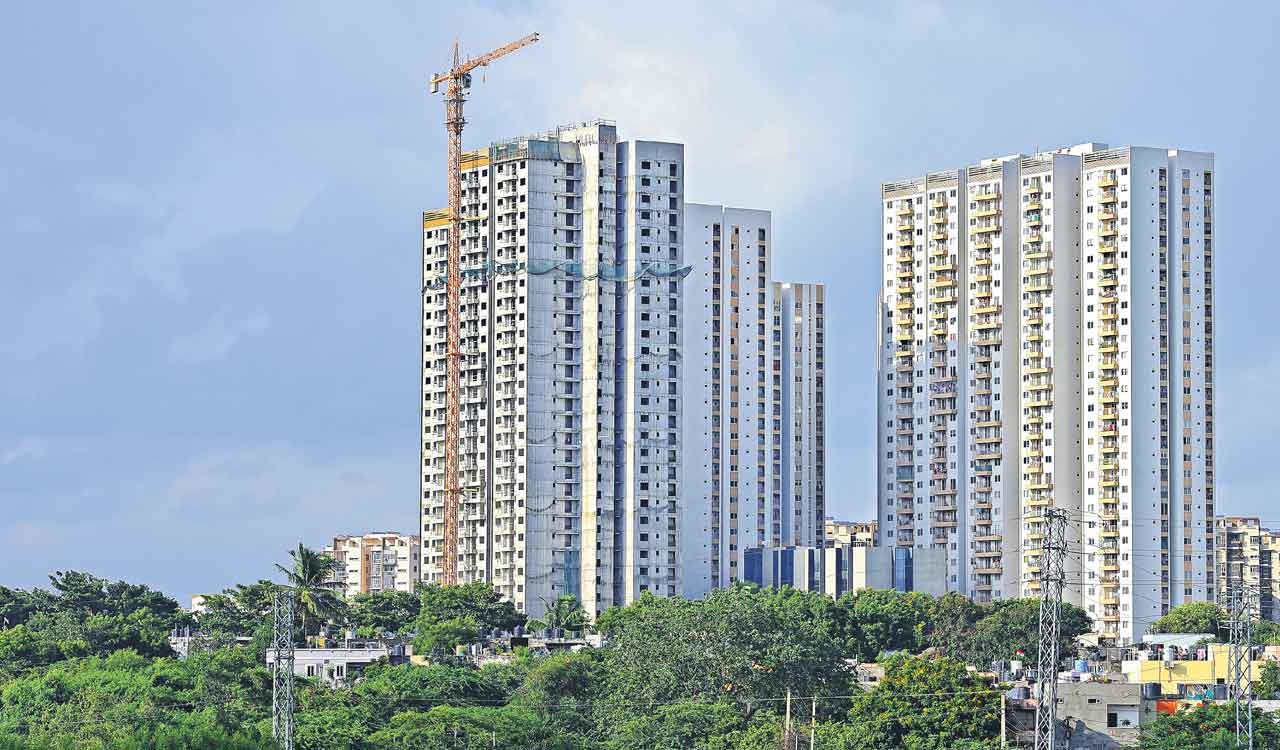


Hyderabad: Builders in Hyderabad have raised objections to the new Transferable Development Rights (TDR) rules imposed for the construction of high-rise buildings above ten floors, urging the State government to reconsider the orders. The real estate sector says the new policy could increase project costs and eventually push up apartment prices for buyers.
Here is the issue and the concerns raised by builders.
What are the new TDR rules introduced by the government?
The Metropolitan Area and Urban Development Department issued GO Ms No.16 on January 16 this year. According to the order, builders constructing high-rise buildings above 10 floors must ensure that 10 percent of the built-up area above the 10th floor is executed through the utilisation of Transferable Development Rights. The government introduced this provision mainly to increase the demand for TDR and improve its acceptance among landowners who lose their land for various infrastructure and public projects.
Why are builders opposing the new rule?
Builders say the rule imposes an additional financial burden on developers. In most projects, builders enter development agreements with landowners in ratios such as 60:40 or 50:50, depending on the location and value of the land parcel. Under the new rules, builders would have to purchase TDRs separately to comply with the mandatory requirement. A CREDAI Hyderabad member said this would increase the project cost, forcing developers to pass the additional burden on to customers through higher apartment prices.
How much could the construction cost increase?
According to industry representatives, the cost impact could be substantial in taller buildings. If a developer constructs a 40-floor building, the builder may have to invest nearly four times the cost in purchasing TDRs for the mandatory portion. This could increase the unit cost of apartments by approximately Rs.350 to Rs.400 per square foot.
What is the current market situation for TDR?
At present, TDRs are available at about minus 23 to 25 percent of the total cost value in the market. However, builders warn that the new rule could sharply increase demand for TDRs. This could create opportunities for black marketing in TDR transactions, which they say would be detrimental to developers and distort market prices.
What changes are builders suggesting?
Builders have suggested that the mandatory utilisation of TDR for 10 percent of the built-up area should be made applicable only to projects above 20 floors instead of buildings above 10 floors. They also say the rule should not be implemented uniformly across all zones of Hyderabad, as real estate conditions vary significantly across different parts of the city. According to them, the rule could discourage high-rise construction in several emerging zones.
How does the government grant TDR for affected lands?
The government grants TDR to landowners whose properties are affected by public projects or environmental protection measures.
Grant of TDRs for land affected under the Core Urban Region:
• Lands falling in the Full Tank Level (FTL) of lakes and Maximum Flood Level (MFL) of rivers receive TDR equivalent to 200 percent of the built-up area surrendered.
• Lands located in buffer zones of lakes and rivers receive TDR equivalent to 300 percent of the built-up area surrendered.
• Lands outside buffer zones but required for conservation or development of water bodies receive TDR equivalent to 400 percent of the built-up area surrendered.
• Lands acquired for road widening receive TDR equivalent to 400 percent of the built-up area surrendered.
• Private lands affected by nala widening or development receive TDR equivalent to 400 percent of the built-up area surrendered.

Related News
-

Property registrations decline 15 per cent in September in Hyderabad
-
Hyderabad set to host seventh International Real Estate Conference
-
Case registered against real estate firm for duping investors
-
PropTech Platform Houssed.com Organizes Broker Meet to Strengthen Real Estate Partnerships in Hyderabad