FSSAI sets new standards for Hyderabadi Haleem
The FSSAI has introduced strict standards for Hyderabadi Haleem, including minimum meat, protein and moisture requirements. The new regulations aim to standardise the iconic dish, with compliance deadlines extended until November 2026 following concerns raised by exporters and manufacturers.
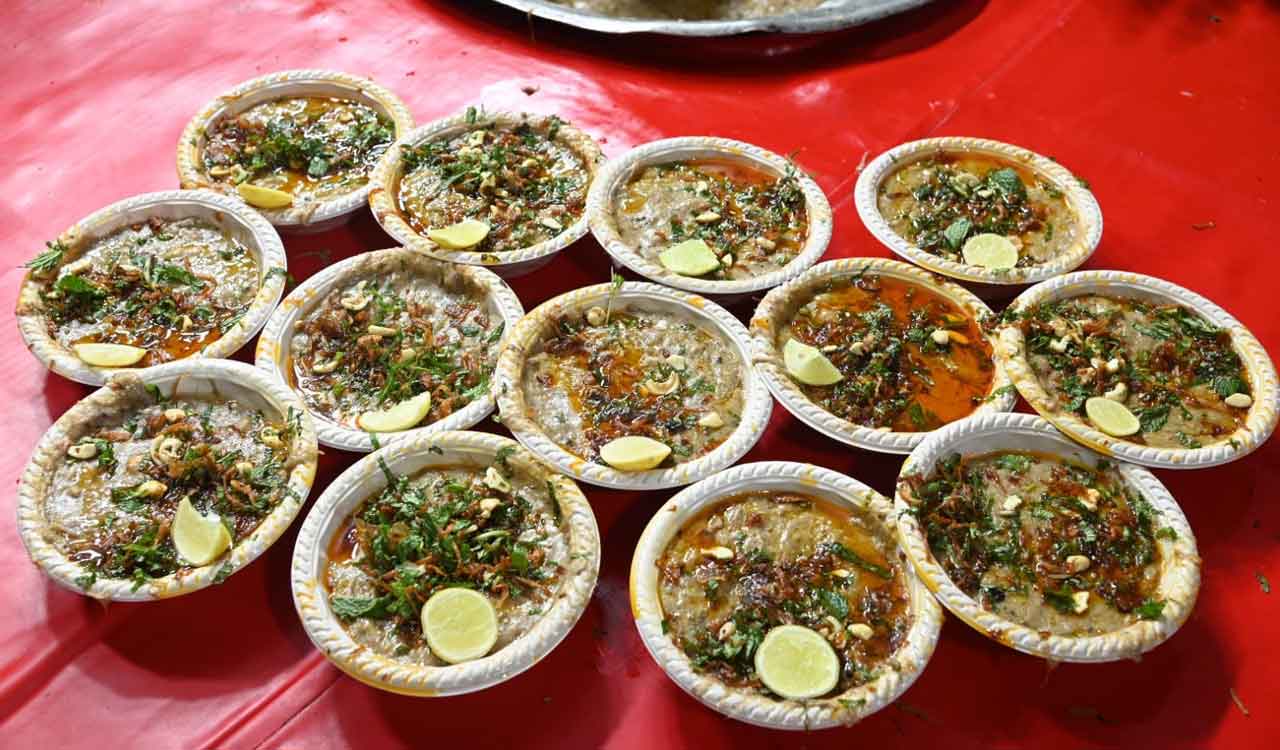


Hyderabad: For decades, the secret to a perfect bowl of Hyderabadi Haleem lay in the hands of the ustad (chef) and the ritual of the bhatti. However, in a major shift from tradition to technology, the Food Safety and Standards Authority of India (FSSAI) has decided to standardize the renowned dish, which is synonymous with the culture of Hyderabad.
The food regulatory body has come up with a set of standards for Hyderabadi Haleem, whose taste varies from galli to galli, effectively turning a cultural staple into a strictly monitored industrial product.
The move began with a landmark notification in which the FSSAI moved Haleem out of the ‘general food’ category and into a specialised niche and, for the first time, defined exactly what must be in a bowl of Haleem.
To legally be called ‘Haleem’, the food product must now contain a minimum of 25 per cent meat by weight. Such a move could directly impact Haleem outlets that serve ‘watered-down’ versions by relying heavily on broken wheat and lentils to reduce costs.
Apart from fixing ingredients, the FSSAI regulation also sets specific chemical benchmarks that every packaged and exported Haleem must meet. The mutton Haleem must maintain a minimum protein level of 8 per cent and a moisture cap of 70 per cent, while chicken Haleem has been set at a minimum protein level of 6 per cent with a 75 per cent moisture limit. In a notification, the FSSAI has also capped the fat content at 12 per cent for all variants.
The prescribed percentages of protein and moisture will now serve as parameters to be used during laboratory testing to ascertain the quality of Haleem.
While the standards were finalised in the July 2025 Gazette, the ground reality in Hyderabad has been one of technical concern. According to the FSSAI, local exporters involved in shipping canned Haleem to Gulf and US markets argued that the slow-cooking process makes it difficult to consistently meet exact moisture targets.
Responding to the technical and practical challenges raised by manufacturers, the FSSAI issued a critical update on April 28, 2026, extending the mandatory compliance deadline for these meat standards and setting the new cut-off date as November 1, 2026.
For the average Hyderabadi, this means the current 2026 season is a grace period, and by the next Ramzan, every commercial manufacturer will be legally required to print these protein and fat percentages on their labels. Furthermore, the FSSAI has mandated that labels must explicitly distinguish between Mutton, Chevon (Goat), and Buffalo Meat Haleem, ending the era of ambiguous ‘Meat Haleem’ stickers.

Related News