Fur, wool, hair: what’s the difference?
The length, thickness and density of these hair types contribute to the incredible diversity we see in mammals' furry pelts.
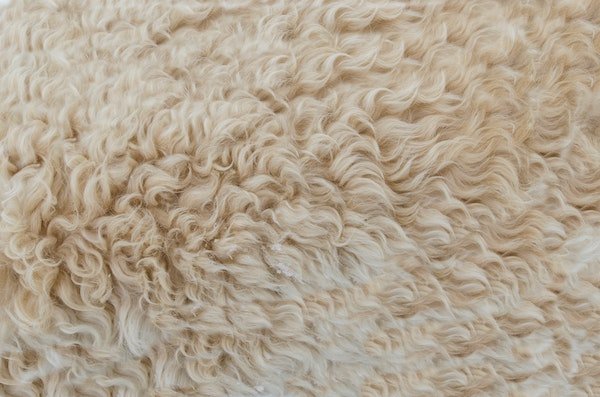


One of the features shared by nearly every mammal species on Earth — from antelopes to zebras, and even humans — is that their bodies are covered in structures known individually as ‘hairs’ and collectively as ‘fur’.
Fur can be dense or sparse, soft or coarse, colourful or drab, monochromatic or patterned. However, regardless of what it looks or feels like, fur is an evolutionary characteristic that defines the mammalian lineage.
There are three types of hair in mammals that make up their fur — vibrissae, which are sensitive tactile receptors, such as whiskers, used for sensing the environment. Guard hairs, the most conspicuous hairs, which serve as protection. And underhairs, whose primary purpose is insulation. The length, thickness and density of these hair types contribute to the incredible diversity we see in mammals’ furry pelts.
Hair is the basic unit. It is made of keratinised filament — the same substance that makes up our fingernails — and can vary in length from just a fraction of an inch to about 1 meter.
What is commonly called ‘fur’ is typically recognised as the relatively short hair with definitive growth that grows densely over the body.
The type of fur known as wool is a kind of underhair — soft, thin, curly, flexible hair that never stops growing.
Human hair is less differentiated than the hairs on other mammals, having characteristics of both guard hairs and undercoat hairs.
The first type of ‘hair’ to emerge in mammalian ancestors was perhaps a modification of scales, “or some sort of hard, nonhair epidermal structures.
A need for insulation likely drove fur’s evolution in early mammals, as it developed alongside another trait that differentiated them from reptiles.
Experts say fur’s most important role for mammals is to help with thermoregulation, preserving their internal temperature regardless of external conditions. In especially cold environments, terrestrial mammals such as the musk oxes, arctic foxes and polar bears rely on their thick coats to stay alive in frigid temperatures. Dense fur traps a layer of air close to their skin, which helps to keep them warm.
Semiaquatic mammals, such as fur seals and otters, also have a thick covering of fur, with sea otters sporting up to 1 million hairs per square inch of skin — more than any other mammal. Marine mammals such as whales, dolphins and elephant seals lost their furry coverings long ago but replaced the fur’s insulation with a thick layer of blubber that shields them from the cold.
But in warmer climates, larger mammal species tend to have sparser coverings of hair, as big animals are generally able to maintain their core body temperatures without much insulation. Smaller animals with higher metabolic rates tend to have body temperatures that fluctuate more dramatically, and are therefore more reliant on furry insulation to protect them from dips in external temperatures.
However, a mammal’s fur can serve many purposes in addition to insulation. In some species, guard hairs evolved into highly specialized protective structures — like the porcupine’s and hedgehog’s quills, or the pangolin’s armor, where hairs fuse together to form tough plates. Fur can also be a source of camouflage.
For example, small mammals’ coats generally match the colour of the soil in their environment so they’ll blend in with the dirt. Fur colouration can be used for sexual selection, or to serve as a warning to predators that an animal carries toxic chemical weapons — as is the case with the skunk. Zebras’ distinctive striping suggested that their patterns might have evolved to deter biting tsetse flies.
Considering that mammals are so reliant on their fur, it’s no wonder that they also work hard to keep it in good condition.
Our own hair — even though we don’t call it ‘fur’ — is an intrinsic part of our mammalian heritage, though perhaps we have less of it overall than some of our fuzzy friends.

Related News