Gold may touch Rs 1.85 lakh amid strong macro trends: Report
Gold prices may rise up to Rs 1.85 lakh amid favourable macroeconomic conditions, according to a report. Strong demand, central bank buying and global uncertainties continue to support the metal, making it an attractive investment this Akshaya Tritiya



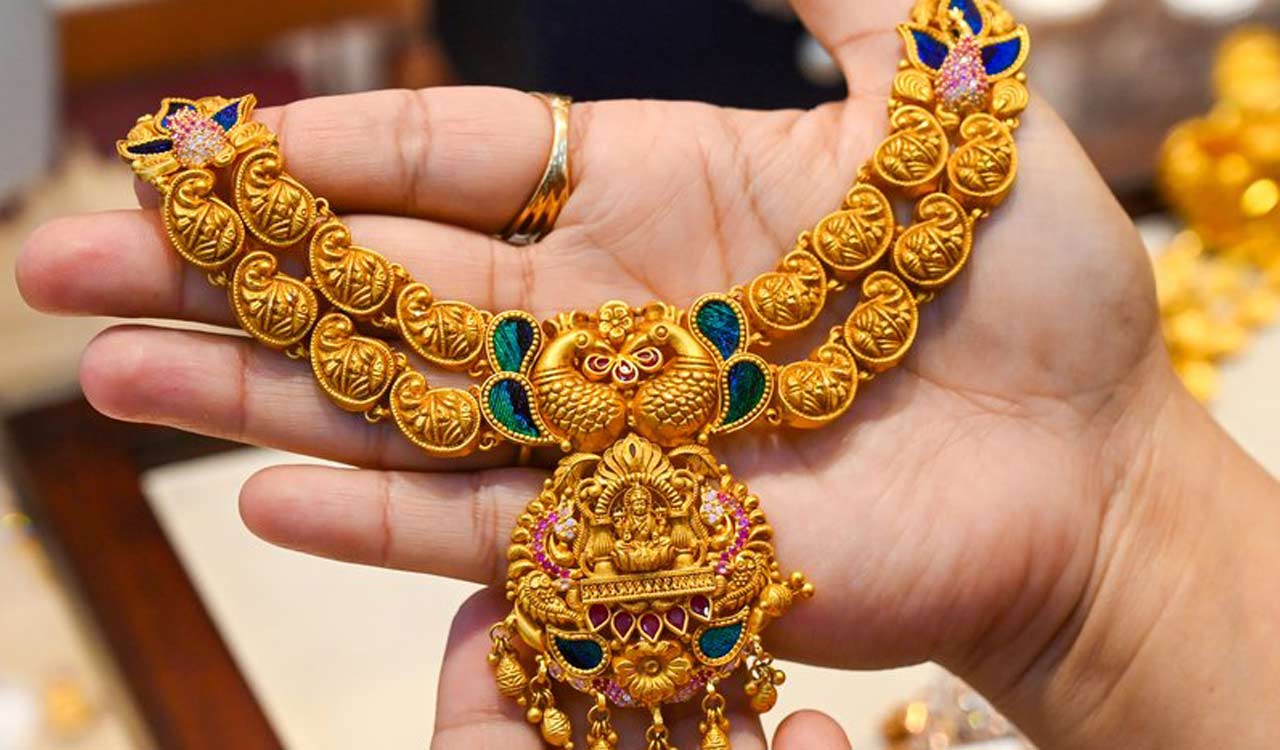
New Delhi: As India gears up to celebrate Akshaya Tritiya on Sunday — an auspicious occasion for buying gold — macroeconomic trends are reinforcing the metal’s investment appeal alongside tradition, with analysts seeing prices rise up to Rs 1.85 lakh, according to a report on Saturday.
An analysis by Axis Direct said gold is well-positioned in the current global environment and could gain whether the economy weakens into stagflation or improves amid falling interest rates.
“Whether the global economy faces stagflationary heat or rate-cut relief, the macroeconomic architecture provides a structural tailwind for gold,” the brokerage said.
The report also noted that elevated crude oil prices, driven by geopolitical tensions could sustain inflation while slowing growth, a combination that typically boosts demand for bullion as a store of value.
Analysts have set a COMEX gold target of $5,300–$5,500 per ounce in the near term.
For the domestic market, they projected that yellow metal could rise to Rs 1.7 lakh-Rs 1.85 lakh per 10 grams, which indicates a potential upside of up to 15 per cent from current levels.
If realised, this would mark a fifth consecutive year of double-digit returns for gold.
Alternatively, if crude prices ease and inflation moderates, central banks — led by the US Federal Reserve — are expected to resume rate cuts.
Lower interest rates reduce the opportunity cost of holding non-yielding assets such as gold, typically supporting prices.
The outlook follows a volatile first quarter for gold in 2026.
COMEX prices rose to $5,598 per ounce in late January before correcting sharply amid escalating geopolitical tensions, a surge in crude oil prices from $60 to $115 per barrel, inflation concerns and ETF outflows. However, prices fell to $4,098 earlier in March.
Gold has since recovered as crude prices eased following ceasefire talks, with analysts noting that the metal is rebuilding a “formidable base”.
“Following the extreme stress test of Q1 2026, the underlying pillars of demand, central bank accumulation, ETF inflows and macroeconomic hedging, remain fully intact,” the brokerage said.
In addition, in terms of returns over the past decade, gold has delivered an 18 per cent compounded annual return across successive Akshaya Tritiya periods, outperforming equity benchmark Nifty 50.
For instance, an investment of Rs 100 in gold in 2016 would be worth around Rs 527 today, compared with about Rs 307 in the Nifty 50.
Annual returns have accelerated in recent years, from 7 per cent in 2021-22 to 18 per cent, 22 per cent and 30 per cent in subsequent years, before surging 61 per cent in 2025-26.
On the demand side, Indian gold ETF inflows have risen sharply from Rs 1,500 crore in 2022 to an estimated Rs 25,000–Rs 30,000 crore in 2025, reflecting a shift from physical jewellery to financial gold instruments.
At the sovereign level, analysts highlighted a structural shift in global reserves.
Additionally, the report stated that for the first time, the total value of gold held by central banks has surpassed their combined holdings of US Treasuries, with both estimated at around $4 trillion.
Central bank purchases, which exceeded 1,000 tonnes annually between 2022 and 2024, are projected to moderate to around 850 tonnes in 2026.
For buyers this Akshaya Tritiya, the report said the investment case for gold remains strong irrespective of the global economic trajectory.
“Gold remains a fundamental portfolio necessity,” the brokerage said.

Related News