Media bodies express concern over present status of press freedom
Leading journalists expressed concerns about declining press freedom, increasing attacks on reporters, and rising editorial pressures during an IWPC panel on World Press Freedom Day.
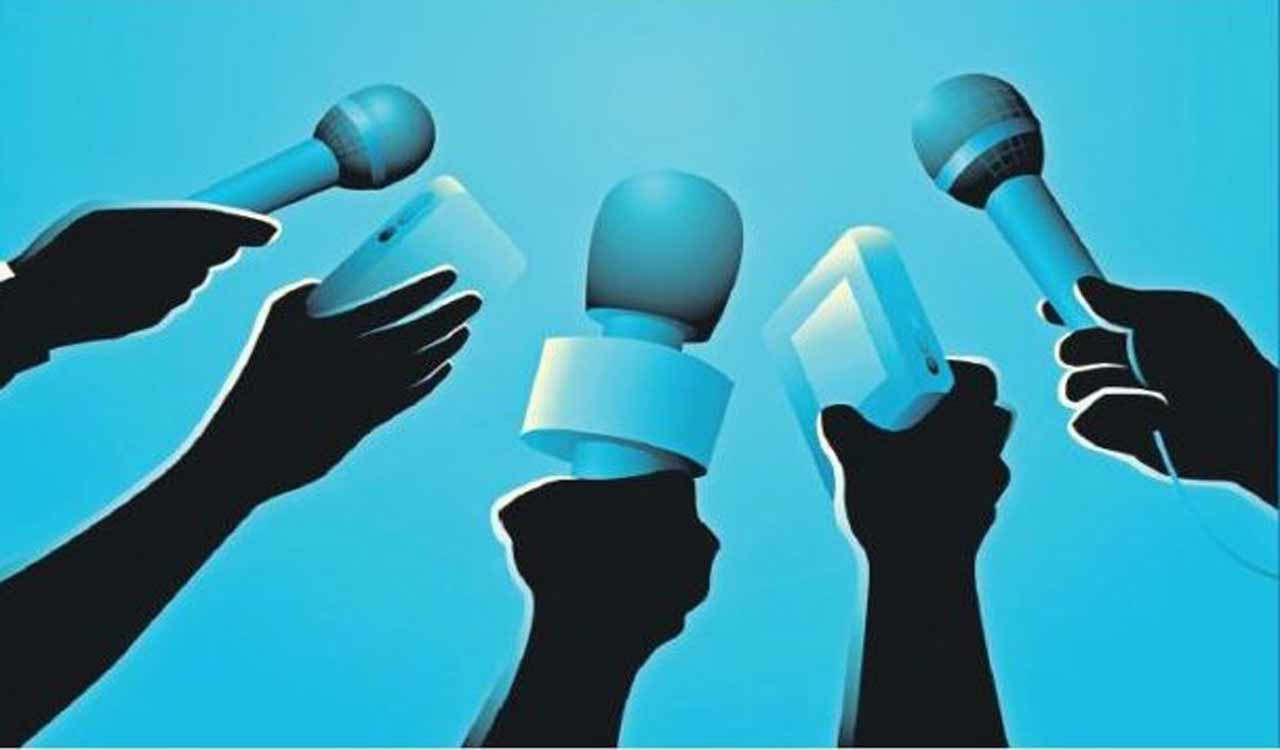


New Delhi: Several prominent journalists, representing different organisations, have expressed concern over the present status of media professionals in different places and press freedom.
Press Association president C K Naik, Editors Guild of India general secretary Raghavan Srinivasan and Foreign Correspondents Club of South Asia (FCC) president Waiel Awwad spoke at a panel discussion organised by the Indian Women’s Press Corps (IWPC) on the occasion of World Press Freedom Day, according to a release issued by the IWPC on Sunday.
The subject of the discussion was “Safeguarding Press Freedom Amidst Global Upheaval”.
The event was held in the backdrop of a recent report that India has slipped to the 157th place among 180 countries in the 2026 World Press Freedom Index released by Reporters Without Borders, marking a six-place drop from the previous year, the release said.
Awwad, who is also the president of the International Association of Press Clubs (IAPCs), warned that attacks on journalists have moved from incidental to deliberate.
“This is part of a systematic attempt to stop the truth from being told,” he said, stressing the urgent need for stronger international mechanisms to protect reporters on the ground.
He highlighted recent “targeted” killing of journalists in Gaza.
Srinivasan pointed out to deep structural failures within the industry and said: “Many troubling trends in the media have become normalised, from ownership-driven bias to editorial pressure.” Expressing concern that a new generation may not fully grasp the profession’s core values, he highlighted the economic crisis facing traditional media, noting that declining audiences and readership directly impact financial viability and editorial independence.
Naik turned the spotlight inward on a fractured profession.
“We have become our own enemy,” he said, citing the absence of coordinated resistance and the weakness of press bodies as critical vulnerabilities at a time when journalists need solidarity the most.
In conclusion, IWPC president Sujata Raghavan said, “We are here to collectively reflect, speak up and build a more robust environment for journalism, which remains central to the democratic ethos.

Related News
-
‘You should not be here’: Trump tells CNN at UN as standoff with media outlets persists
-
Pakistan tightens grip on foreign media; draws backlash over shrinking press freedom
-
Press freedom can’t shield irresponsible journalism: Delhi HC
-
Ex-CJI Chandrachud inaugurates hi-tech Samridhi Studio, stresses responsible press freedom