Opinion: Auto-credit Vs Auto-debit — two ideas of governance in Telangana
Under KCR, governance rested on institutionalised trust; under Revanth, auto-debit risks turn citizens into presumed defaulters


By Nayini Anurag Reddy
Governance is not just about schemes or statements. It is about instinct. About how a government sees its people when no one is watching. Does it begin with trust, or does it begin with suspicion?
Also Read
Today, Telangana stands at a clear ideological crossroads. On one side is a model that believes the State’s first responsibility is to credit confidence, capital, and dignity directly into citizens’ lives. On the other is an emerging approach that speaks of automatic deductions, enforcement-first governance, and direct access to citizens’ bank accounts. This is not a debate about traffic challans alone. It is about two fundamentally different ideas of the state.
Trusting Citizens, Under KCR
Under K Chandrashekhar Rao’s BRS administration, Telangana quietly built one of the most extensive auto-credit governance architectures in the country. The idea was simple, yet radical in Indian politics: if the state owes something to its people, it should reach them directly, predictably, and without intermediaries.
Rythu Bandhu became the clearest expression of this philosophy. Investment support was directly credited to farmers’ accounts, season after season, without applications, approvals, or discretion. Farmers did not have to prove anything. They did not have to plead. The state trusted them to decide how best to use the money. That trust reshaped rural Telangana’s economic rhythm and soon became a national reference point.
The same logic extended across welfare. Kalyana Lakshmi and Shaadi Mubarak credited dignity into households at a critical moment. Aasara pensions ensured social security arrived automatically. KCR Kits, Aarogya Lakshmi, and other direct benefit schemes followed the same pattern. Dalit Bandhu took the idea even further. It was not charity or subsidy, but capital. Direct support meant to create livelihoods, credited without middlemen and bureaucratic choke points.
When enforcement becomes automatic, and trust becomes conditional, power moves closer to the system and further away from the individual
This philosophy was not limited to income support alone. Schemes like Rythu Bima extended auto-credit governance to risk itself, with Rs 5 lakh insurance claims reaching bereaved farming families directly, often within days, without litigation or insurance intermediaries. Kanti Velugu treated preventive healthcare as a state responsibility rather than an individual burden, removing discretion from diagnosis itself.
Mission Bhagiratha reframed drinking water as a guaranteed service, not a favour mediated by access or influence. Even 24×7 free power to agriculture reflected the same instinct: trust first, verification later, support without daily policing. Together, these interventions revealed a coherent governing logic. The state absorbed complexity, so citizens did not have to navigate it. Delivery was designed to be automatic, predictable, and non-negotiable.
Beyond Welfare
This auto-credit instinct was not limited to welfare alone. It extended decisively into development and investments. Telangana’s industrial policy was built on trusting investors rather than policing them. Through TS-iPASS, projects received time-bound, automatic approvals instead of discretionary clearances. TS-bPASS applied the same logic to building permissions, alongside several other first-of-their-kind reforms. The state removed friction not by lowering standards, but by replacing suspicion with certainty.
Former Industries Minister KT Rama Rao institutionalised this approach, making speed, predictability, and rule-based clearances Telangana’s biggest competitive advantage. Investors were not asked to wait endlessly at government doors; the system cleared the path automatically. In essence, this was auto-credit for enterprise, by crediting confidence, time, and opportunity upfront, allowing growth to follow naturally.
Across sectors and demographics, the pattern was consistent. The state credited first. The citizen decided next. Friction was reduced. Interfaces with government offices were minimised. This was not accidental. It reflected a worldview that believed governance works best when trust is institutionalised, not negotiated daily.
One of the least discussed yet most consequential outcomes of this approach was how it quietly dismantled layers of political mediation. By routing benefits, permissions, and approvals directly through systems rather than representatives, the state reduced the everyday dependence of citizens on intermediaries, brokers, and local power centres. Welfare no longer flowed through recommendation letters or discretionary signatures. Permissions no longer required proximity to influence. This mattered deeply in a society where access to the state had long been uneven.
Auto-credit governance did not just transfer money; it redistributed power. It weakened patronage without confrontation and flattened hierarchies without slogans. Citizens interacted with rules, not individuals. Entitlements became predictable rather than negotiable. This also insulated governance from political cycles. Benefits did not change with loyalty, alignment, or visibility. They arrived because the system recognised eligibility, not because someone vouched for it. In doing so, Chandrashekhar Rao’s administration reduced the emotional and transactional costs of citizenship itself. The state was present, but it was not intrusive. Authority existed, but it was procedural.
Revanth’s Approach
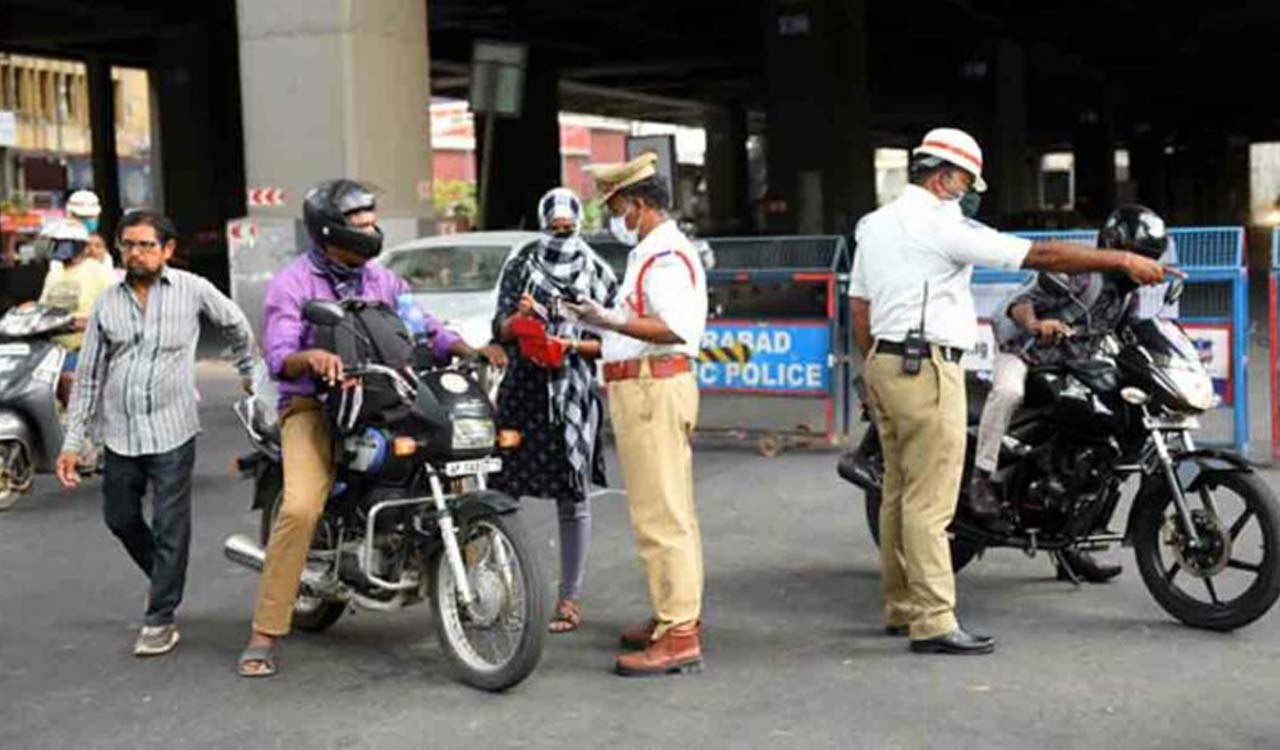
Against this backdrop, Chief Minister Revanth Reddy’s recent comments on auto-debiting traffic challans mark a sharp philosophical departure. Linking vehicle registrations to bank accounts and enabling automatic deduction of fines is being presented as an efficiency measure. But efficiency cannot be the only lens through which state power is exercised. A challan is an allegation, not a conviction. Due process exists precisely to allow citizens the right to contest, explain, or appeal. Auto-debit collapses that distance.
More importantly, it signals a shift in mindset. The default assumption changes, from citizen as a participant in governance to citizen as a potential defaulter, from persuasion to extraction, from consent to compulsion. This concern deepens when viewed alongside other remarks about using satellite surveillance and technology to reassess welfare eligibility, including Rythu Bandhu.
When technology is spoken of primarily as a tool to exclude, deduct, or withdraw, rather than to include, credit, or empower, it reveals a governance instinct that deserves closer scrutiny.
The divide this moment exposes is not administrative or legal. It is ideological. Governments reveal their worldview not through speeches, but through the systems they normalise. What a state chooses to automate tells citizens how it truly sees them. Automation is a statement of belief. When a government automates credit, it embeds trust into the architecture of governance. When it automates deduction, it embeds authority. Neither is accidental. Each reflects a different starting point about human behaviour, responsibility, and the role of the state.
State and Citizens
Telangana’s experience over the past decade demonstrated a distinct instinct. The state designed systems that reduced dependence on discretion and increased predictability. Money moved without intermediaries. Permissions moved without negotiation. The government’s presence was felt not through constant intervention, but through reliable outcomes. This was confidence in institutions and in the people using them.
A shift in this instinct, even when it appears casually, in a policy aside or a random speech by a Chief Minister, matters deeply, because governance is cumulative. When enforcement becomes automatic and trust becomes conditional, the relationship between the state and the citizen subtly changes. Power begins to move closer to the system and further away from the individual.
Ultimately, the question before Telangana is simple and enduring: Should governance begin with trust and intervene when it is violated, or should it begin with control and permit trust selectively? That answer defines more than policy. It defines the character of the State itself.

(The author is an MBA graduate, entrepreneur, and policy enthusiast working to highlight governance gaps & public grievances)

Related News