Opinion: From strategic depth to strategic discord: Why the Taliban-Pakistan rift is reshaping the region
The Taliban–Pakistan rupture is more than a bilateral dispute; it signals a post-2021 geopolitics shift in South Asia


By Brig Advitya Madan (retd)
What exactly is happening between the Afghan Taliban and Pakistan? Once described as “all-weather allies,” the two now find themselves locked in a volatile cycle of air strikes, suicide bombings and collapsing ceasefires. The deterioration is not episodic; it is structural. It reflects unresolved historical disputes, shifting power equations after 2021, and the unintended consequences of Pakistan’s own Afghan policy.
Also Read
The immediate trigger for the latest escalation lies in the events of the past year. On October 9, 2025, Pakistan carried out air strikes against targets it claimed were linked to militant groups operating from the Afghan territory. In retaliation, Taliban forces attacked Pakistani posts on October 12 and 15. Tensions peaked until a ceasefire was brokered on October 18 in Doha, mediated by Qatar and Turkey. The truce, however, proved fragile and did not endure.
Mediation may pause tensions, but the underlying issues —Durand Line, TTP sanctuaries, refugee pressures — remain unresolved
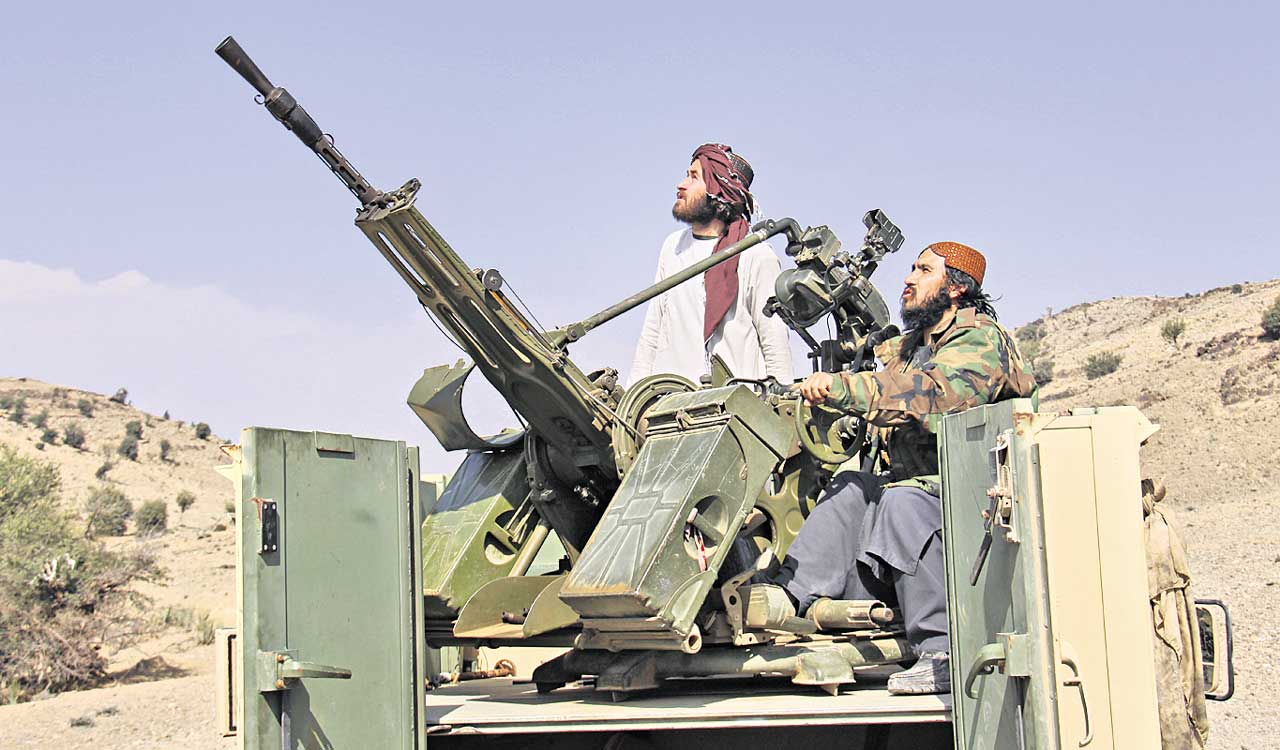
This year, the violence resumed with greater intensity. Two suicide bombings in Khyber district signalled the resurgence of militant activity: on February 16, eleven Pakistani soldiers were killed; on February 21, another soldier and a Lieutenant Colonel lost their lives. Pakistan responded on February 22 with air strikes targeting Kabul, Kandahar and Paktia — reportedly the first time it directly struck Taliban military facilities as well as Islamic State Khorasan (IS-K) elements using air-to-ground missiles. On February 26, Taliban fighters retaliated by attacking Pakistani border outposts. Efforts at mediation are now reportedly being explored by Russia, China, Saudi Arabia and Turkey, underscoring the wider regional stakes.
Two Decades Ago
To understand how this rupture emerged, one must revisit the past two decades. During the insurgency years, the Taliban leadership was based largely in Quetta. Pakistan extended logistical and strategic support to the movement as it fought US and Afghan government forces. Why did Islamabad back the Taliban? Primarily for two reasons. First, it was uncomfortable with India’s expanding developmental and diplomatic footprint in Afghanistan — particularly in infrastructure projects. Second, it believed that a friendly Taliban regime would provide “strategic depth” against India in the event of conflict.
Yet once the Taliban captured Kabul in August 2021 and declared the Islamic Emirate of Afghanistan, the dynamic shifted. An insurgent movement dependent on a sanctuary became a sovereign authority determined to assert autonomy. Allies became uneasy neighbours.
At the heart of this estrangement lies the Durand Line — the 2,640-km border drawn in 1893 between British India and Afghanistan by Sir Mortimer Durand and Afghan ruler Abdur Rahman Khan. Pakistan inherited this boundary in 1947 and regards it as a legitimate international border. Successive Afghan governments, including the Taliban, have refused to formally recognise it. The Durand Line cuts through Pashtun and Baloch tribal areas, dividing families and communities. The Taliban argue that the line was imposed to demarcate spheres of influence rather than to create a permanent border. Had the British accepted Afghan appeals to revisit the agreement, much of Pashtun territory might have fallen within Afghanistan.
During the insurgency phase, Pakistan did not object to fluid cross-border movement; it served its strategic purposes. But once the Taliban became the ruling authority, they began resisting Pakistan’s efforts to fence and regulate the border. Islamabad now seeks strict control over movement across the Durand Line, citing security concerns. The Taliban demand freer movement for Pashtun tribes and reject what they view as external interference. This border dispute has transformed from a dormant historical grievance into a daily flashpoint.
Good And Bad Taliban
Another crucial dimension is the distinction between the Afghan Taliban and the Tehrik-e-Taliban Pakistan (TTP). In Pakistani discourse, these were once described as “good Taliban” and “bad Taliban.” Organisationally separate but ideologically aligned, the Afghan Taliban focused on expelling US forces and toppling the Islamic Republic in Kabul — an objective they achieved. The TTP, by contrast, seeks to overthrow the Pakistani state and establish an Islamic caliphate, at least across the former tribal areas and ideally nationwide. The 2014 attack on a school in Peshawar that killed 132 students remains a grim reminder of its brutality.
Today, the TTP operates largely from Afghan territory. Many of its fighters are ethnically Pashtun, with familial and tribal ties across the border. Seeds of the current crisis were sown in 2018 when Pakistan merged the Federally Administered Tribal Areas into Khyber Pakhtunkhwa, altering local power structures. When the Afghan Taliban returned to power in 2021, the TTP found ideological inspiration and strategic space. Initially, the Afghan Taliban mediated a truce between Pakistan and the TTP, but it collapsed in 2022. Last year alone, TTP attacks reportedly killed at least 400 Pakistani security personnel.
Pakistan accuses Kabul of harbouring TTP militants. The Taliban deny this and condemn Pakistani airstrikes as violations of sovereignty. Matters have been further aggravated by Pakistan’s deportation of nearly 1.7 million Afghan refugees, a move that has fuelled resentment within Afghanistan.
Regional Diplomacy
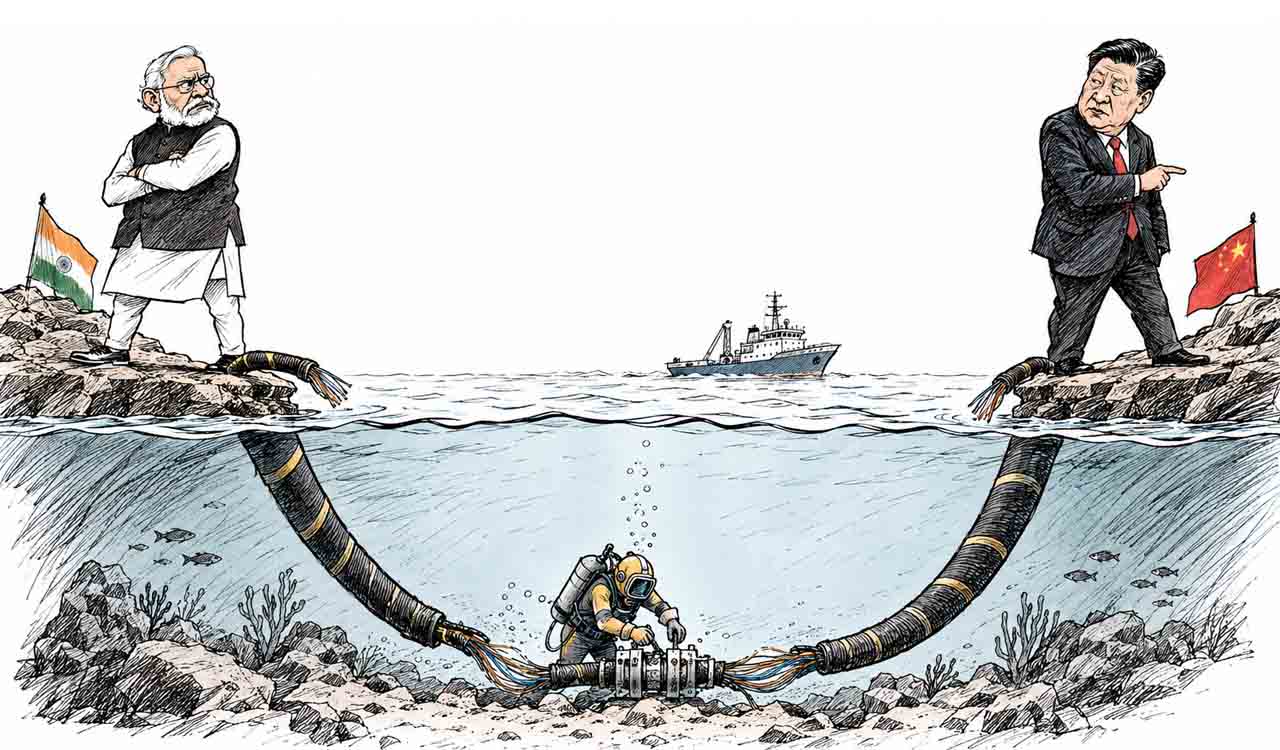
Complicating the picture is the evolving regional diplomacy. Relations between India and the Taliban, once adversarial in the late 1990s, have cautiously reopened. India hosted Taliban Foreign Minister Amir Khan Muttaqi last year, and in January, Afghanistan appointed an envoy to head its diplomatic mission in New Delhi. India has not formally recognised the Taliban regime, but engagement has increased. Pakistan’s Foreign Minister has even alleged that the Taliban are acting as an Indian proxy — a charge that reflects Islamabad’s growing insecurity.
In military terms, the balance is asymmetrical. The Taliban excel in unconventional guerrilla warfare and asymmetric tactics. Pakistan retains conventional superiority — a structured army, air force capabilities and advanced weaponry. In a head-on conflict, Pakistan would hold the upper hand. Yet border conflicts and insurgent warfare rarely unfold in conventional formats. Escalation risks drawing in non-state actors and destabilising the wider region.
For India, the stakes are significant. Three core objectives shape New Delhi’s engagement with Afghanistan. First, to safeguard nearly $3 billion invested between 2001 and 2021 in infrastructure, health and education projects. Second, to ensure that Afghan soil is not used by anti-India militant groups. Third, to prevent Afghanistan from becoming an exclusive strategic extension of Pakistan, thereby reviving the “strategic depth” doctrine.
Afghanistan also figures in India’s connectivity ambitions. Along with Iran, it is central to the International North–South Transport Corridor, providing access to Central Asia. Stable relations with Kabul could facilitate trade and strategic outreach.
Recent developments add another layer of uncertainty. US and Israeli strikes on Iran have heightened regional volatility. Any spillover — including refugee flows from Iran into Afghanistan — could strain an already fragile Afghan state and indirectly affect Indian development interests.
The Taliban–Pakistan rupture is thus more than a bilateral dispute. It is a recalibration of post-2021 geopolitics in South Asia and the broader region. Pakistan’s long-standing Afghan policy has produced unintended blowback. The Taliban, no longer dependent insurgents, are asserting sovereignty. Mediation attempts may produce temporary pauses, but the underlying issues — the Durand Line, the TTP sanctuary question, refugee pressures and competing regional alignments — remain unresolved.
For India, careful engagement without formal recognition, strategic patience and calibrated diplomacy will be essential. In the shifting sands of the region, yesterday’s proxies have become today’s problems — and tomorrow’s alignments remain uncertain.
(The author is a retired Army officer)

Related News