Opinion: BJP’s Eastern surge — time for the rule of law
For the BJP, the shift from ‘war mode’ to ‘governance mode’ means shedding the jhumlas that helped it rise in West Bengal and Assam.


By Geetartha Pathak
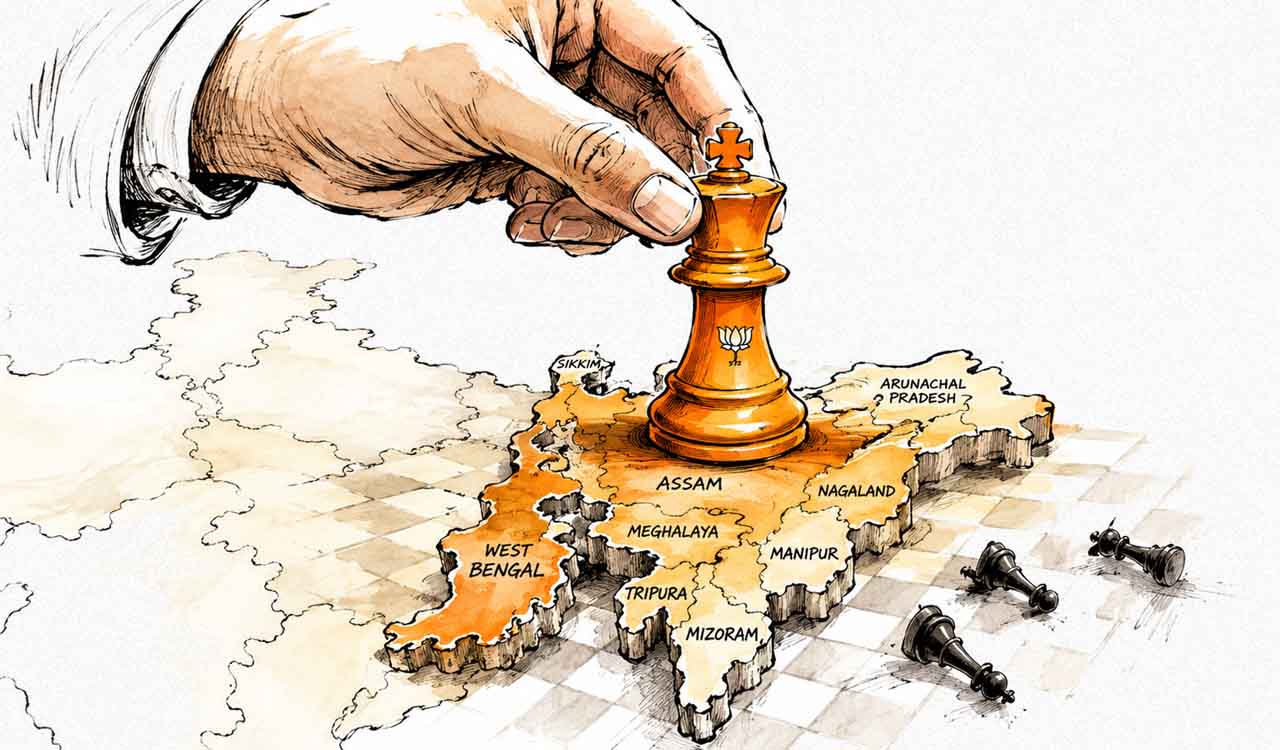
The political landscape of Eastern and North-eastern India has been fundamentally redrawn, and the implications are as staggering as they are sobering. The ‘Lotus,’ once a peripheral bloom in the humid, politically volatile soil of the East, has established a massive, seemingly immovable canopy. The 2026 Assembly elections in West Bengal and Assam represent more than just a change in administration; they signal a total metamorphosis of the region’s power structures.
Also Read
As the dust settles on the 2026 campaign trail, the new governments find themselves at a crossroads. The transition from “war mode” to “governance mode” requires shedding the very rhetoric — often dismissed as jhumlas— that brought them to power. To succeed, these administrations must now embrace the constitutional mandate of non-discrimination, fiscal responsibility, and the restoration of a state where the law, not the party, is supreme.
The Rise
The rise of the saffron party in the East was not a spontaneous event but the result of a meticulously engineered campaign that attacked the systemic inertias of the Left and the Trinamool Congress (TMC). This ascent was built on a pillar of ‘competitive populism’. For years, the TMC maintained its grip through a robust welfare architecture, most notably cash transfers to women.
In 2026, the BJP did not attempt to dismantle this freebie culture; instead, it hijacked it. By proposing to double existing transfers to Rs 3,000 per month for all women, the saffron party neutralised the incumbent’s primary emotional connection with the rural poor. In a State where public debt is nearly 39% of GSDP, this was a bold, some might say reckless, gamble that used the ‘revdi’ culture as a standard electoral weapon.
The 2026 election will likely be remembered for the Special Intensive Revision (SIR) of the electoral rolls, where nearly 9.1 million names were deleted in West Bengal alone. This ‘invisible muscle power,’ exercised through institutional machinery, created a tilted playing field that critics have likened to a sophisticated form of gerrymandering. When combined with a narrative centred on the spectre of the ghuspaithiya (infiltrator), the party successfully consolidated the majority vote by framing the election as a battle for ‘indigenous’ identity.
This reached a crescendo in Bhabanipur, where victory was framed not as a collective mandate but as a victory for one community over another, claiming the mandate came specifically from Hindus. This polarising rhetoric served its purpose in winning the seat, but it left a deeply fractured society in its wake.
From Candidate to CM
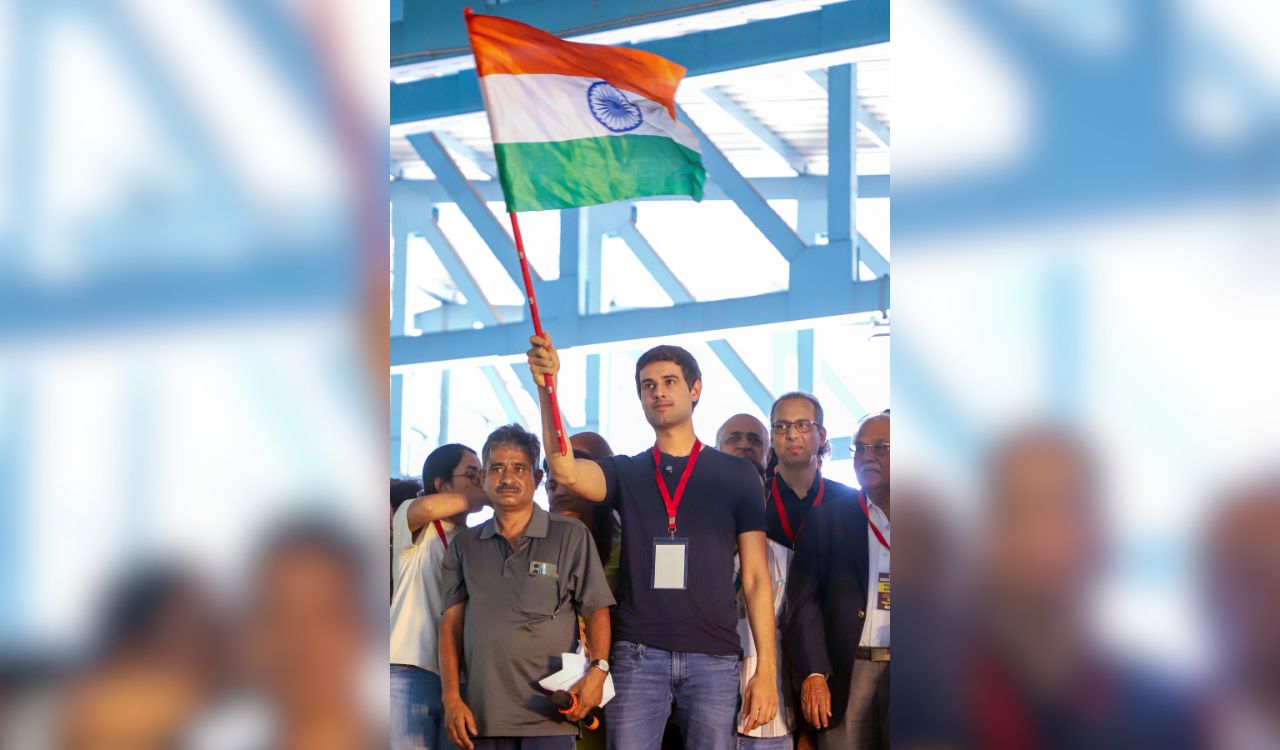
In the days to come, the polarising rhetoric will need to be dialled down significantly. The shift from candidate to Chief Minister requires a fundamental change in language. Upon being sworn in, Suvendu Adhikari said he was sokoler—now everyone’s. To walk that talk, he will need to speak to all citizens of Bengal—those who voted for him and those who did not. This is not just a moral imperative, but a functional necessity for a State that has seen its social fabric stretched to the breaking point.
The Constitution demands equality before the law, and the new administration has a mandatory duty to ensure that minority communities, particularly Muslims, enjoy the same fundamental rights and access to state resources as the majority. Restoring peace and tranquillity is not merely about stopping post-poll violence; it is about dismantling the 50-year pattern where the line between party and government was dangerously blurred.
Since at least 1977, West Bengal has had a unique and often destructive form of political culture. The CPI(M) made the party a parallel state, and the state an extension of the party. This smudging of boundaries led to the systematic weakening of governance and accountability on one hand and normalised political violence on the other.
The administrations must embrace the Constitution’s mandate of non-discrimination, fiscal responsibility, and the restoration of a State where the law, not the party, is supreme
The TMC under Mamata Banerjee did not dismantle these structures; it only deepened and expanded them. The BJP, first and foremost, needs to break this 50-year pattern that has eroded trust in the state. A citizen should not have to approach a party apparatchik to get the ration the government owes her. If the line continues to dissolve between the party and the government, who will check the members when violence and intimidation become part of the political arsenal?
There is also a formidable economic challenge staring the new governments in the face. For long, even as its once-thriving industrial base has been hollowed out, Assam still remained industrially backward. Assam and Bengal’s young have continued to migrate to other states in search of livelihoods and opportunities.
It will be the Adhikari and Himanta Biswa Sarma government’s task to create and expand opportunities at home, leveraging all the advantages to bring manufacturing and services back to the states. West Bengal’s per capita income ranking has slipped from 11th to 16th over the last quarter-century. To move the State toward the levels of Haryana or Gujarat requires attracting massive private investment—an impossible task in a climate of social unrest or administrative partisanism.
True Poriborton
If this victory remains based on “revdi” promises rather than structural development, it may not be a real and sustainable change—a true poriborton. The governments must move the States from their current economic stagnation to a higher growth trajectory, balancing welfare commitments with developmental expenditures. If the West Bengal and Assam governments decide to go ahead with their bold cash schemes, the obvious question remains: how do they plan to finance such a commitment without squeezing developmental expenditures?
West Bengal is currently the second-most indebted major State in India, with total campaign outstanding liabilities estimated at 38.9 per cent of GSDP in 2026. The total outstanding debt is projected at Rs 2.06 lakh crore for Assam by March 2026. This is where the new government’s real challenge begins. To succeed, they must distance themselves from electoral rhetorics —the jhumlas —and fulfil the developmental promises.
The rise of the saffron party in the East and Northeast is a testament to their ability to adapt, organise, and dominate the narrative. They have successfully tapped into a deep desire for change and a frustration with the status quo that had persisted for half a century. However, the true measure of their success will be in the quality of their governance. Can they provide a government that is non-discriminatory? Can they restore the rule of law in a region where political violence has been the norm? And can they provide an economic model that offers more than just survival through subsidies?
For the ‘Lotus’ to stay in bloom, it must nourish the entire garden, not just the soil that favoured its planting. The transition from a party of protest and polarisation to a party of stable, inclusive governance is the most difficult journey in politics. Whether the new leadership can complete this journey will determine the future of millions. The time for rhetoric has passed; the time for constitutional governance has begun.
(The author is a senior journalist from Assam)

Related News