Opinion: Convenience wrapped in plastic — an environmental hazard?
The hyper-convenience of quick commerce encourages careless consumption and adds to the environmental burden


By Teegala Shruthi
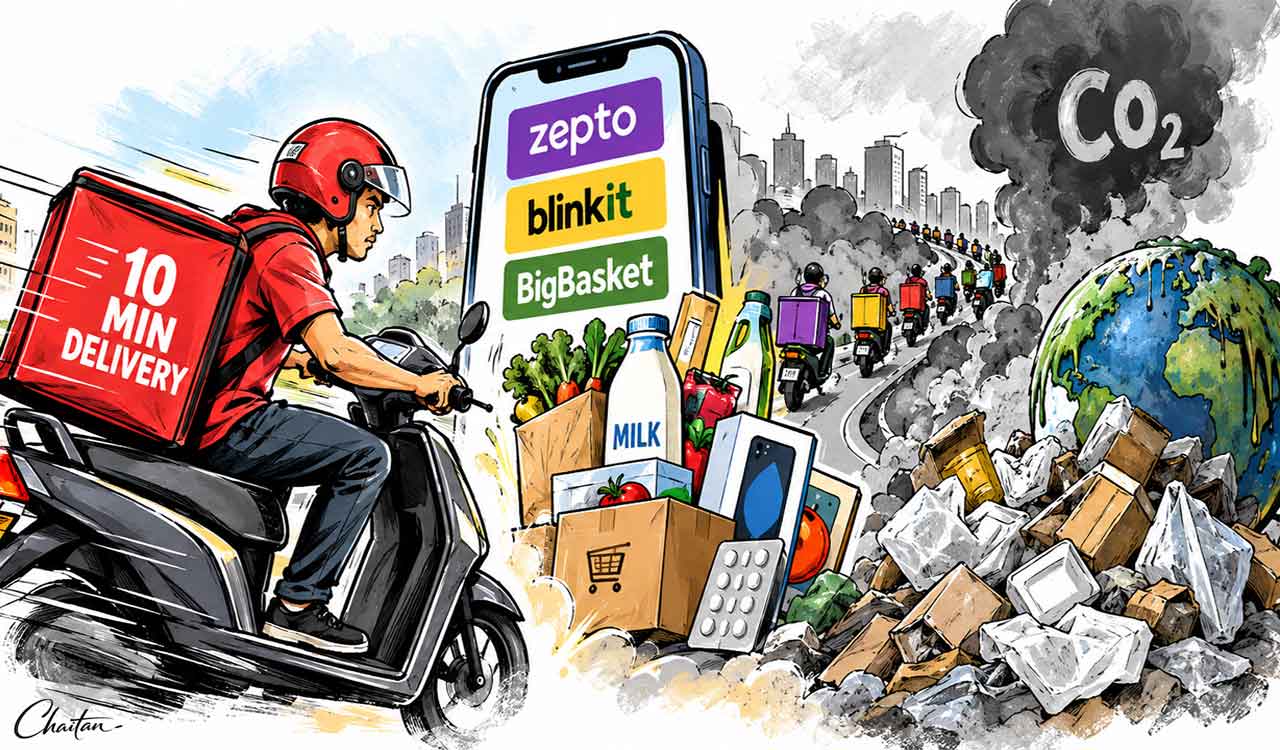
Ordering a single packet of milk and having it delivered within 10 minutes through apps such as Zepto, Blinkit, or BigBasket may feel harmless. Yet, when multiplied across millions of users, it creates massive environmental burdens, including a larger carbon footprint, increased fuel consumption, and packaging waste. Groceries, medicines, electronics, and many other essentials are being delivered to consumers’ doorsteps within 10 to 15 minutes. This hyper-convenience comes with an additional carbon burden on the environment.
Also Read
The unusual circumstances created by Covid-19 led to a rise in such services, particularly same-day deliveries. However, ordering through these platforms has since become routine in many households, significantly changing consumption patterns. It can sometimes lead to overconsumption, with consumers adding unnecessary items to meet minimum order values or avoid delivery and platform fees. This fragmentation can increase emissions, congestion, and noise pollution in already crowded cities
Single Order, Manifold Concerns
A single order placed by an individual or household may involve bubble wrap, plastic carry bags, plastic pouches, adhesive tapes, insulated covers and small single-use containers. Sustainable packaging, waste segregation, recycling and proper disposal must therefore be encouraged by quick commerce companies, households and individuals.
Delivery platforms provide employment to many people and facilitate millions of orders every day across Indian cities. However, frequent deliveries can increase fuel consumption and contribute to environmental pollution.
According to the Central Pollution Control Board’s annual report for 2022-23, India generates 3.9 million tonnes of plastic waste annually and nearly 10,689 tonnes per day. Per capita plastic waste generation rose from 700 grams in 2016-17 to over 2.5 kg by 2020, indicating a tripling in just four years, and highlighting the need for stronger measures to reduce plastic consumption and improve waste management.
Real Enemies
The biggest concern with single-use plastic is that it takes hundreds of years to degrade in the soil, acts as a barrier to percolation of rainwater, obstructs tree roots, limits airflow and water absorption, and pollutes the soil. Packaging materials such as bubble wrap and plastic pouches are cheap and convenient for companies to use to pack and protect products. However, much of this throwaway plastic is difficult to recycle and can end up in overflowing landfills and drainage systems, affecting aquatic ecosystems and contributing to the spread of microplastics through the food chain.
Transparent sustainability reporting can help businesses build consumer trust, manage reputational risks and strengthen social and governance practices
The hyper-convenience of quick commerce encourages careless consumption habits and overshadows environmental sustainability. Yet quick commerce itself is not the enemy; unsustainable packaging and delivery practices are real enemies. Companies must therefore explore alternatives for packaging and delivery that can reduce ecological degradation without compromising efficiency.
The Plastic Waste Management Rules, 2016, and subsequent amendments provide a regulatory framework for plastic packaging, including provisions related to recycled content and reuse. For 2025–26, rigid plastic packaging, ie, Category I plastic that includes High-Density Polyethene (HDPE) and Polyethene Terephthalate (PET) containers, was introduced. Companies must strictly adopt Category I plastic – which contains at least 30% recycled material, rising to 60% by 2028–29 – for packaging, as it is easier to collect, segregate, and recycle
Instead of conventional plastic covers, quick-commerce companies can explore bioplastics and compostable mailers where appropriate. Some of these alternatives are made from plant-based polymers and materials such as corn starch and cassava. Companies can also go for tie-ups with cooperatives and initiate contract farming to support the production of relevant agricultural raw materials.
Honeycomb-structured paper packaging can provide interlocking, shock-absorbing protection without needing adhesive. Multilayered craft paper can be used to protect glass or other delicate items, and when appropriately designed, can be recycled through existing paper-recycling systems. Companies can go with the returnable basket models, which eliminate plastic waste packaging, as they rely on hyper-local, short-distance delivery.
Making a Difference, Together
Government intervention also plays a major role. Strict implementation of regulations on single-use plastic, solid waste management, along with incentives for eco-friendly packaging, may encourage companies to adopt greener practices. The government can make quick-commerce companies accountable through stronger implementation of Extended Producer Responsibility and better verification of EPR credits. Infrastructure for collecting, segregating and recycling discarded plastic waste also needs to be strengthened.
Schools can educate students through programmes such as Swachh Bharat Abhiyan about waste segregation and the importance of proper disposal practices. Parents must teach their children about sustainable consumption from an early age, helping future generations become more responsible towards protecting the environment.
Quick-commerce companies can voluntarily adopt rigorous sustainability reporting practices, including relevant SEBI Business Responsibility and Sustainability Reporting (BRSR) Core standards to strengthen transparency and accountability. By displaying a transparent, verified sustainability scorecard on the user interface at the end of every transaction – clearly breaking down the exact grams of carbon dioxide saved or packaging material repurposed – a brand can build consumer trust. Transparent and credible sustainability reporting can also help businesses manage reputational risks, appeal to environmentally conscious consumers and demonstrate stronger environmental, social and governance (ESG) practices to investors.
Consumers at the household level also have an important role to play. They can choose minimal-packaging options, avoid small and fragmented orders and support brands that adopt environmentally responsible practices. By focusing on sustainability, companies can appeal to environmentally conscious consumers while mitigating the environmental impact of their operations. Civil society organisations or NGOs must take the initiative to create awareness through weekend sessions, activity-based workshops or online videos.
India’s quick commerce industry provides employment and offers convenience to consumers, but its rapid expansion also raises environmental concerns. Speed and convenience cannot become an excuse for environmental irresponsibility.

(The author is a PhD scholar, Centre for Economic and Social Studies [CESS], Hyderabad)

Related News