Opinion: From access to agency: India’s next digital imperative
Beyond connectivity lies the real challenge: building digital capacity, inclusion, and true empowerment



By Anshika Chauhan, Akamsha Krishnan & Dr Amit Kumar
For an economy striving for a USD 5 trillion milestone, digitisation is no longer optional — it is foundational. It drives financial inclusion, expands access to healthcare and education, enhances governance, and fuels innovation. A nation’s digital infrastructure is now as critical as its physical one, shaping everything from entrepreneurship to social mobility.
Also Read
India has embraced this digital imperative with remarkable speed. Over the last decade, the country has made transformative investments in digital infrastructure, rolling out broadband highways, expanding mobile penetration, introducing Aadhaar-linked services, and developing one of the world’s most sophisticated real-time payment systems — UPI. As a result, India today is home to over 1.2 billion mobile connections and boasts one of the highest volumes of digital financial transactions globally.
Digital Deadweight Loss
In the story of India’s digital revolution, the focus has long been on access: counting the number of towers, smartphones, and broadband connections. According to the recently released Comprehensive Modular Survey (CMS): Telecom 2025 report, these achievements are most visible among India’s youth aged 15-29 years.
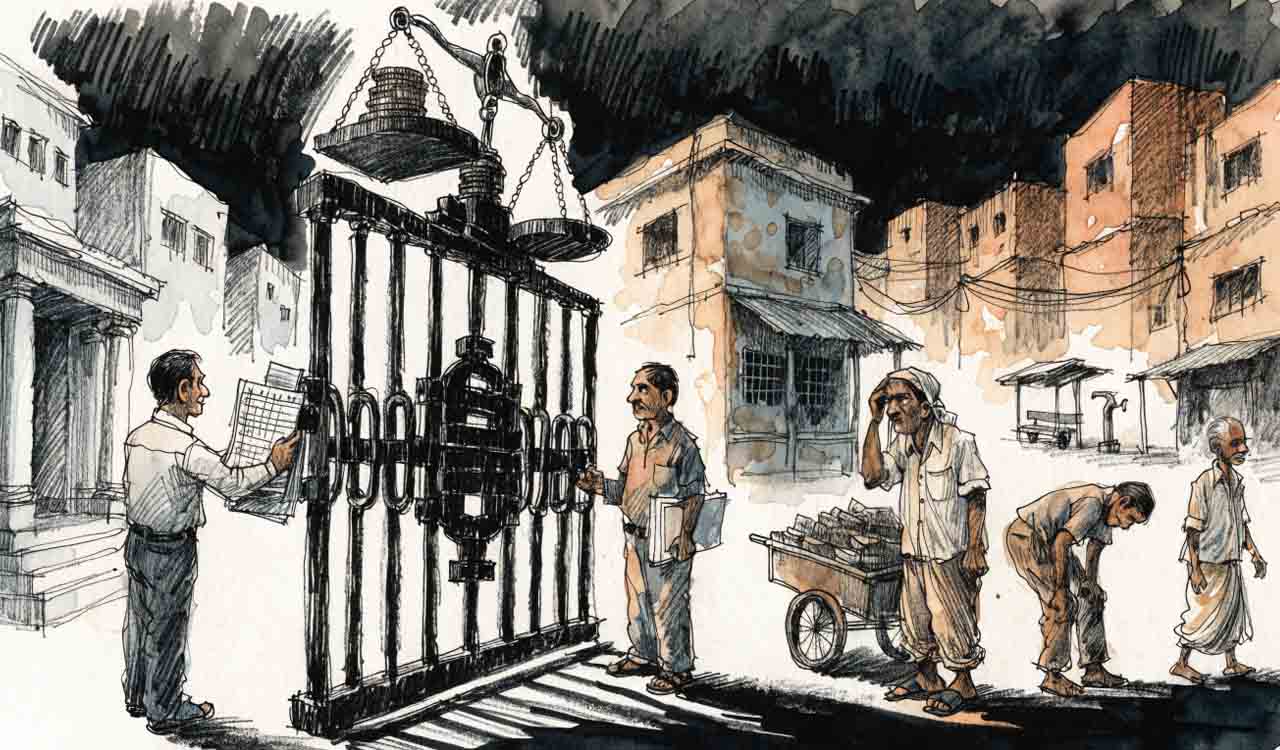
As we stepped into 2025, another less visible crisis is emerging: ‘Digital Deadweight Loss’, an economic term that describes the value lost when digital infrastructure exists but is underutilised due to limited skills, and a lack of capacity, context, or confidence to use them meaningfully. In other words, India is increasingly connected but underutilised.
The report presents both reasons to celebrate and reasons to worry. At first glance, the data suggests near-universal connectivity. Among individuals aged 15-29 years, 97.1 per cent reported using a mobile phone. Internet usage in this group is particularly high (93.6 per cent), with 92.7 per cent in rural and 95.7 per cent in urban areas. The report highlights that 93.8 per cent of youth (15-29 years) now own a smartphone and more than 92 per cent can use the internet.
Owning a smartphone may seem like a triumph of inclusion achieved, but does it guarantee digital empowerment? On paper, it appears to be a digital success story. But peel back the layers, and a deeper problem surfaces.
Digital Empowerment?
Despite the infrastructure, 13.7 per cent of households still lack in-premise internet access. The top reasons aren’t technical — they are human. For example, 39.2 per cent cited not knowing how to use it, 21.3 per cent said they didn’t need it, and 11.4 per cent felt the available services didn’t meet their household needs. These are behavioural, educational, and cultural barriers — not infrastructural ones. When digital capital sits idle, it mirrors classic economic deadweight loss: large investments yielding suboptimal returns.
Unless we ensure that people know how to use their phones for more than calls and messages, we risk building a digital economy that excludes the very people it is meant to empower
Even among India’s digitally connected youth, capability gaps are evident. While 85.1 per cent of 15-29-year-olds report sending messages with attachments (eg, via email or messaging apps), only 32.2 per cent have created an electronic presentation in the past three months. Just 26.9 per cent know how to report cybercrime via official portals. These skills are essential for participation in the modern digital economy, yet remain far from universal.
The divide is sharper across gender and geography. Only 63 per cent of females aged 15-29 personally own a mobile phone, compared to 83 per cent of males. In rural areas, the disparities deepen. The most telling indicator of this is the capability gap in financial digital literacy. Between 2022-23 and 2025, the ability to perform online banking among rural males rose from 43.8 per cent to 75.9 per cent, and among rural females, the leap was even steeper — from 0.2 per cent to 50.4 per cent — but is significantly lower than their male counterparts.
Urban figures improved too, from 65 per cent to 86 per cent for males and from 46 per cent to 72.7 per cent for females. While these improvements are commendable, they also highlight persistent exclusion; half of rural women and over a quarter of urban women still cannot independently conduct a digital transaction. This is particularly concerning in a county where UPI now underpins everyday commerce.
Connectivity Without Capacity
This is the essence of digital deadweight loss: devices are present, infrastructure is laid, but the human capacity lags. Connectivity without capacity breeds exclusion, not empowerment. India has won the connectivity race. But unless we ensure that people know how to use their phones for more than calls and messages, we risk building a digital economy that excludes the very people it was meant to empower.
India needs massive digital drives with a particular focus on the rural population and women; locally relevant content and services aligning with the real needs; digital confidence-building programmes that transform people into active participants and incentives for private firms to develop apps focusing on the low-literacy non-English speaking population. To truly realise the USD 5 trillion vision and to become a developed nation, India must move from devices to development, from access to agency and from infrastructure to inclusion.

(Anshika Chauhan and Akamsha Krishnan are pursuing MSc (Economics & Analytics), and Dr Amit Kumar is an Assistant Professor of Economics, Christ University, Delhi NCR)

Related News